(Written by AZUL: October 15, 2026)
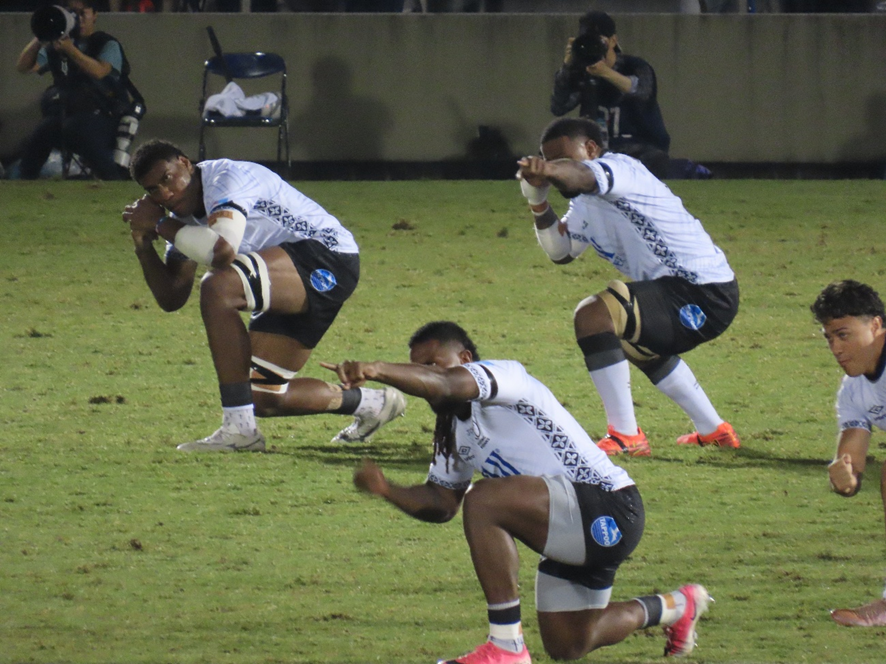
On Saturday, September 19, 2026, the Pacific Nations Cup final was held at Chichibunomiya Rugby Stadium in Minato Ward, Tokyo.
The number of participating nations decreased this year, with the following 4 countries taking part. Compared to last year’s tournament, Tonga and Samoa chose not to participate.
Fiji (World Ranking: 8th)
Japan (World Ranking: 12th)
USA (World Ranking: 14th)
Canada (World Ranking: 24th)
The Pacific Nations Cup is positioned as a tournament aimed at raising the competitive level of rugby teams from the Pacific Rim that are ranked in the middle or lower tiers of the world rankings. As evidence of its success, PNC participating nations—Canada, Samoa, Fiji, and Japan—have all advanced to the knockout stage of the Rugby World Cup.
In recent years, Fiji has claimed the title for 3 consecutive years; if Japan wins this season’s tournament, it will mark their first championship since 2019—a seven-year gap.
Next, here are the test match results so far this season for the Japanese national team, the Brave Blossoms.
| Japan Rugby Test Match 2026 | ||||
| Date | Opponent | match venue | Result | |
| 1 | 6/27 | Maori All Blacks | Nagoya, Japan | 31-38● |
| 2 | 7/4 | Italy | Tokyo, Japan | 27-10○ |
| 3 | 7/11 | Ireland | New Castle, Australia | 20-36● |
| 4 | 7/18 | France | Tokyo, Japan | 15-42● |
| 5 | 8/8 | Australia | Osaka, Japan | 32-35● |
| 6 | 8/15 | Australia | Queensland, Australia | 17-56● |
| 7 | 9/5 | Canada | Niigata, Japan | 57-12〇 |
| 8 | 9/12 | USA | Osaka, Japan | 63-14〇 |
| 5 | 9/19 | Fiji | Tokyo, Japan | |
| 6 | 10/24 | Fiji | Tokyo, Japan | |
| 7 | 11/8 | Wales | Cardiff, Wales | |
| 8 | 11/15 | England | Twickenham, England | |
| 9 | 11/22 | Scotland | Murrayfield, Scotland | |
| 10 | 11/29 | (Nations Championship) | Twickenham, England | |
While they were able to secure back-to-back wins in their last 2 matches against lower-ranked nations, their opponent this time is Fiji, a top-ranked team. This marks the third consecutive year they have faced each other. The all-time head-to-head record against Fiji stands at 17 wins for Fiji and 4 wins for the Brave Blossoms.
Now, let’s take a look at the latest information on both teams competing today.
First, an introduction to the visiting team, Fiji.
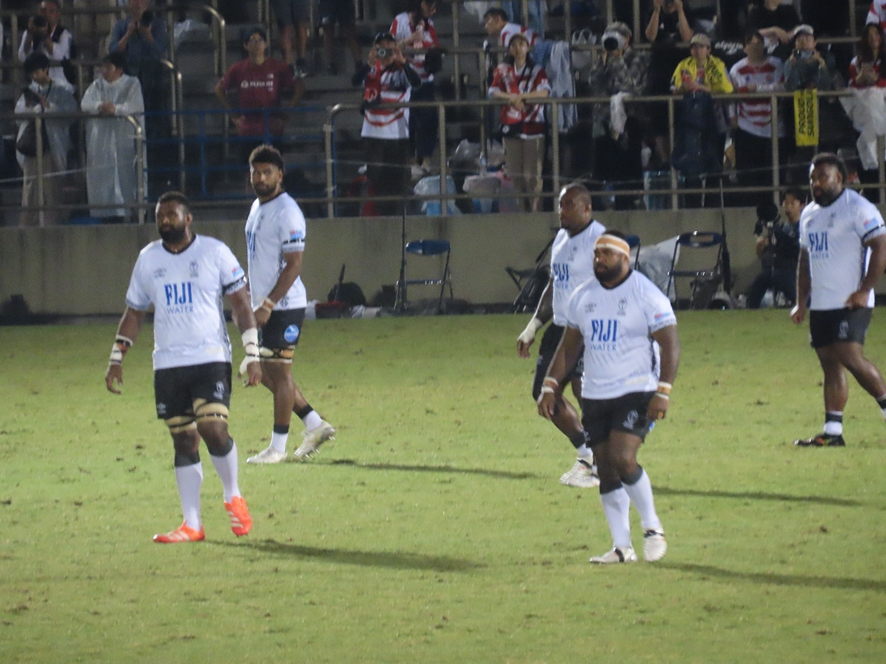
Ranked 8th in the world. They advanced to the knockout stage of the 2023 Rugby World Cup but were eliminated in the quarterfinals.
Their starting lineup for today’s match was as follows:
| Fiji | ||||||
| No. | Name | height | weight | age | Club | Fiji Caps |
| 1 | Peni RAVAI | 185cm | 118kg | 36 | Fijian Drua | 50 |
| 2 | Tevita IKANIVERE | 183cm | 113kg | 27 | HEAT HONDA | 23 |
| 3 | Mesake DOGE | 178cm | 122kg | 33 | Fijian Drua | 17 |
| 4 | Mesake VOCEVOCE | 197cm | 106kg | 23 | Fijian Drua | 13 |
| 5 | Temo MAYANAVANUA | 197cm | 120kg | 28 | Fijian Drua | 23 |
| 6 | Kitione SALAWA | 192cm | 99kg | 25 | Fijian Drua | 13 |
| 7 | Motikai MURRAY | 185cm | 92kg | 23 | Fijian Drua | 0 |
| 8 | Elia CANAKAIVATA | 185cm | 104kg | 30 | Sale Sharks | 0 |
| 9 | Frank LOMANI | 180cm | 81kg | 30 | Fijian Drua | 16 |
| 10 | Caleb MUNTZ | 175cm | 87kg | 26 | Fijian Drua | 14 |
| 11 | Isaac RATUMAITAVUKI-KNEEPKENS | 187cm | 94kg | 27 | Fijian Drua | 20 |
| 12 | Tuidraki SAMUSAMUVODRE | 185cm | 80kg | 28 | Fijian Drua | 2 |
| 13 | Virimi VAKATAWA | 186cm | 99kg | 26 | Fijian Drua | 1 |
| 14 | Joji NASOVA | 185cm | 92kg | 27 | Fijian Drua | 3 |
| 15 | Isaiah ARMSTRONG-RAVULA | 175cm | 86kg | 22 | Fijian Drua | 20 |
Thirteen of the 15 starters belong to the same club (Fijian Drua). This is a major strength when it comes to on-field chemistry. Fiji’s recent rise is largely due to the fact that Fijian Drua—which is essentially the Fijian national team—is able to play numerous high-intensity matches in Super Rugby, the world’s strongest league.
A defining characteristic of the Fijian team is the running ability of both forwards and backs to cover the entire field; their offensive prowess—linking passes to score tries whenever they find gaps in the defense—is arguably the best in the world. On the other hand, while they have historically struggled with set pieces such as scrums and lineouts, they are gradually improving through the experience gained in Super Rugby.
** Player to Watch **
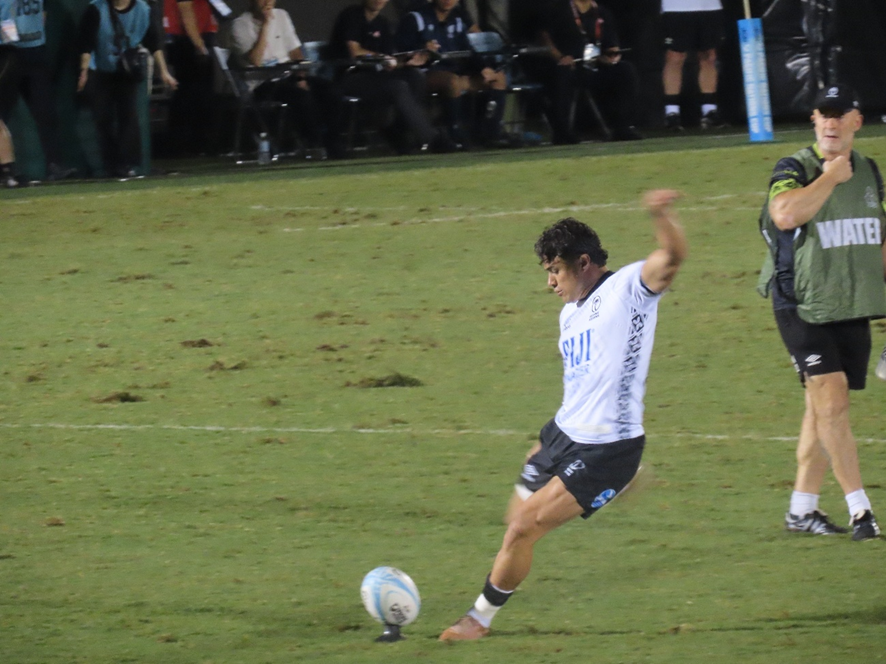
Caleb MUNTZ. 175 cm, 87 kg, 26 years old. Position: SO, FB. Club: Fijian Drua. Fiji national team caps: 14. He was selected for various age-group Fiji national teams and made his professional debut in 2019.
He made his debut for the Fijian national team in the 2023 match against Tonga.
Additionally, at the age of 23, he played as a fly-half in the 2023 Test match against England, scoring 15 points and contributing to a historic victory; however, he suffered a knee injury during that match and was unable to participate in the 2023 Rugby World Cup.
As he reaches his prime as a player, he is expected to shine at the upcoming 2027 Rugby World Cup.
Next, here is an introduction to the home team, the Japanese national team, the Brave Blossoms.
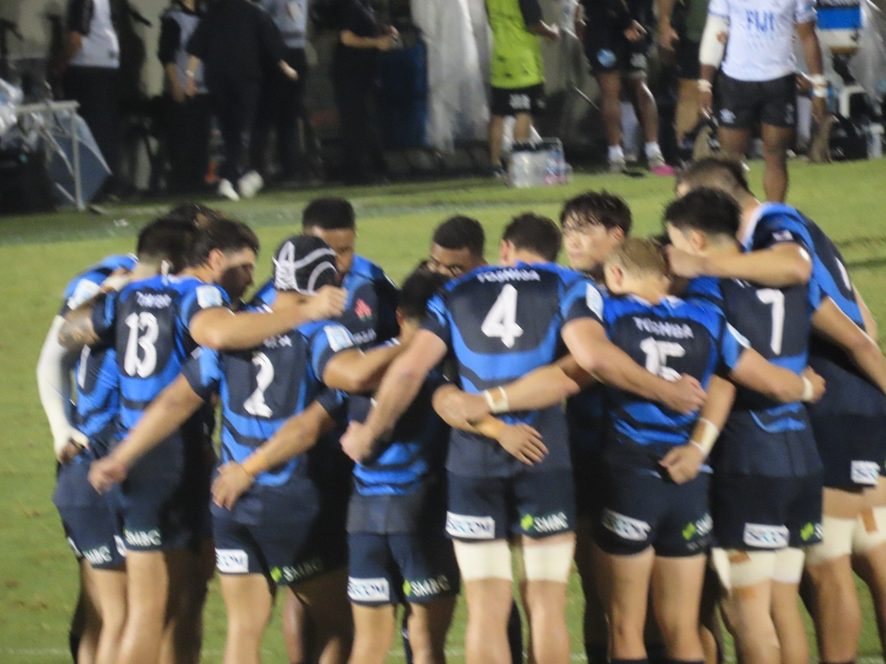
Ranked 12th in the world. At the 2023 Rugby World Cup, they finished with a 2-2 record in the pool stage and were eliminated in the group stage. Their record in Test matches this season so far stands at 3 wins and 5 losses, and
Ranked 12th in the world. At the 2023 Rugby World Cup, they finished with a 2-2 record in the qualifying pool and were eliminated in that stage. So far this season, their test match record stands at 3 wins and 5 losses, with more losses than wins.
The starting lineup for this day’s match was as follows.
| Brave Blossoms | ||||||
| No. | Name | height | weight | age | Club | Japan Caps |
| 1 | Sojiro OTSUKA | 178cm | 110kg | 22 | Kansei Gakuin Univ. | 5 |
| 2 | Mamoru HARADA | 175cm | 101kg | 27 | Brave Lupas | 12 |
| 3 | Shuhei TAKEUTI | 183cm | 115kg | 28 | Sungoliath | 25 |
| 4 | Jack CORNELSEN | 195cm | 110kg | 31 | Wildknights | 31 |
| 5 | Harry HOCKINGS | 208cm | 124kg | 27 | Sungoliath | 3 |
| 6 | Ben GUNTER | 195m | 120kg | 28 | Wildknights | 20 |
| 7 | Kanji SHIMOKAWA | 188m | 105kg | 27 | Sungoliath | 24 |
| 8 | Faulua MAKISI | 187cm | 112kg | 29 | Spears | 24 |
| 9 | Naoto SAITO | 165cm | 73kg | 28 | Stade Toulousain | 31 |
| 10 | Ryunosuke ITO | 172cm | 77kg | 21 | Meiji University | 3 |
| 11 | Tomoki OSADA | 179cm | 90kg | 26 | Wildknights | 25 |
| 12 | Yuya HIROSE | 181cm | 92kg | 25 | Spears | 5 |
| 13 | Dylan RILEY | 187cm | 102kg | 29 | Wildknights | 41 |
| 14 | Inoke BURUA | 178cm | 95kg | 27 | Steelers | 1 |
| 15 | Sam GREENE | 177cm | 86kg | 32 | Blue Revs | 5 |
With each match, the Brave Blossoms’ forwards seem to be overcoming the team’s weaknesses in set pieces, showing signs of improvement heading into the 2027 Rugby World Cup. On the other hand, however, the backs have shown no signs of growth. In particular, regarding the back 3—the 2 wingers and the fullback—their inability to secure high balls, a recurring weakness, is highlighted in every match, yet no progress is evident. Furthermore, the wingers not only lack the decisiveness to score after receiving the ball but also commit far too many handling errors when catching it. Head Coach Eddie Jones has also pointed out a shortage of talent at the wing position. With only 377 days remaining until the RWC 2027, will they be ready in time?
** Player to Watch **
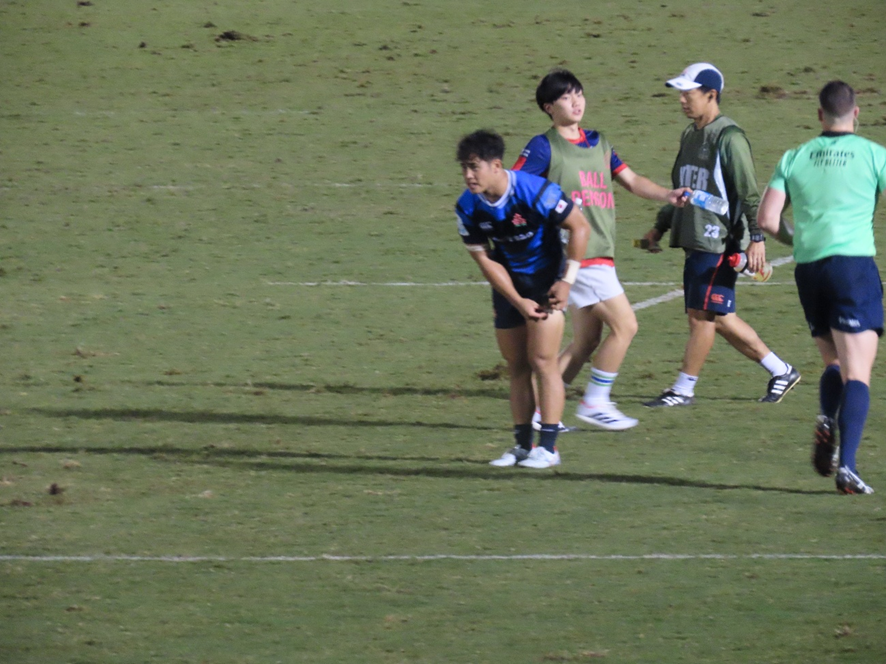
Ryunosuke ITO. 172 cm, 77 kg, 21 years old. Position: SO. Senior at Meiji University. LEE, who had been the starting SO until last season, underwent surgery and will be unable to play this season. ITO, a college student, was selected as his replacement, and so far, he has started 8 consecutive matches, demonstrating playmaking skills every bit as good as LEE’s. The only area where he falls short is consistency as a place-kicker, but ideally, I’d like to see him used in that role in future matches as well. ITO also excels at communicating with his backline teammates, and his rapport with scrum-half SAITO, in particular, has grown stronger. Looking ahead to the 2027 Rugby World Cup, Head Coach Eddie Jones faces the “luxury” of having to choose between LEE and ITO.
And now, the first half begins.
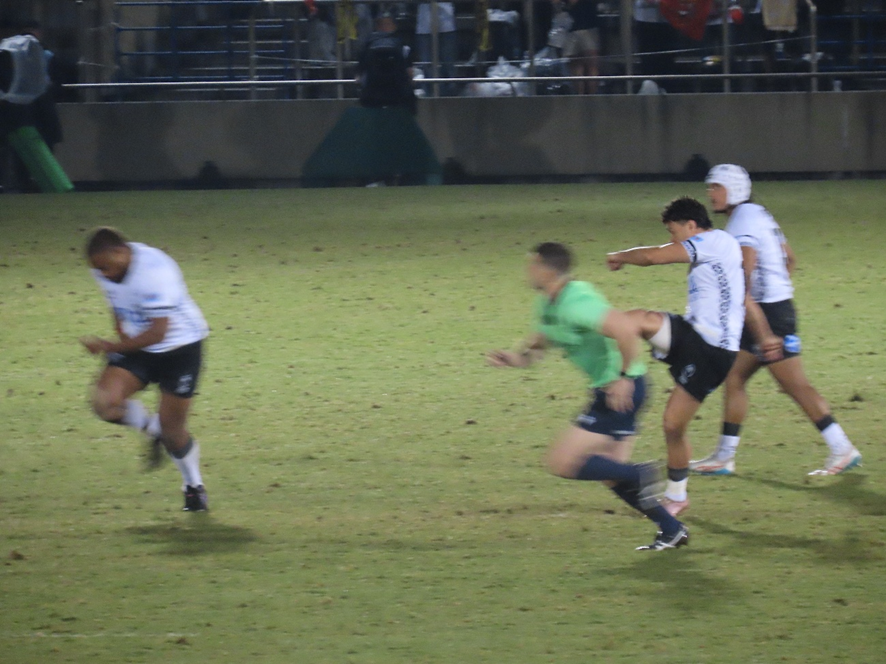
The match began with a kickoff by Fiji.
7 minutes into the first half:
The Brave Blossoms pushed the opposition back in the first scrum of the match, which took place deep in the opponent’s territory.
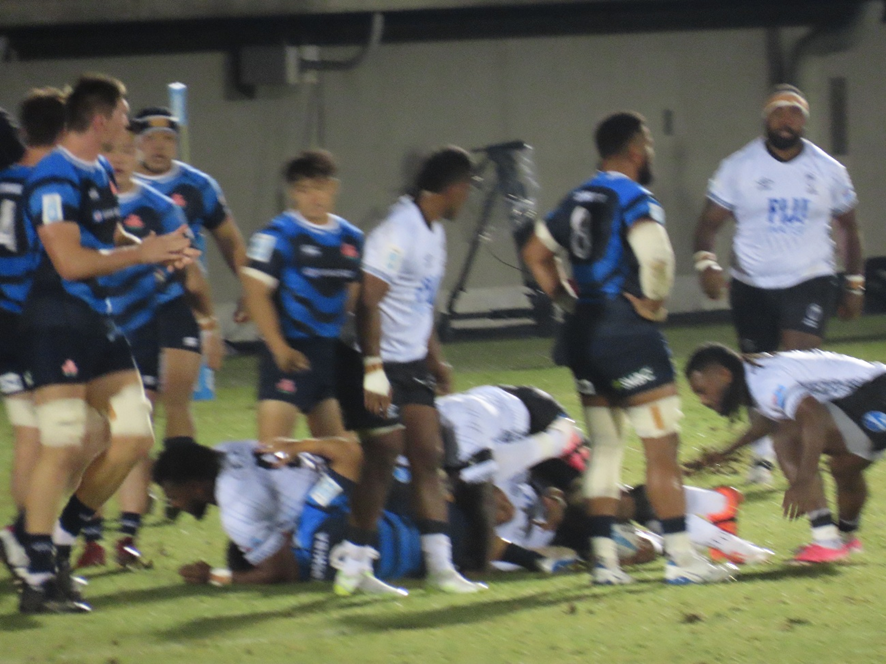
As the Brave Blossoms advanced deep into Fiji’s territory, Fiji committed a foul. The Brave Blossoms opted for a penalty kick.
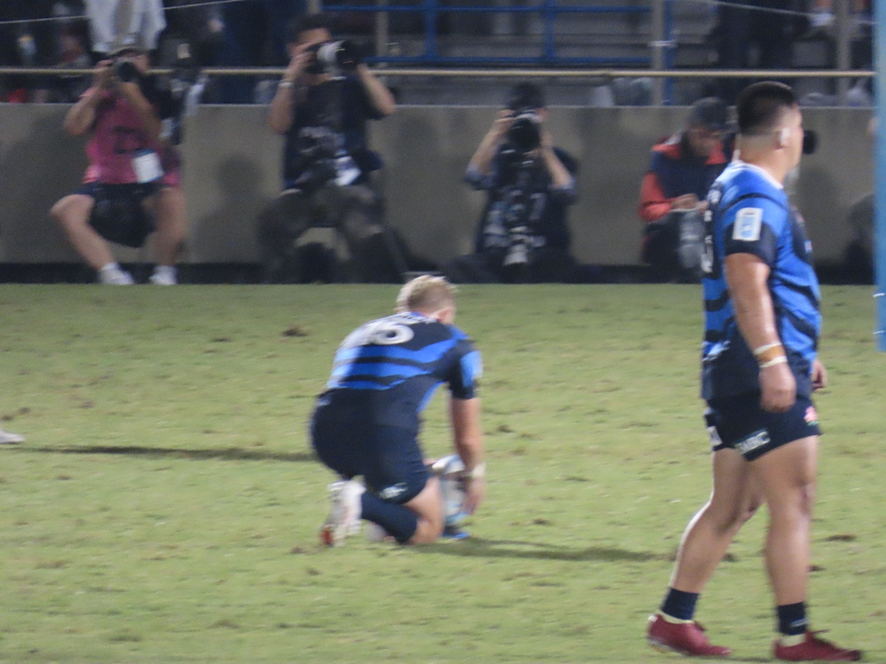
Fullback Greene converted the penalty kick, taken almost directly in front of the goalposts, giving the Brave Blossoms the early lead. The score was 0–3.
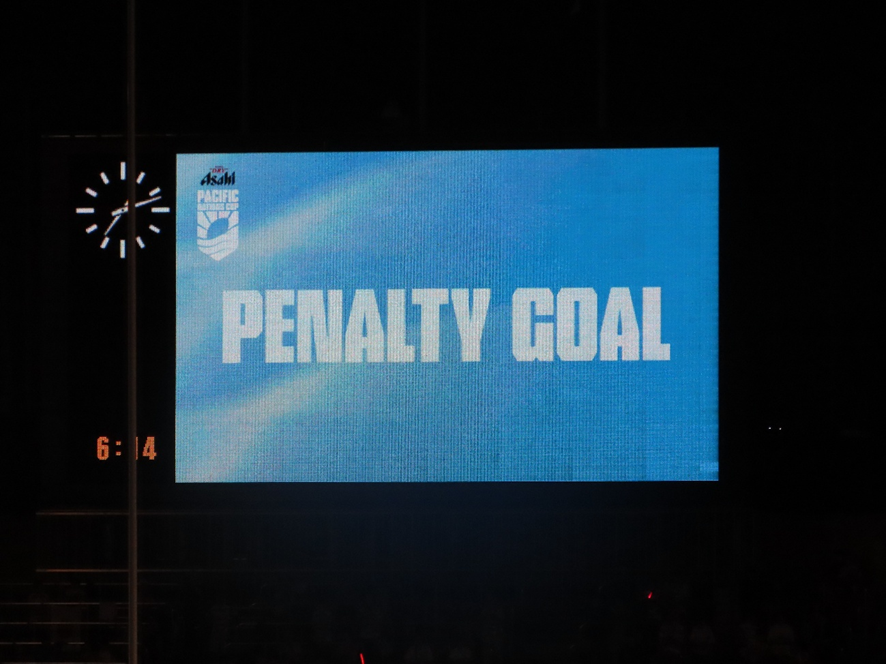
11 minutes into the first half:
Fiji advanced deep into the opponent’s territory following a mistake by the Brave Blossoms. Building from a scrum with possession, center VAKATAWA—standing 185 cm tall and weighing 100 kg—demonstrated his formidable physical strength by dragging 4 defenders with him as he forcefully scored a try in the middle-right corner of the opponent’s in-goal area. It appears Fiji’s offensive strategy was to exploit the fact that the Brave Blossoms’ scrum-half and fly-half are both smaller players, believing they could break through more easily by targeting that area.
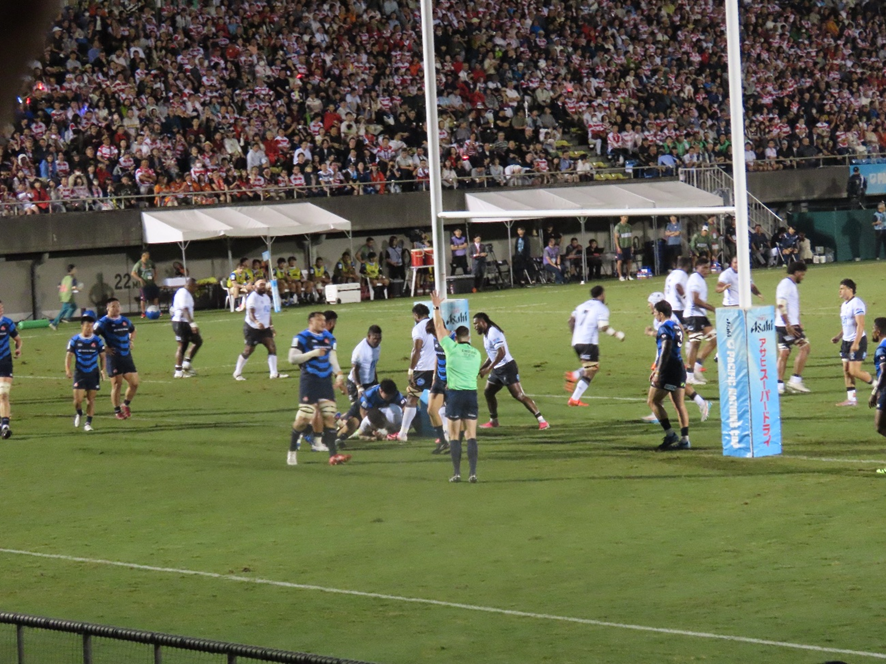
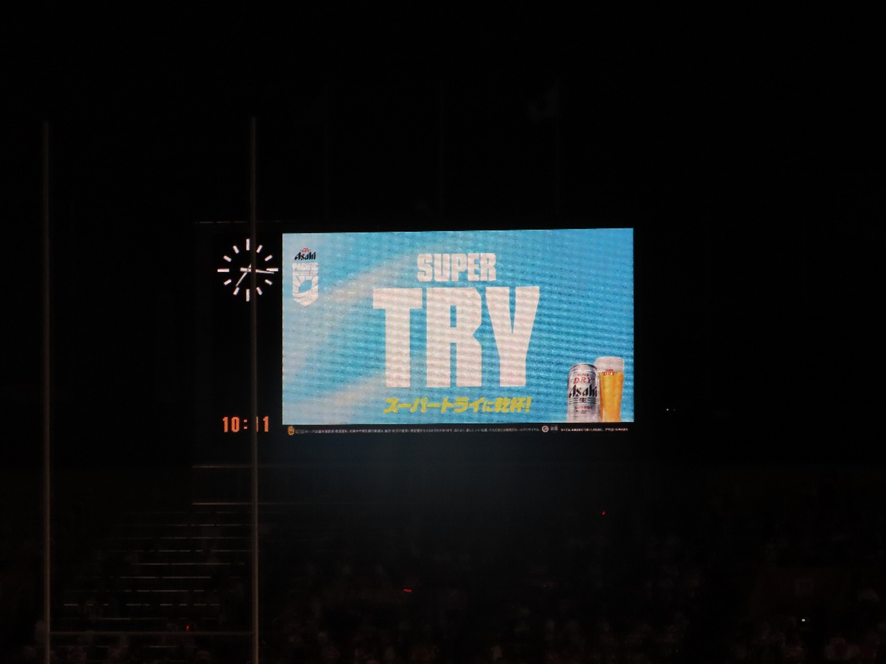
The conversion kick after the try was also successful, bringing the score to 7–3.
15 minutes into the first half:
The Brave Blossoms entered the opponent’s half, formed a scrum, and pushed it forward, forcing the opponent into a penalty. At this point, the Brave Blossoms again opted for a penalty kick. The kick was taken from a position slightly to the left of the goalposts.
However, this penalty kick was missed.
22 minutes into the first half:
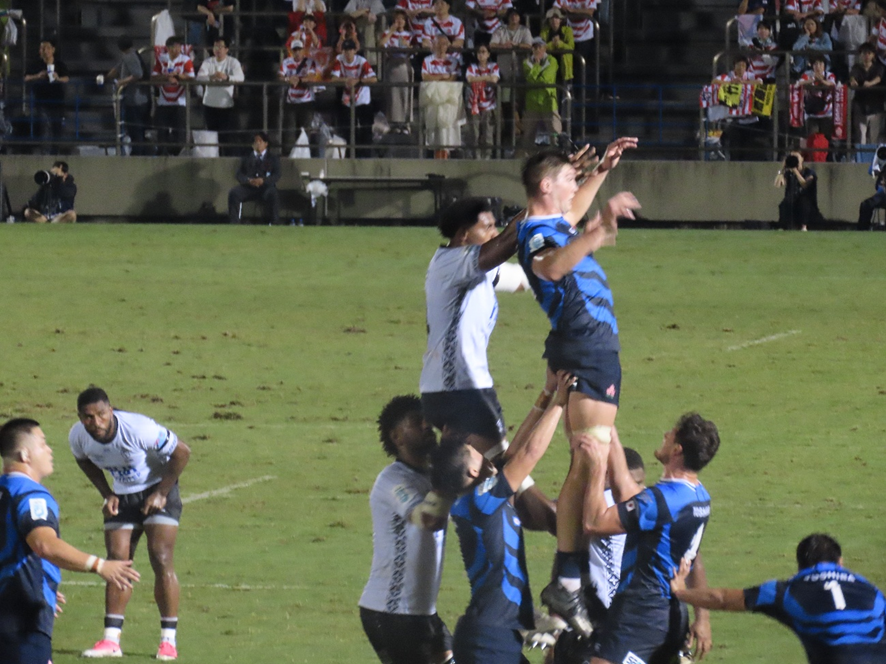
Following a Fijian foul, the Brave Blossoms advanced deep into the opponent’s territory and secured a lineout on their own side near the opponent’s 22-meter line on the right flank.
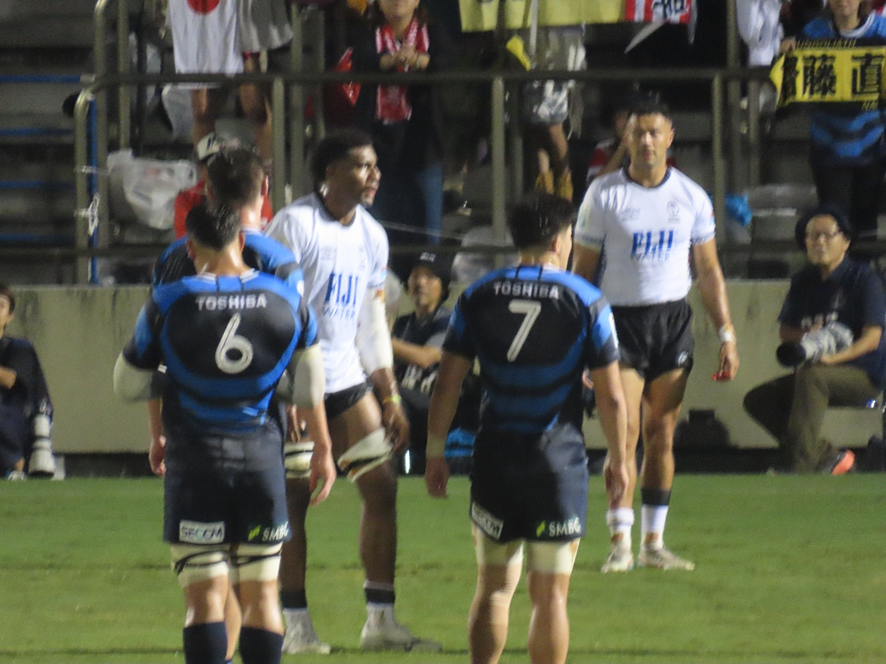
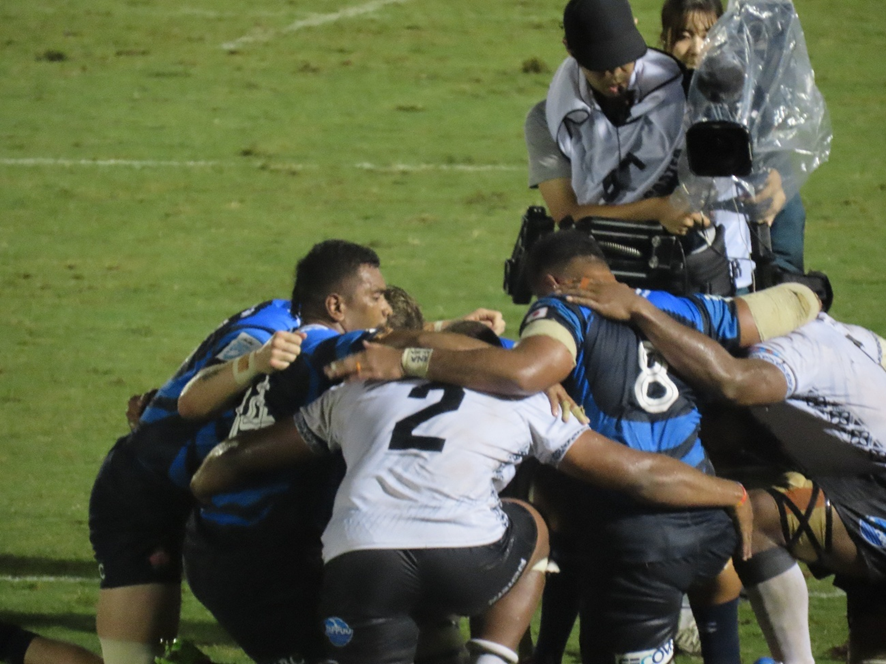
At this point, the Brave Blossoms secured the ball and formed a maul to drive forward.
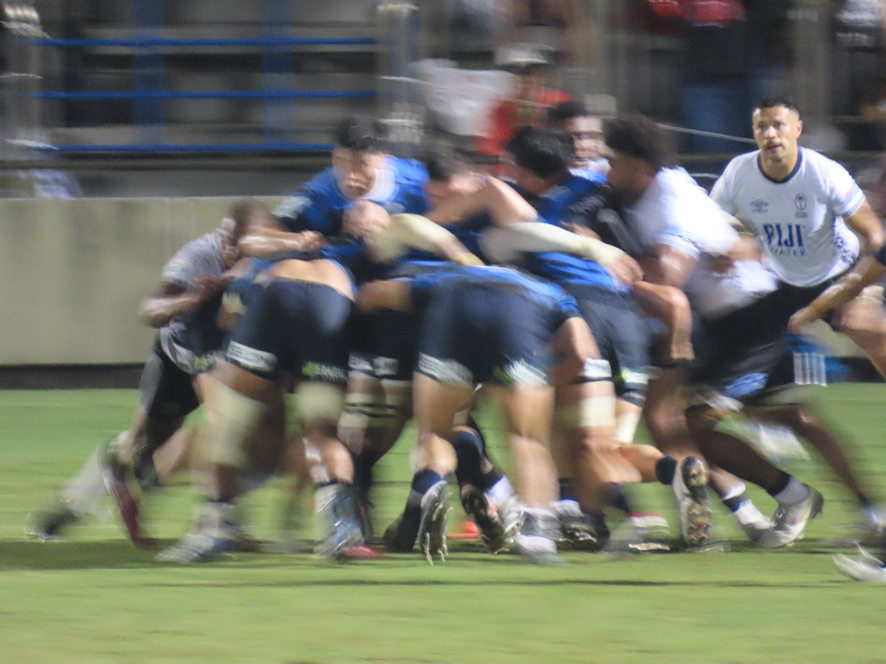
With this maul, the Brave Blossoms made a sudden surge forward and surged straight into the opponent’s in-goal area.
The try was scored by hooker HARADA.
Ever since struggling against France’s maul attacks in their August test match, the Brave Blossoms had been intensively practicing their own maul play. The results of that training were evident here.
The conversion kick following the try was also successful, bringing the score to 7–10 and giving the Brave Blossoms the lead.
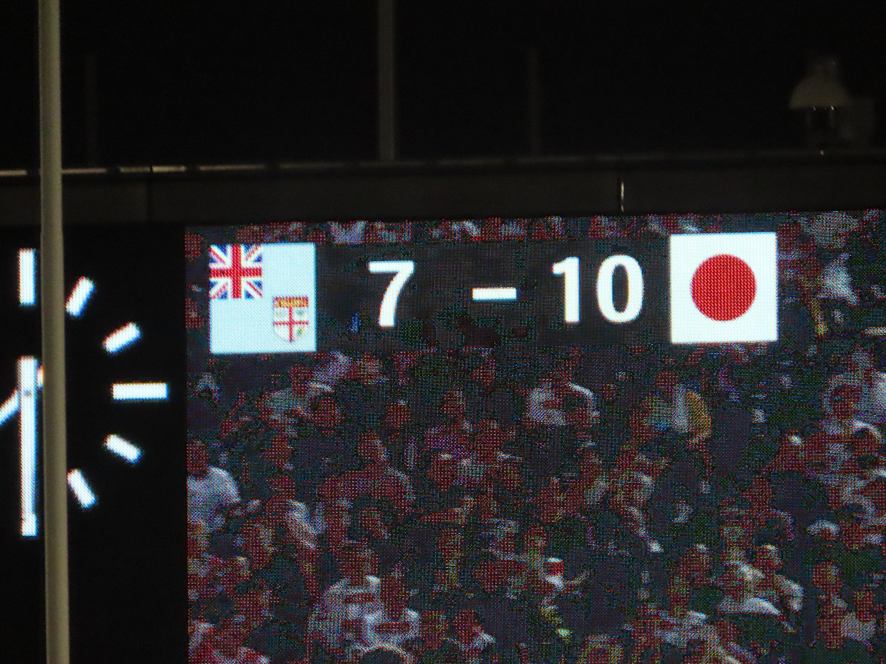
Up to this point, all of the Brave Blossoms’ points on the day had been scored by forward players.
27 minutes into the first half:
Fiji launched a counterattack here. Up to this point, Fiji had failed several times to secure the ball from their own lineouts. However, on this play, they threw the ball to a front-row player in the lineout, received a return pass from the hooker, broke through behind the defense, and hooker IKANIVERE scored a try in the left corner of the opponent’s in-goal area.
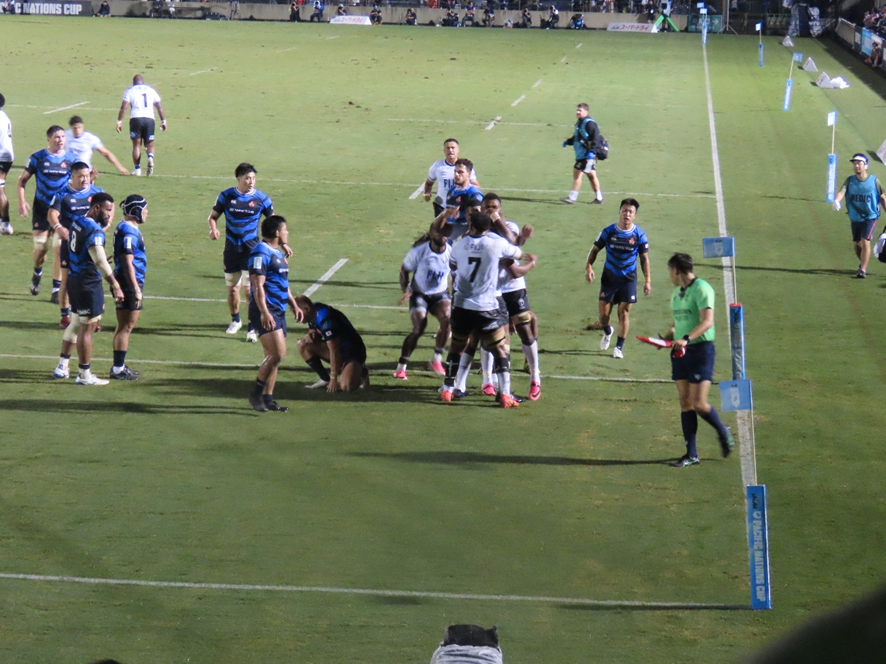
Although the conversion kick after the try was missed, the score stood at 12–10.
The first half ended with this score.
In this match, the Brave Blossoms demonstrated their strength in set pieces centered around the forwards, while Fiji showcased their strength in running plays driven by a full-team attack.
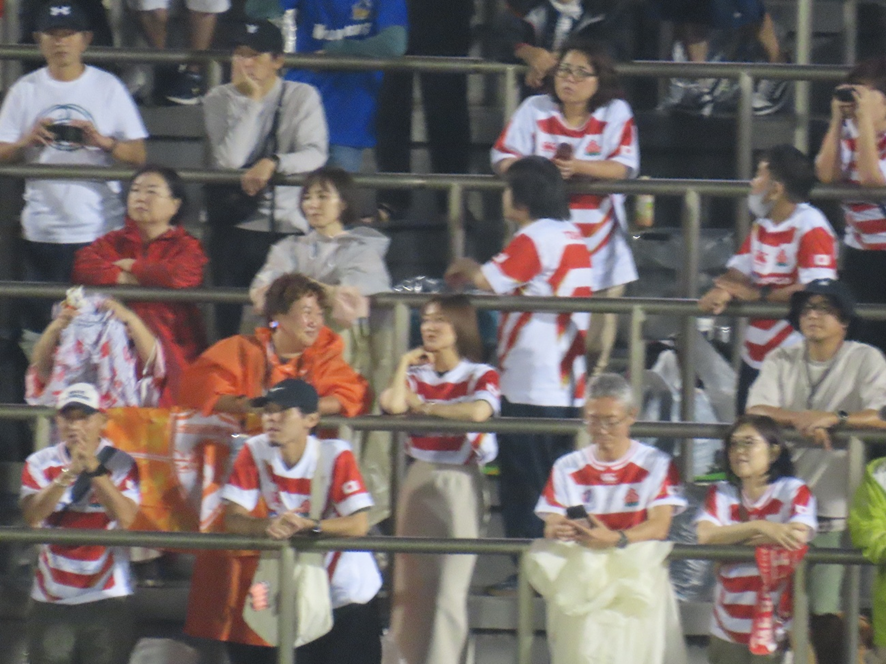
It will be interesting to see which team takes control of the game heading into the second half.
And now, the second half begins.
18 minutes into the second half:
In the second half, the Brave Blossoms pushed their dominant forwards to the front and advanced deep into the opponent’s territory. Near the opponent’s 22-meter line, the Brave Blossoms applied pressure in a scrum, forced a ruck, and drew a “not releasing the ball” penalty from the opponent.
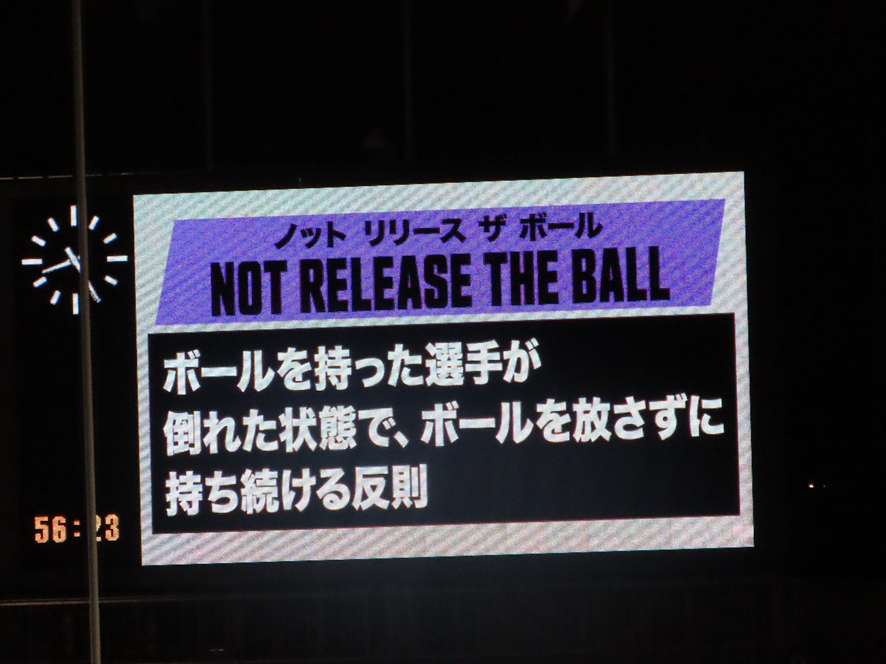
Seeing that the opponent’s scrum was weak, the Brave Blossoms opted for another scrum. From there, they launched a series of flanker attacks down the wings, culminating in a try by flanker GUNTER in the middle-right of the opponent’s in-goal area.
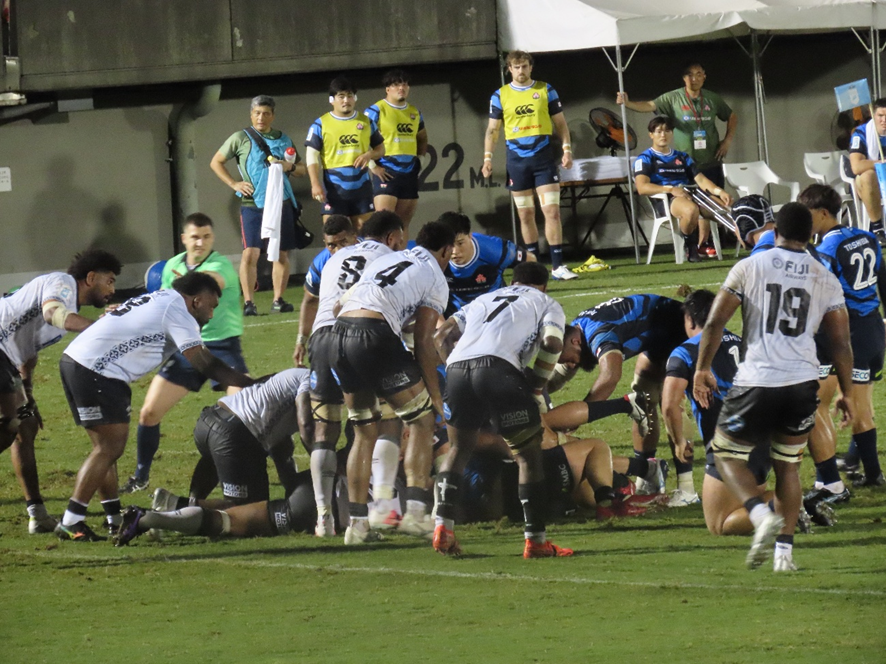
Although the conversion kick after the try was missed, the Brave Blossoms succeeded in overturning the score to 12–15.
25 minutes into the second half:
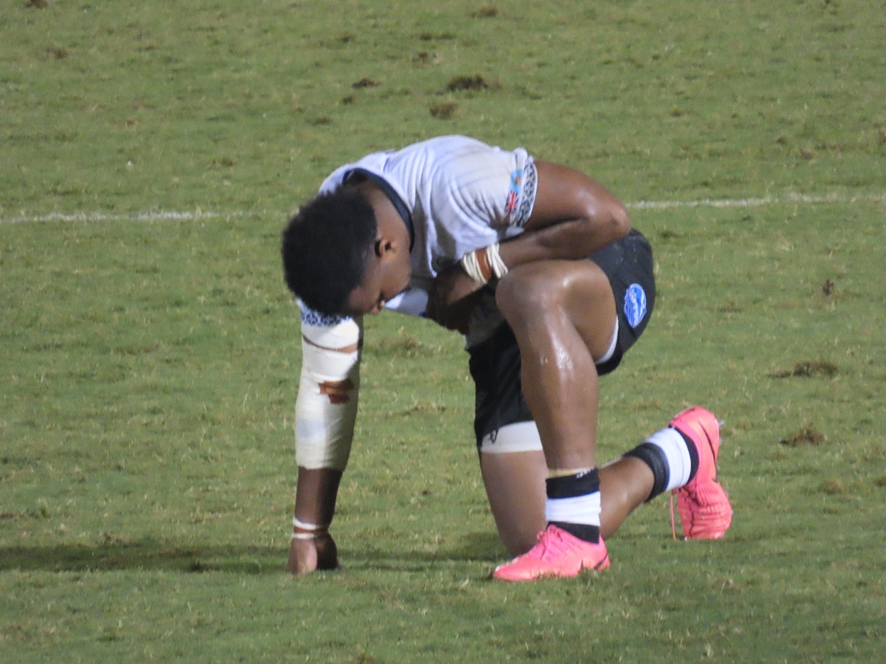
By this point, fatigue due to the high temperatures was becoming evident for both teams. Even when the Brave Blossoms tried to build plays, they struggled to string passes together, and handling errors were frequent.
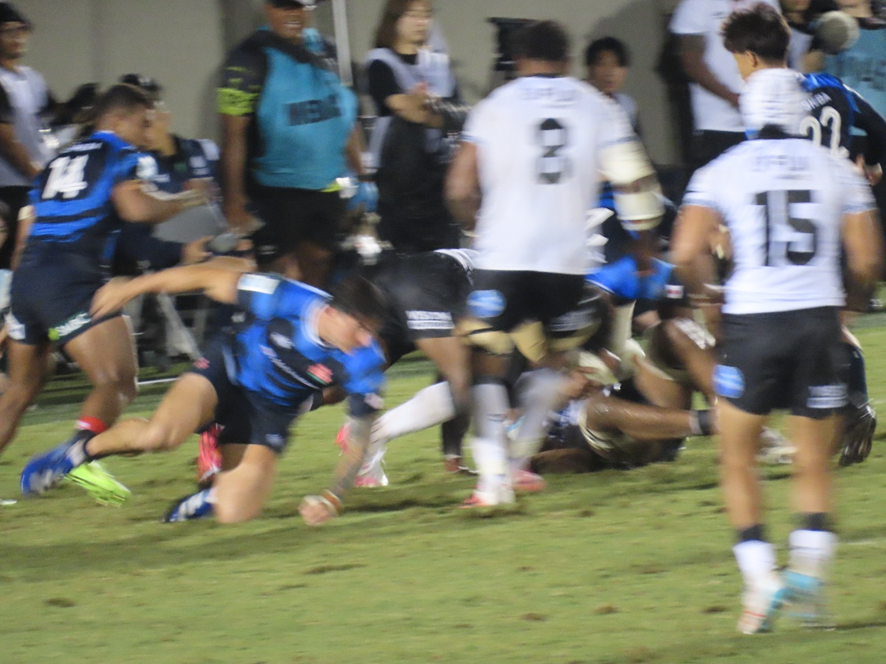
Amid these conditions, the Fijian team earned a penalty goal opportunity deep in the opponent’s half following a foul.
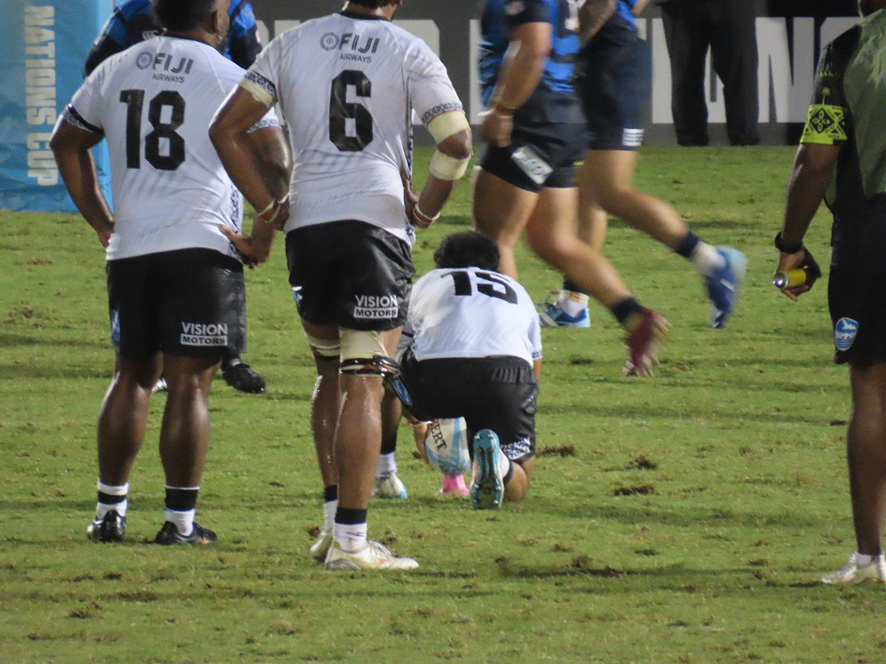
Fullback ARMSTRON-RAVULA converted the penalty goal, tying the score at 15–15.
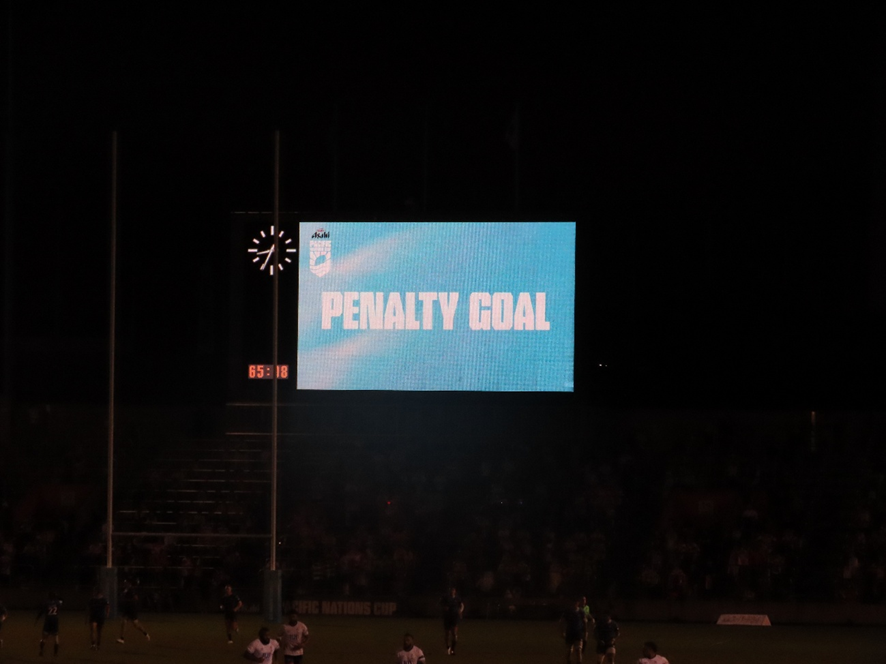
32 minutes into the second half:
With the score still tied, the match entered its final stages. It had reached a point where any mistake by either team could directly decide the outcome. Right from the kickoff following the restart, the Fiji team committed a penalty, allowing the Brave Blossoms to penetrate deep into their territory. From the lineout they won, the Brave Blossoms formed a maul, surged forward, and advanced deep into the opponent’s territory, reaching near the try line.
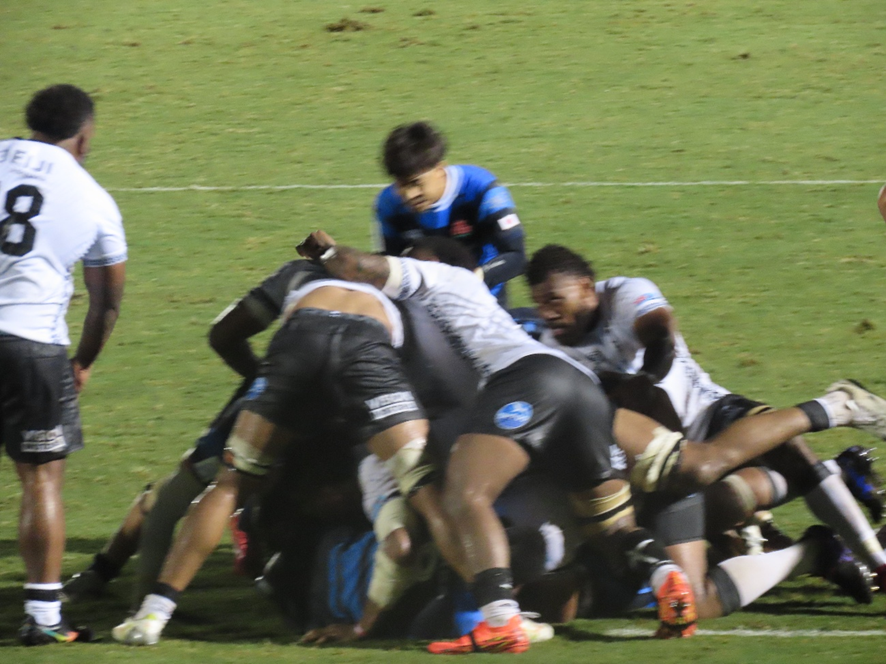
From there, the Brave Blossoms launched a flanking attack by their forwards, and substitute center TUA squeezed the ball into the left-center of the opponent’s in-goal area to score a try.
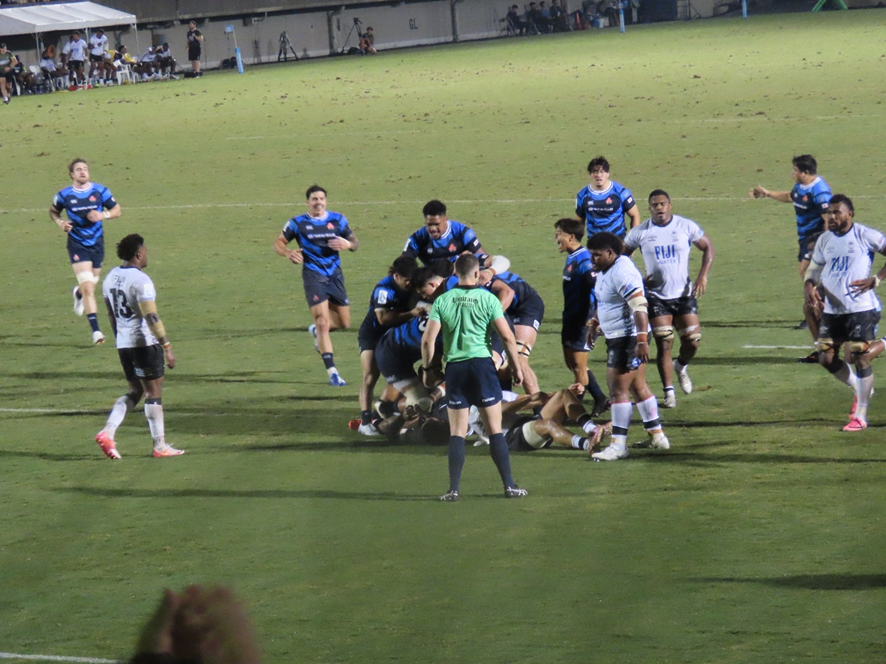

Although the conversion kick after the try was missed, the score became 20–15, and the Brave Blossoms regained the lead.
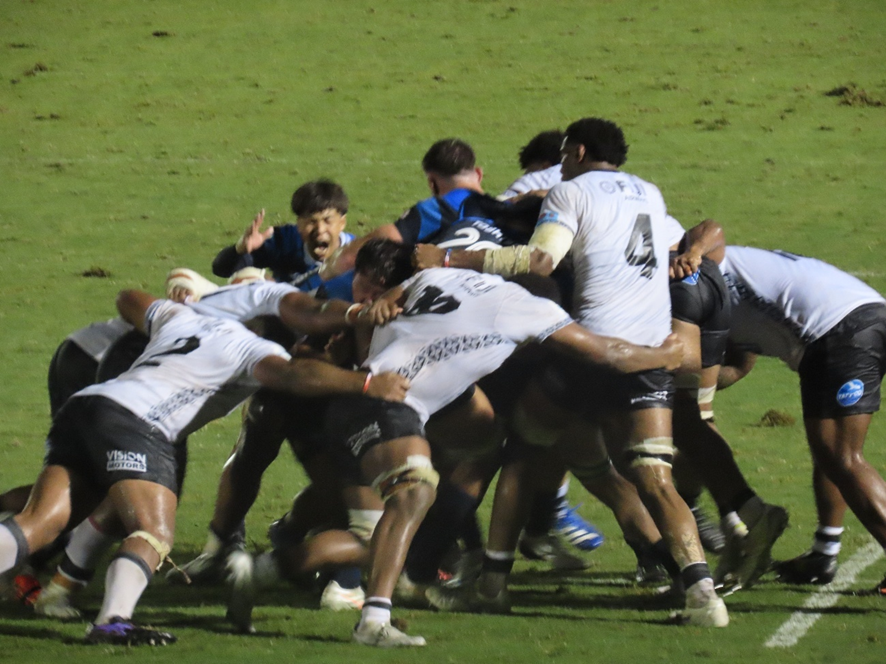
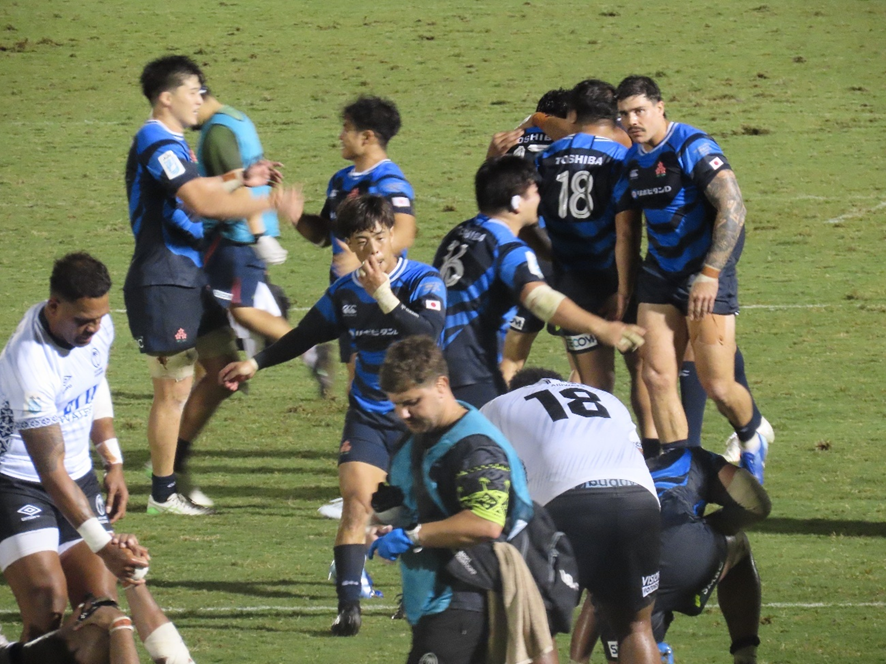
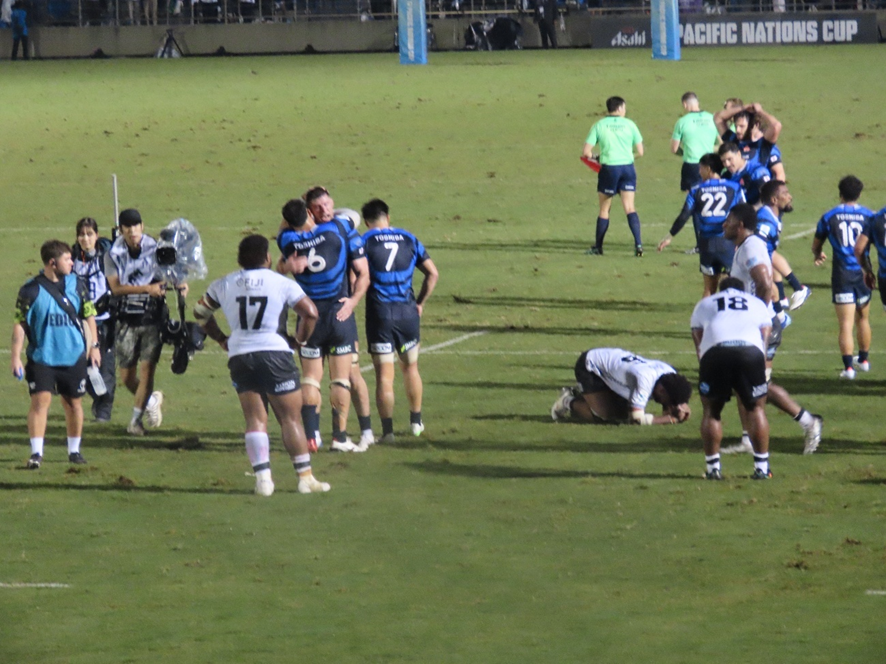
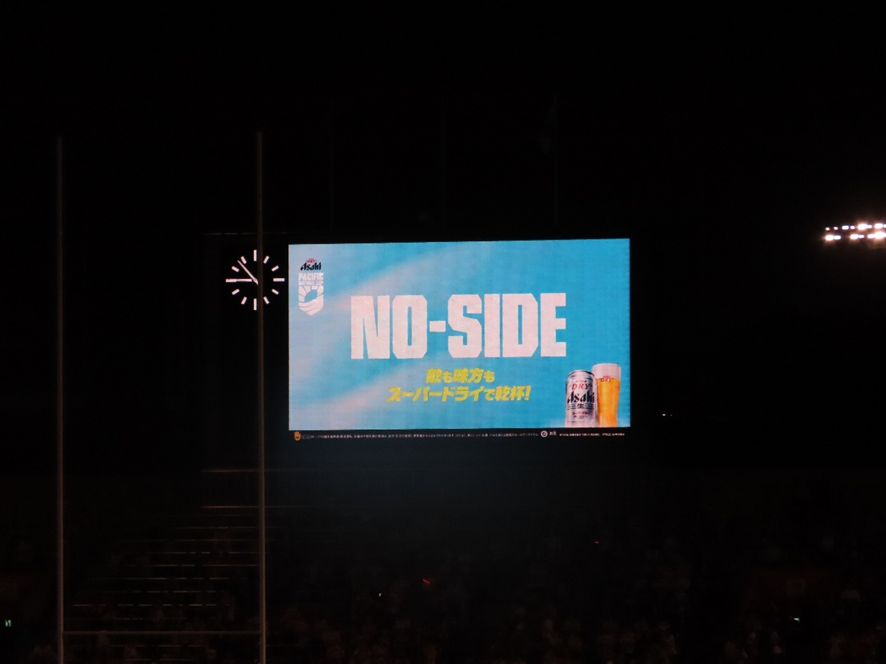
The score remained unchanged for the rest of the match, and the Brave Blossoms defeated Fiji—a team ranked higher than them in the world rankings—to clinch the Pacific Nations Cup title.
In this match, the Brave Blossoms were able to secure the victory in a close contest because their forwards maintained the upper hand throughout the game. However, one area of concern was that when the backs initiated plays, they were almost always shut down by the opposing defense and were unable to break through. Furthermore, they were largely unable to gain the upper hand in high-ball contests—a long-standing issue. With the 2027 Rugby World Cup on the horizon, there are many challenges ahead regarding how much they can strengthen and develop their backline.
**********************

Stop the war.
Peace to Ukraine
*************************