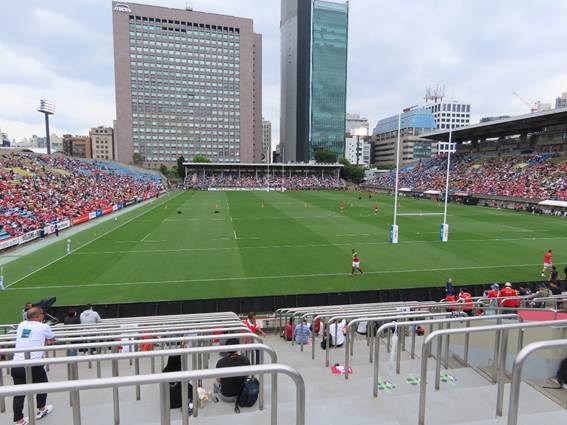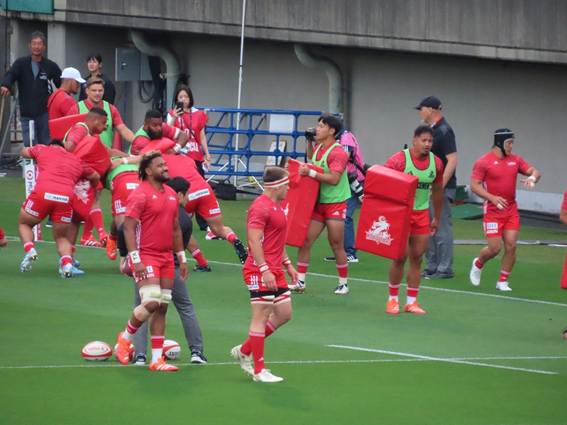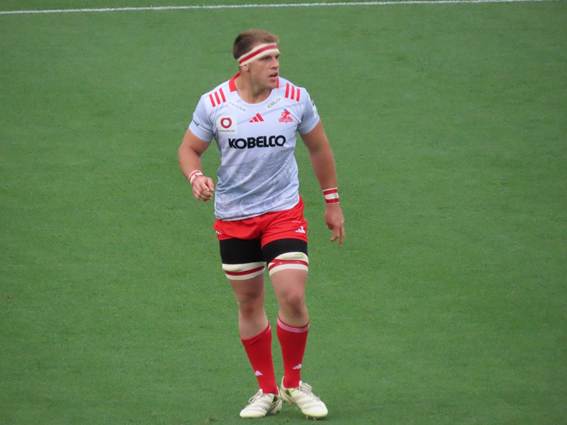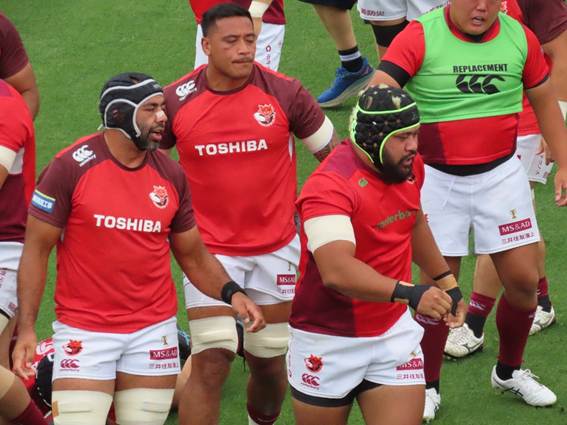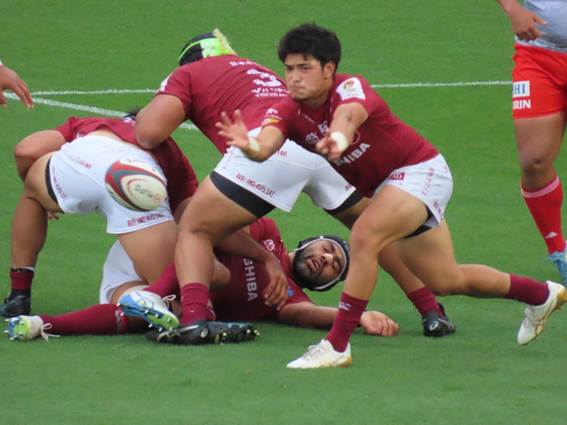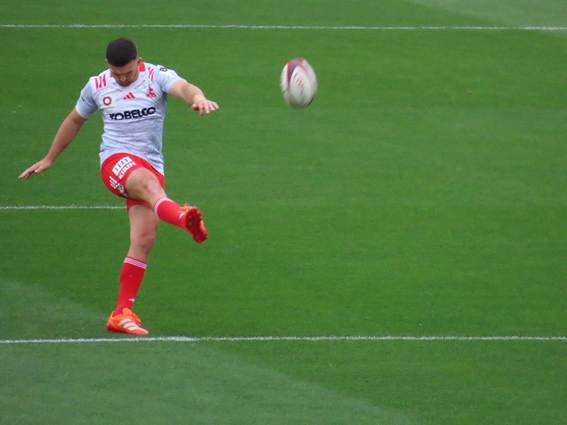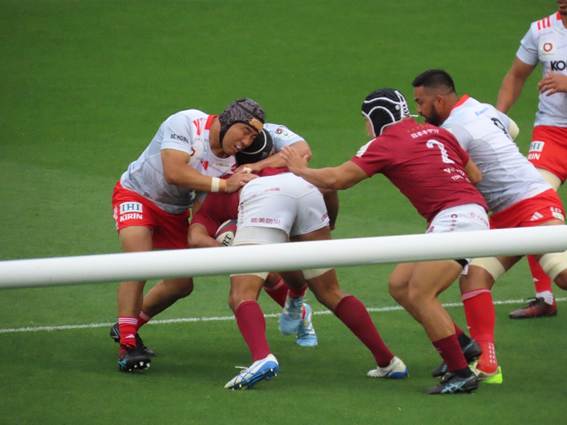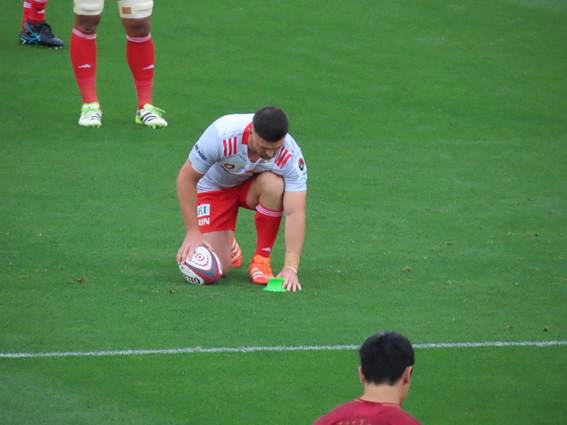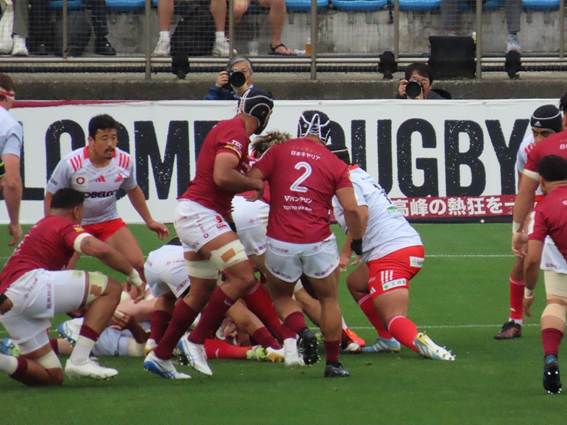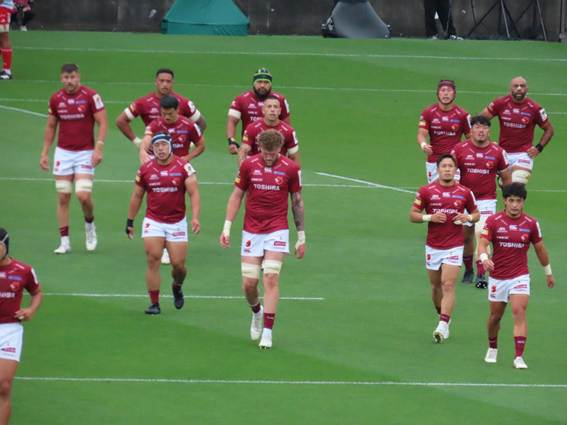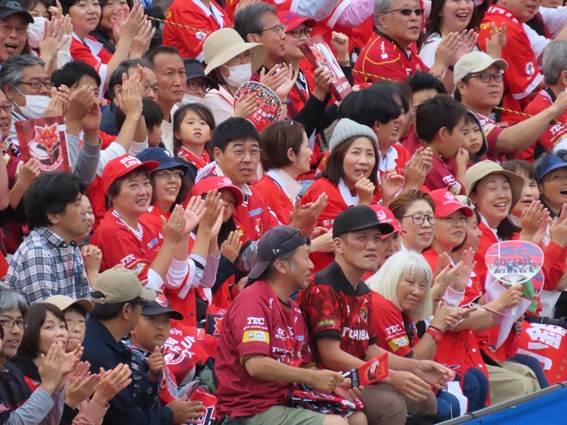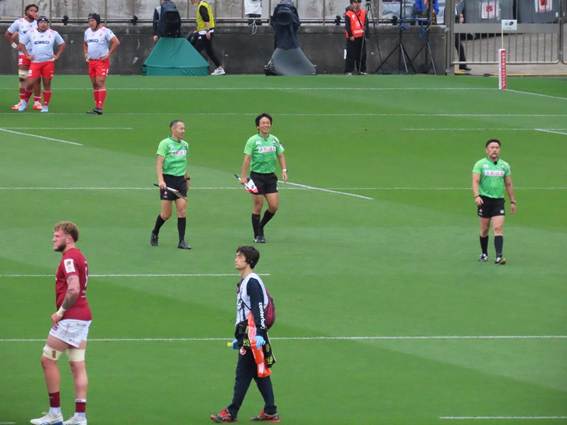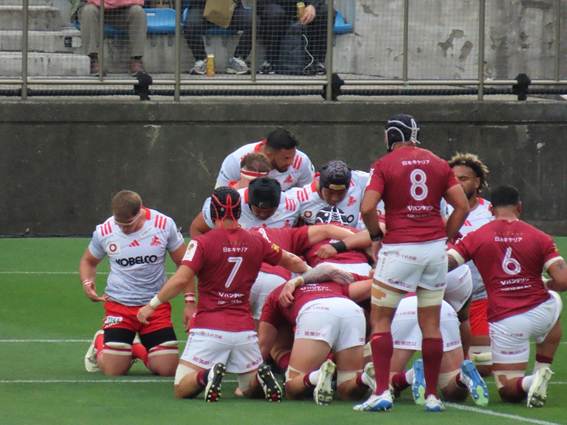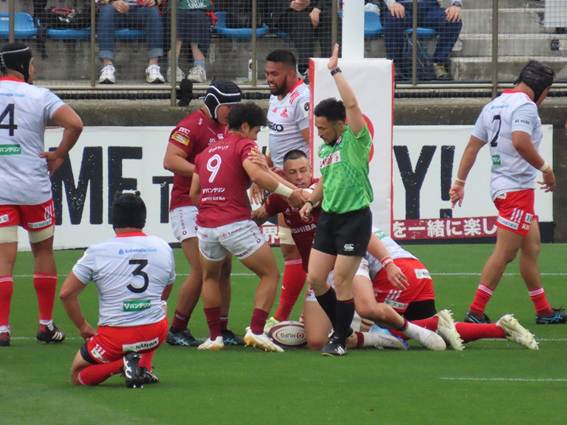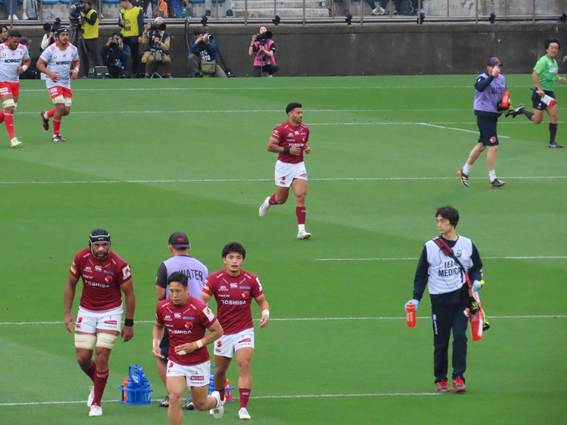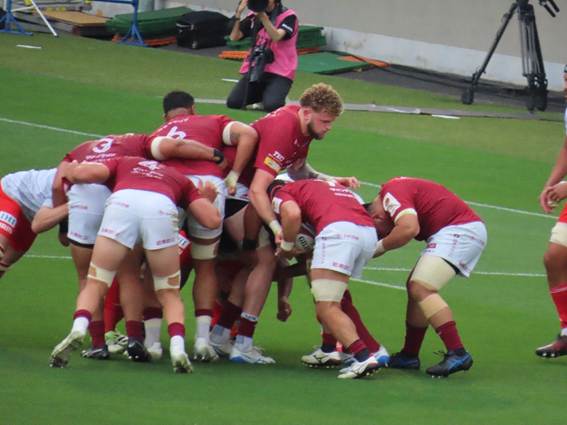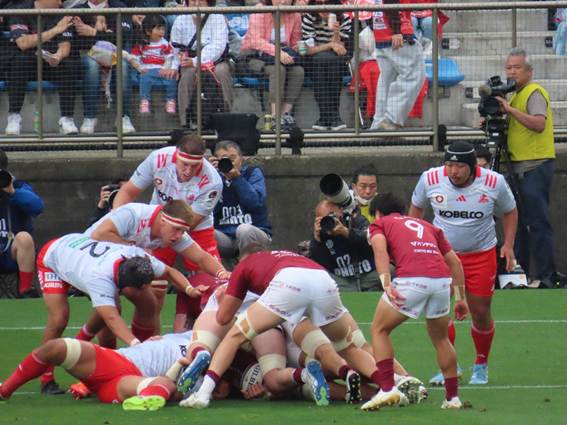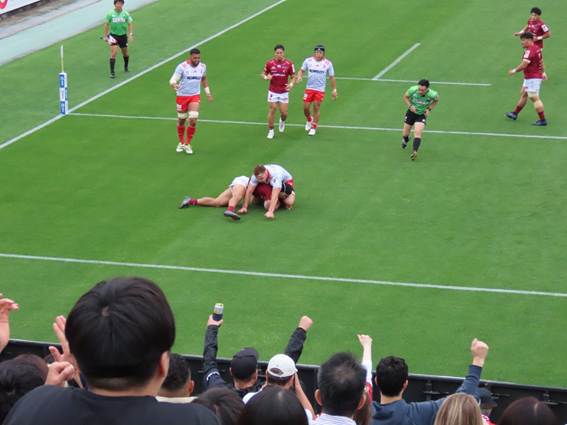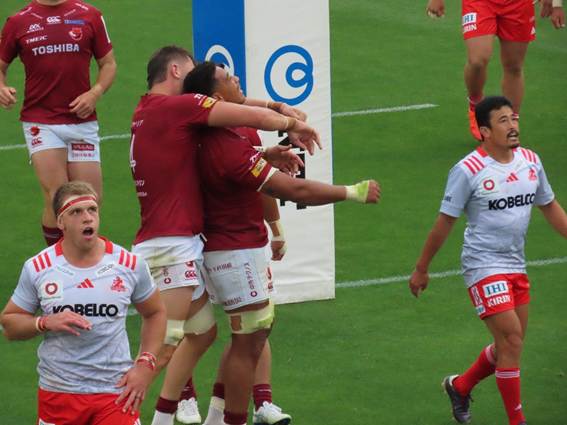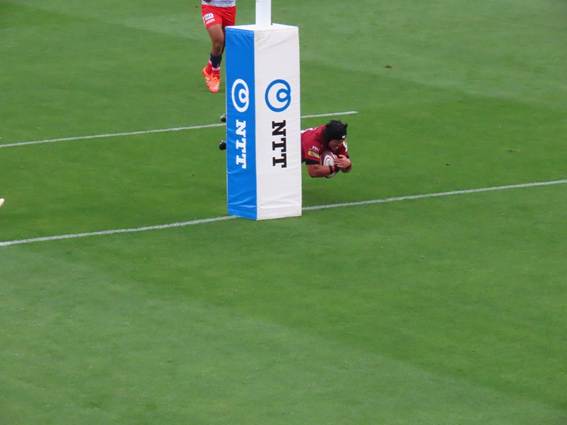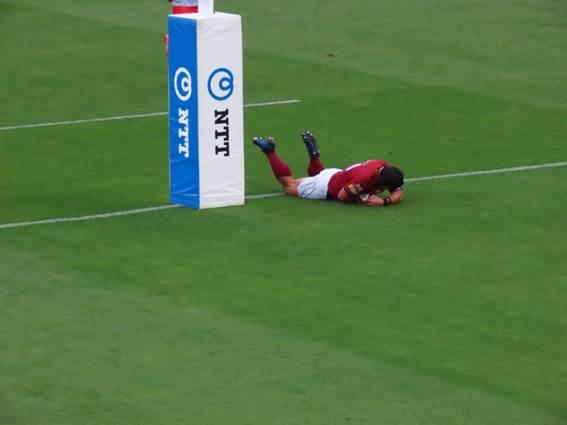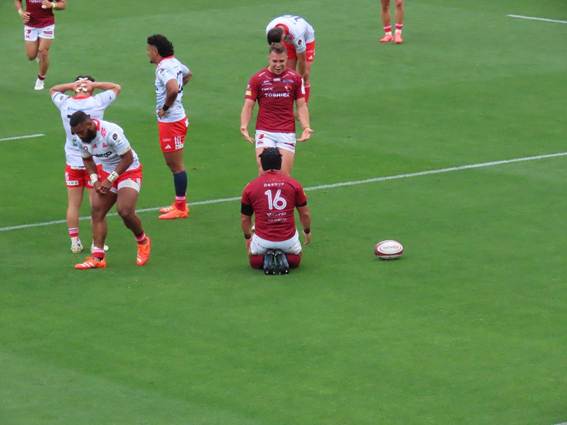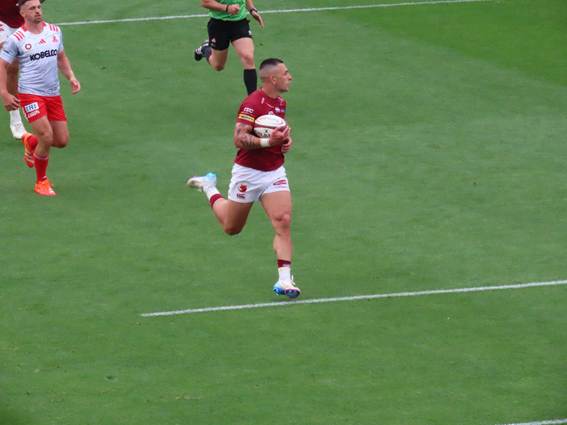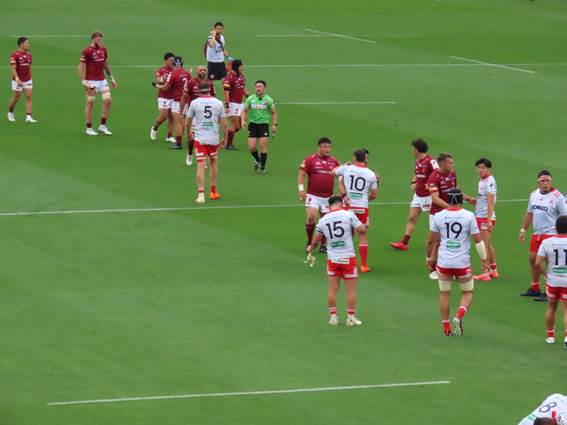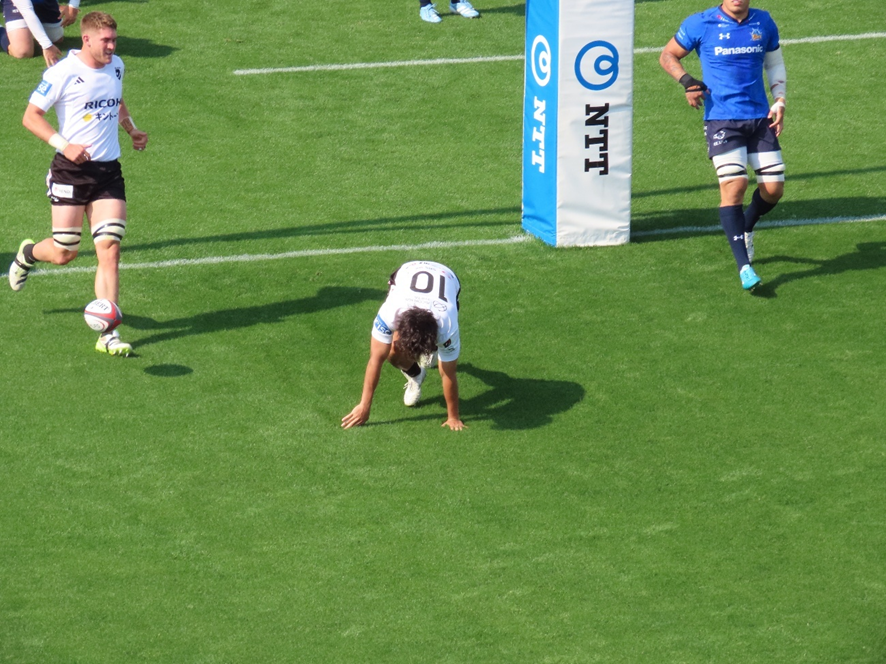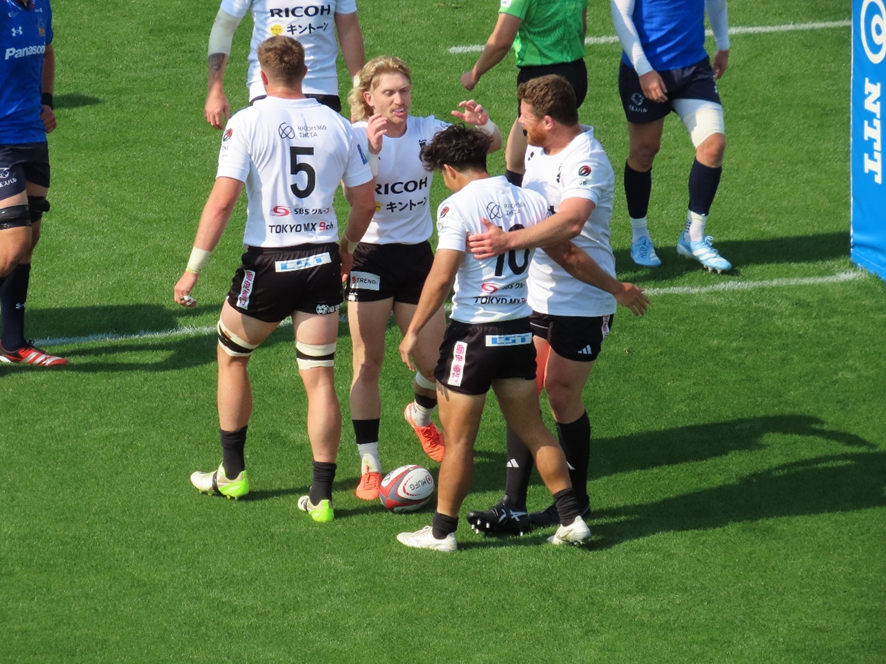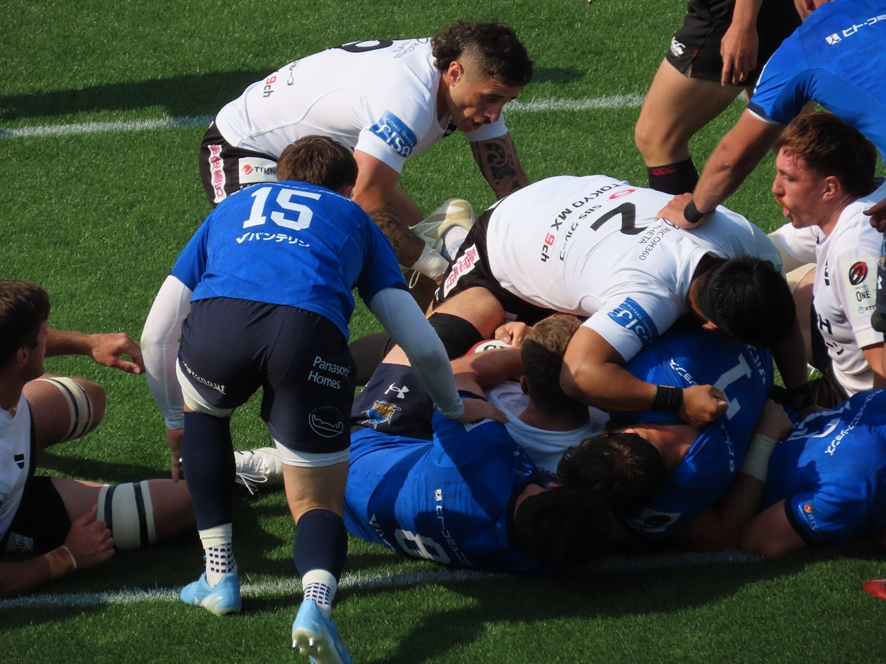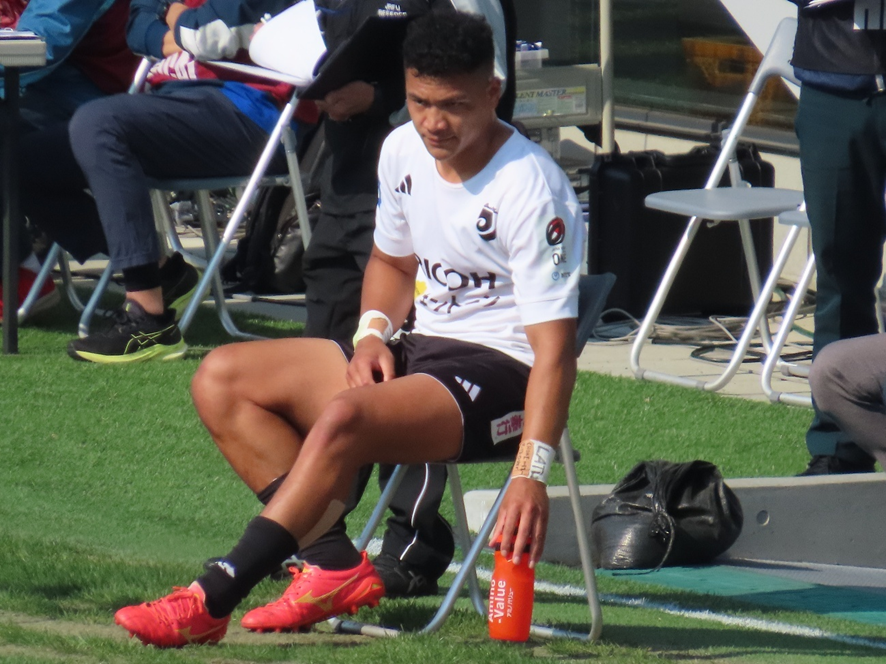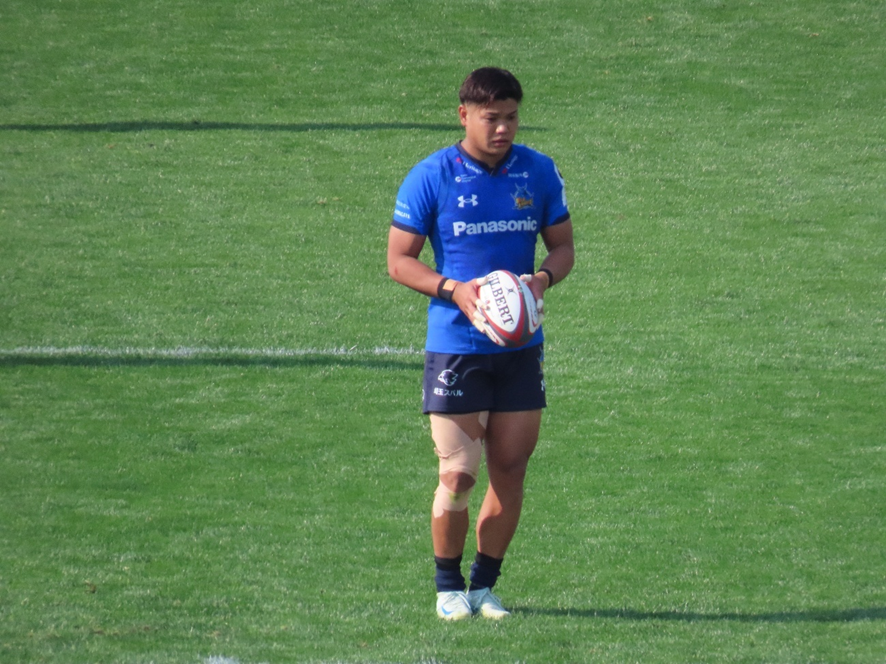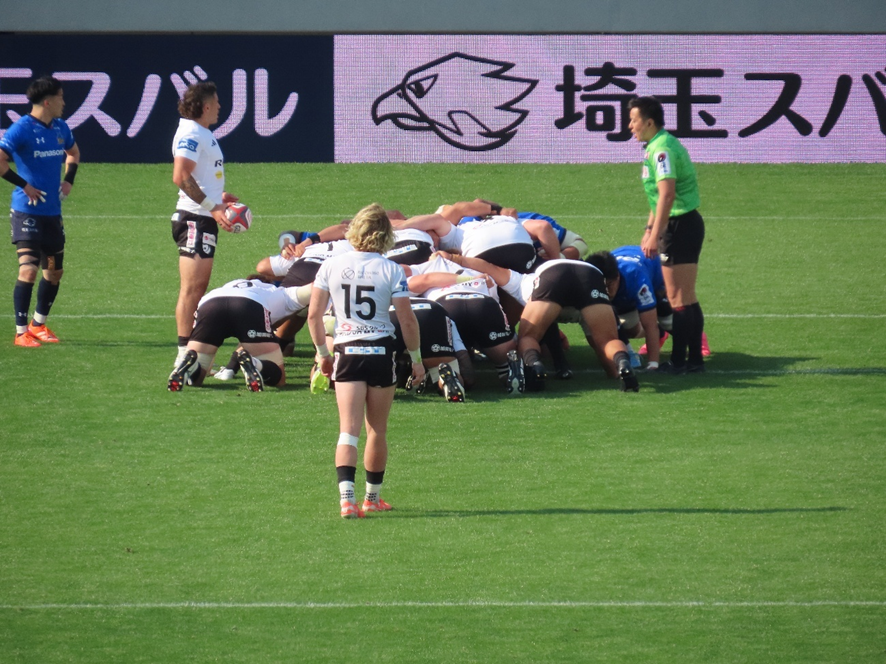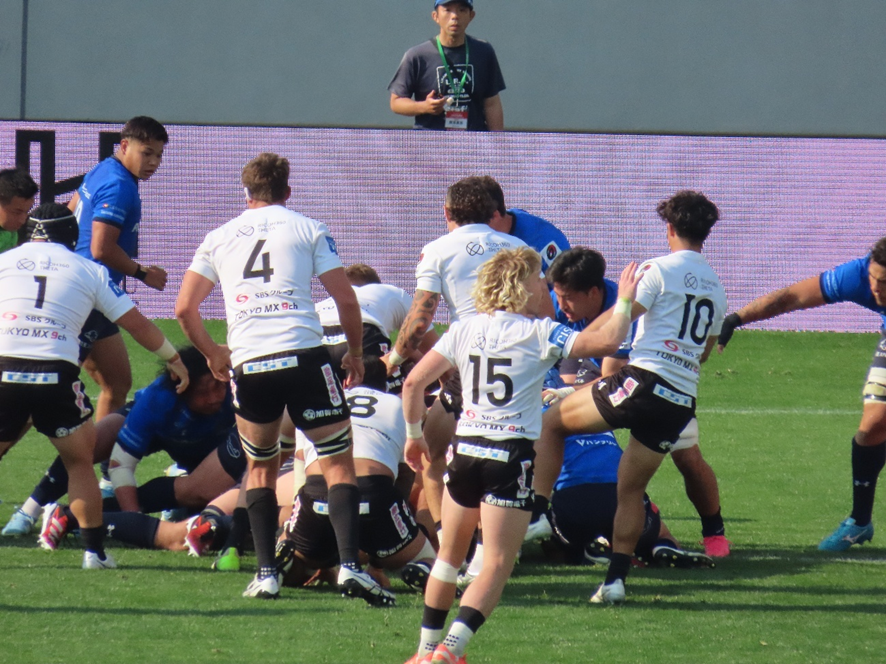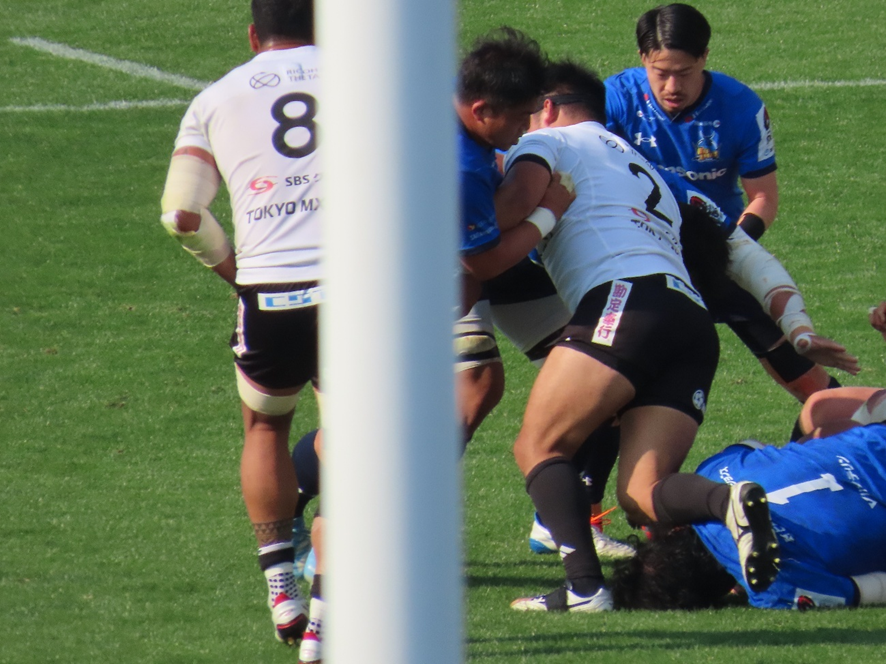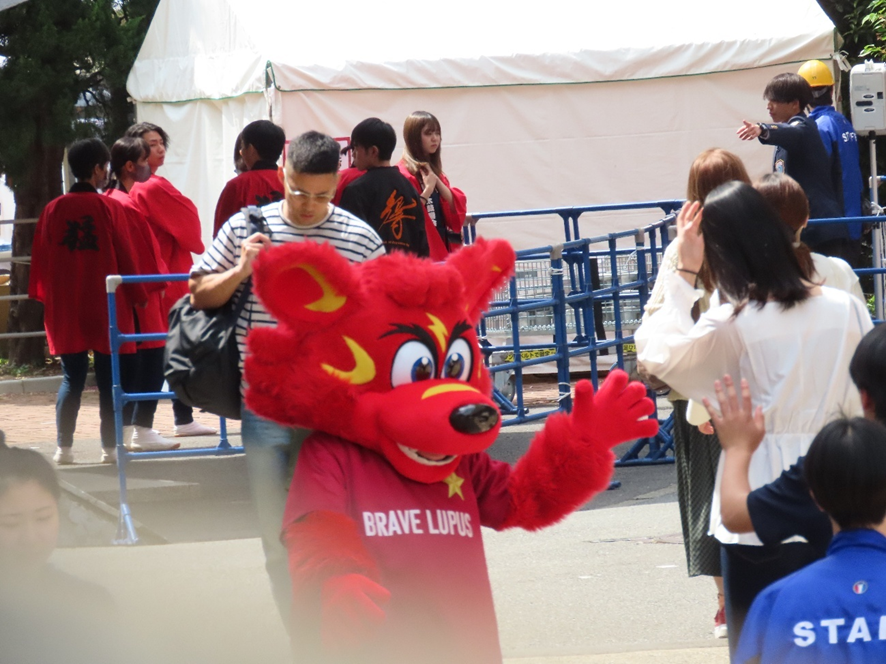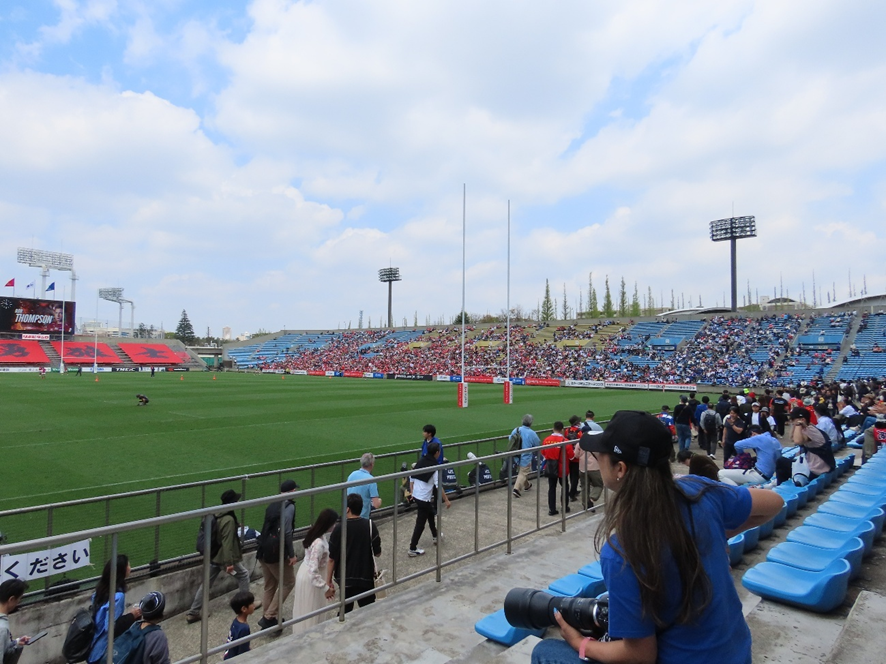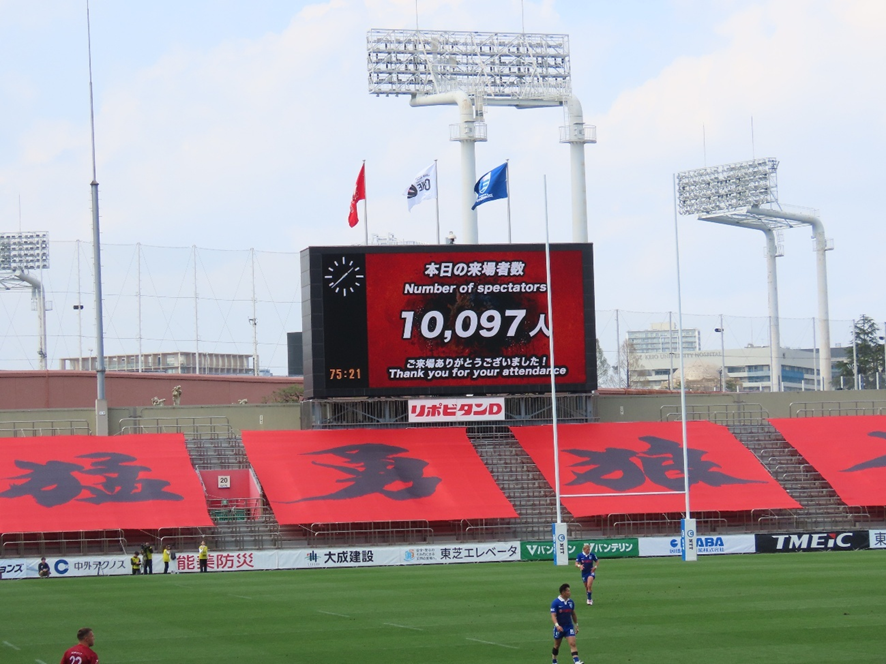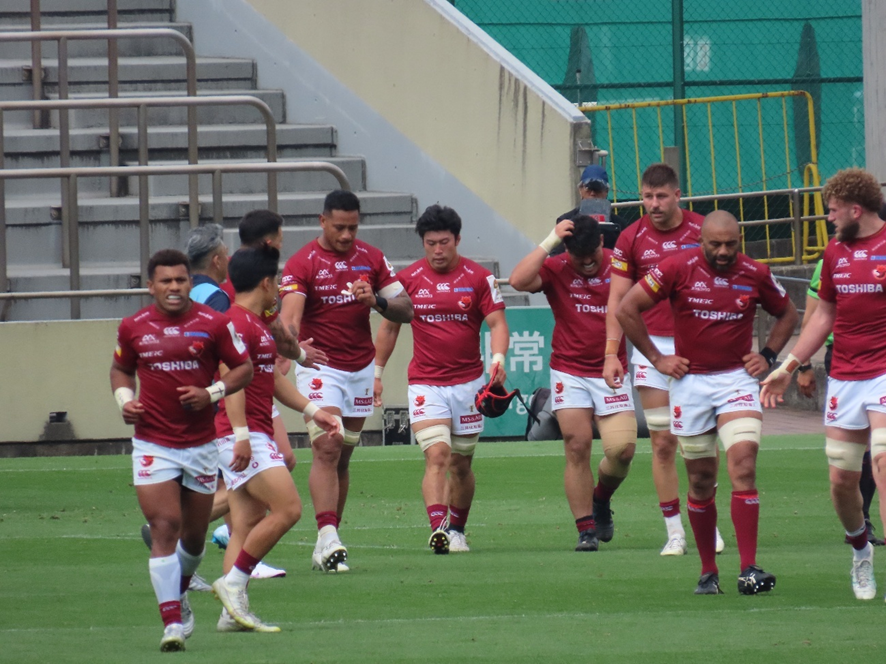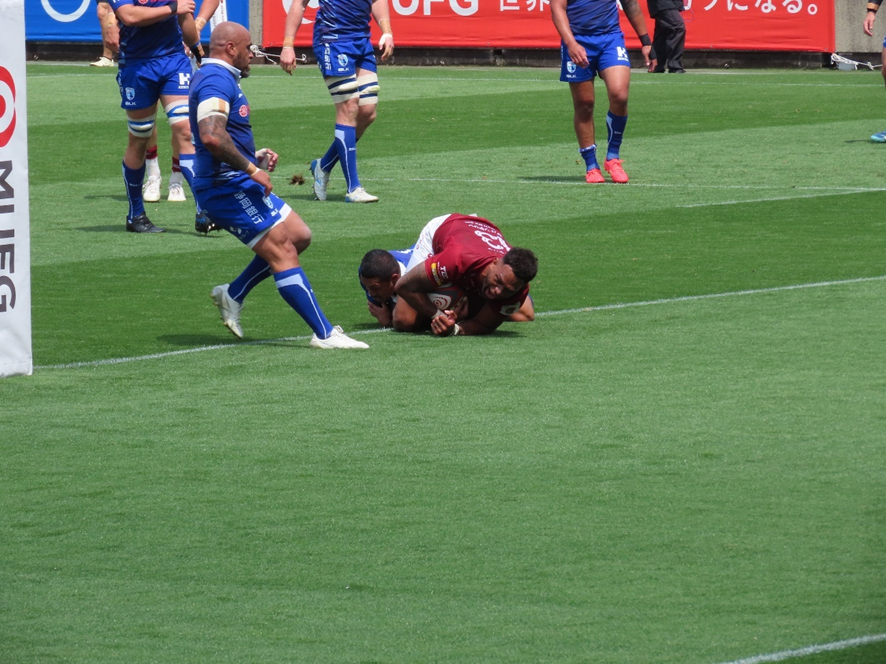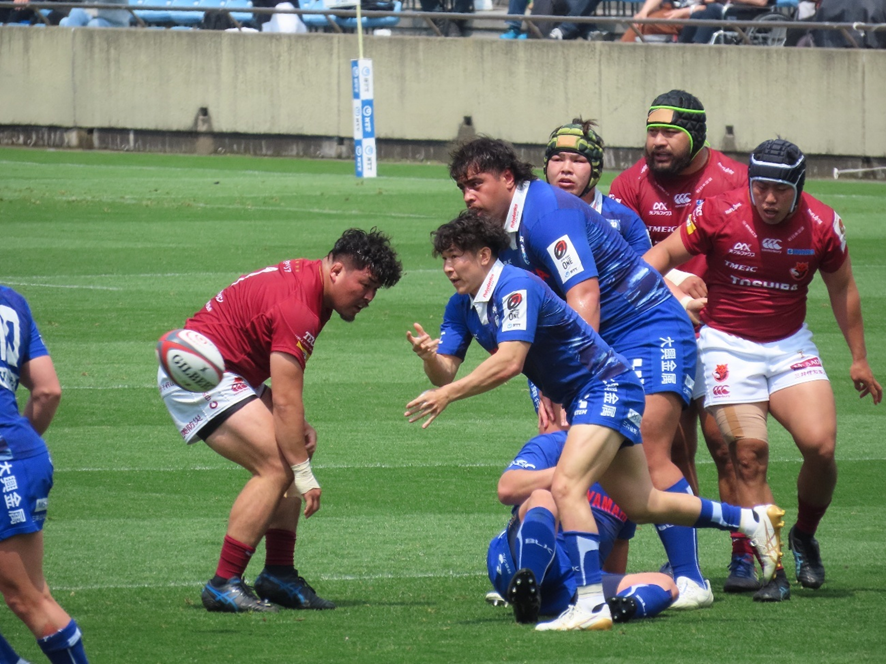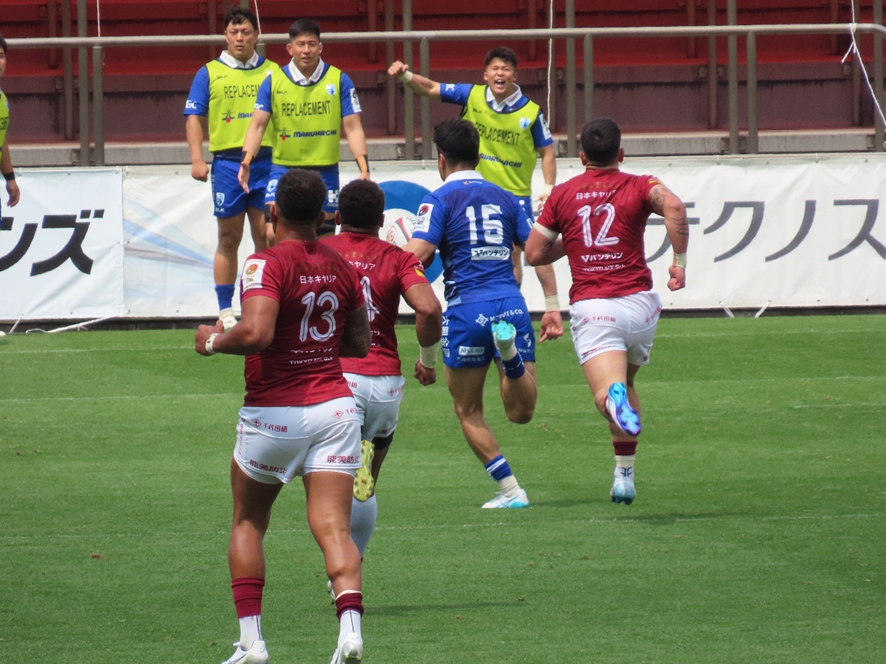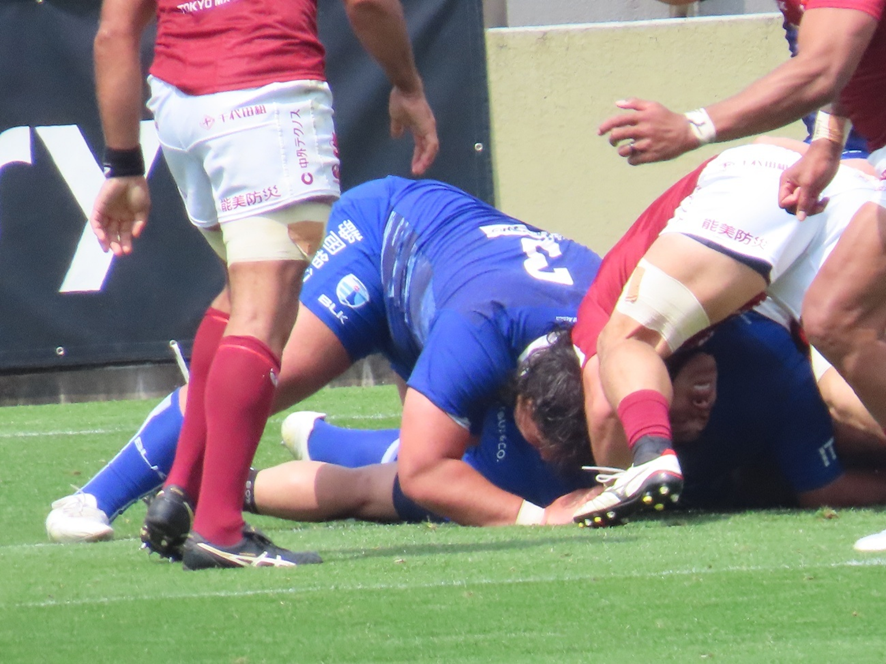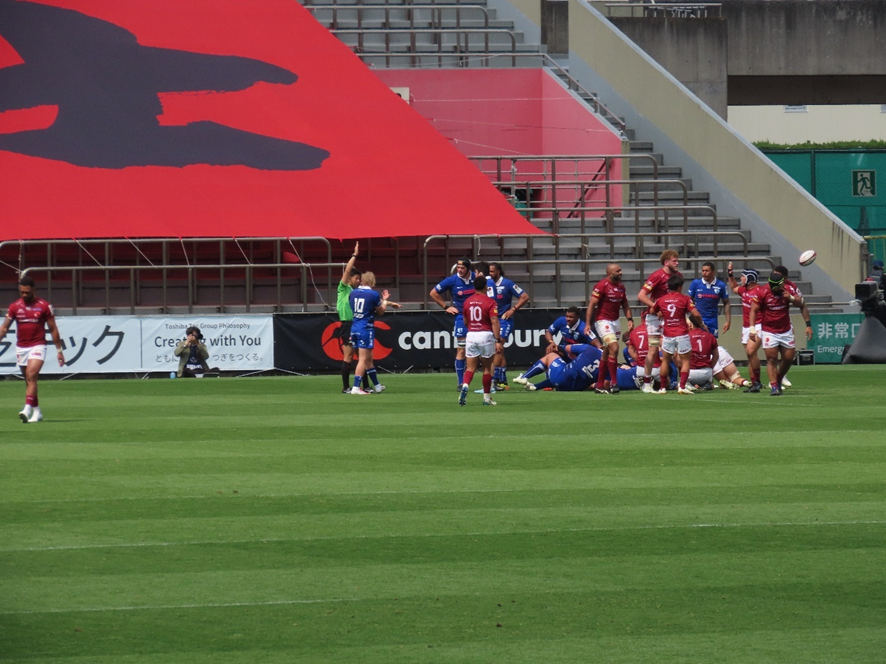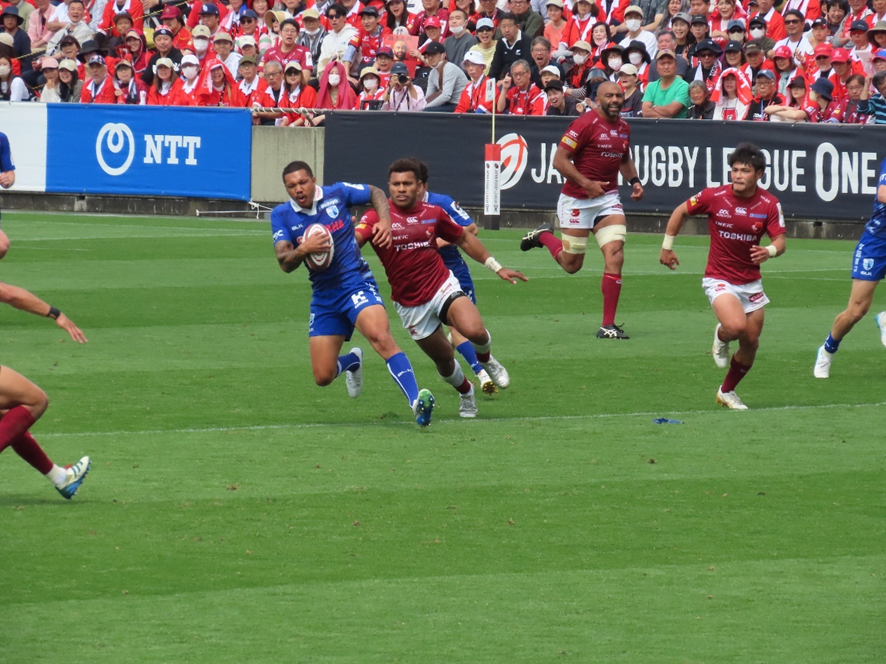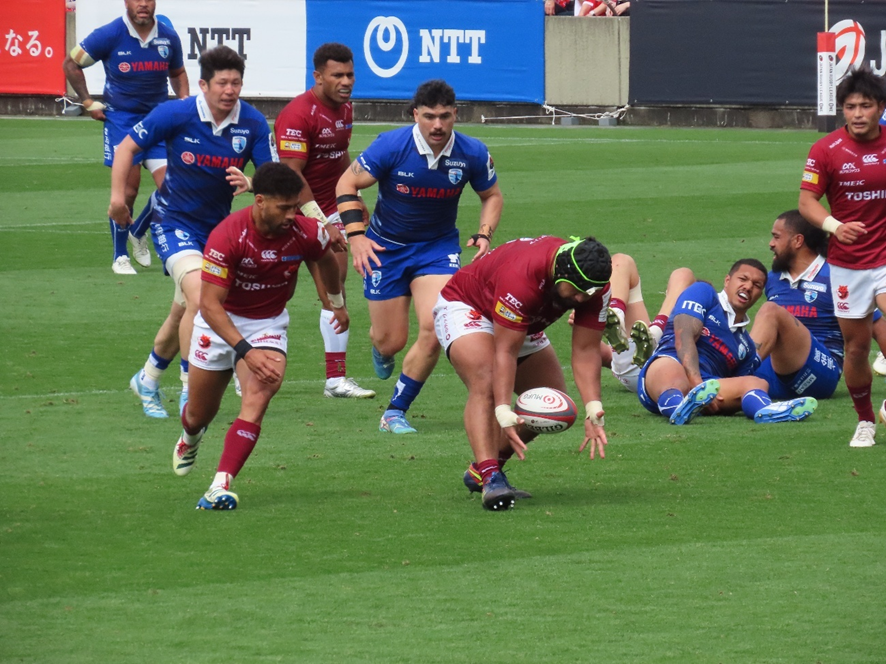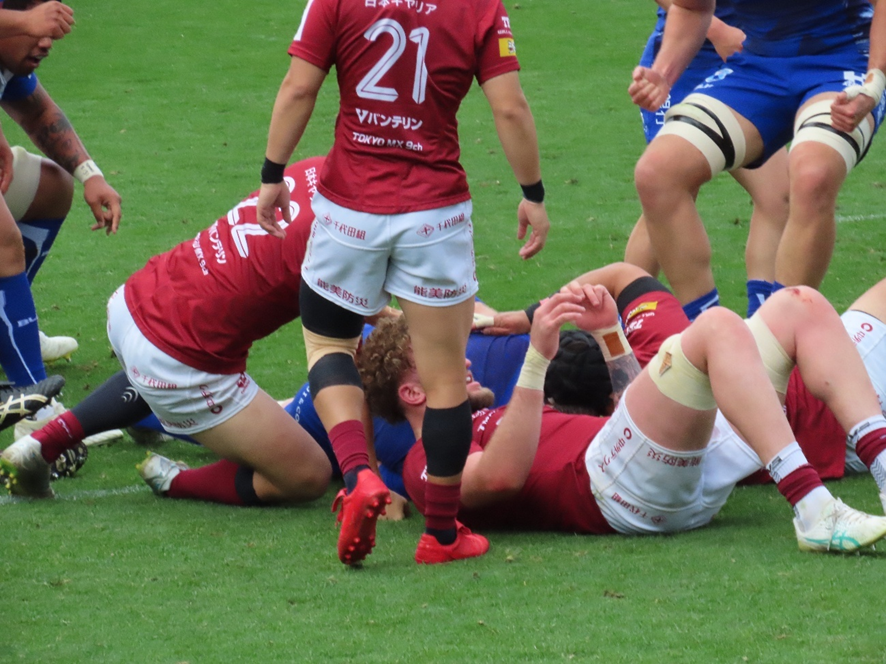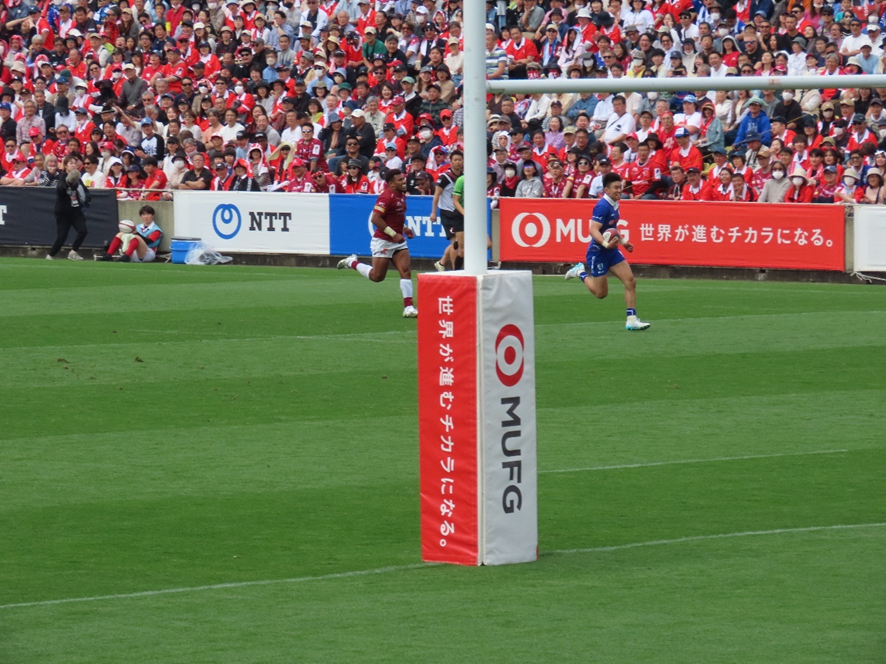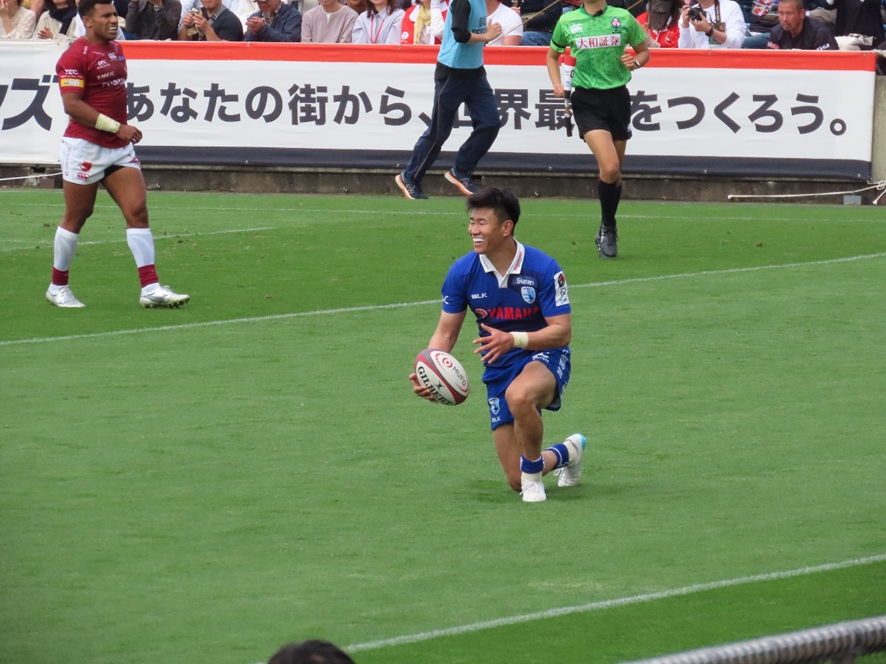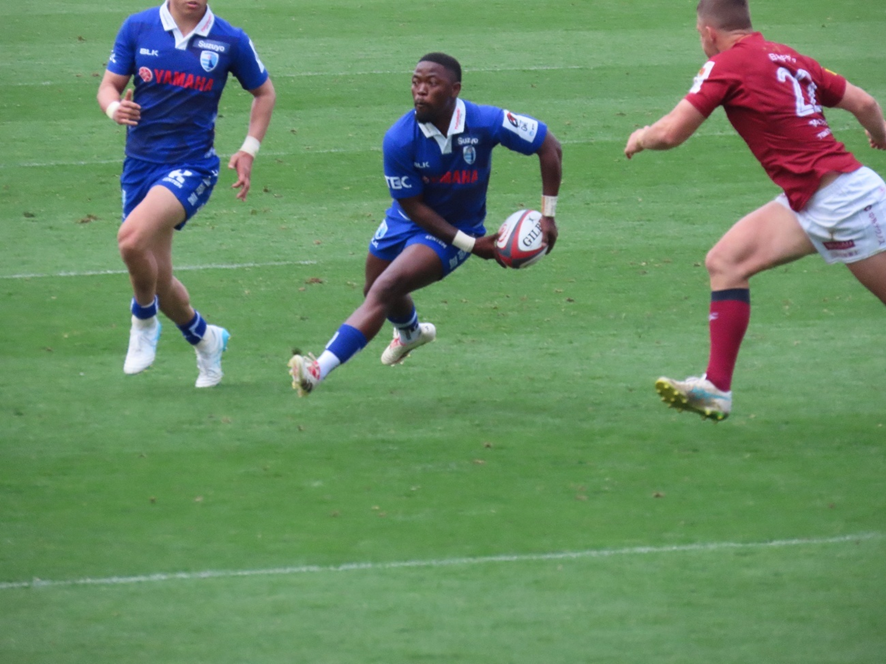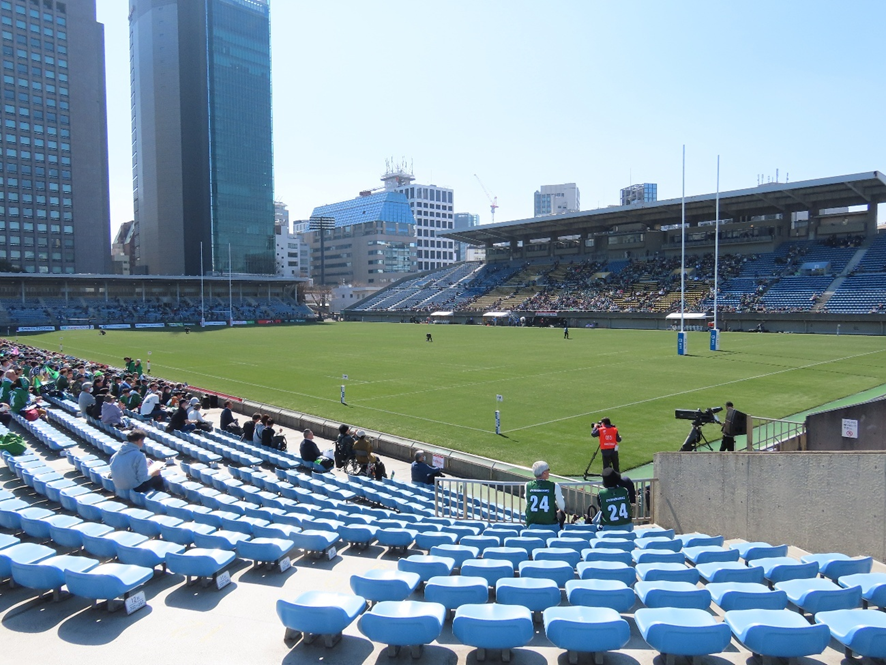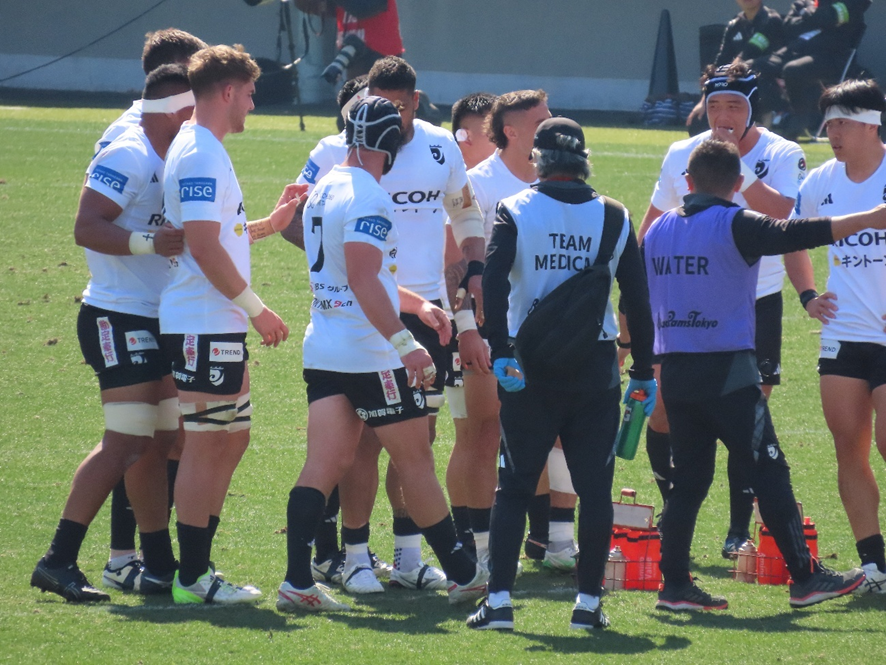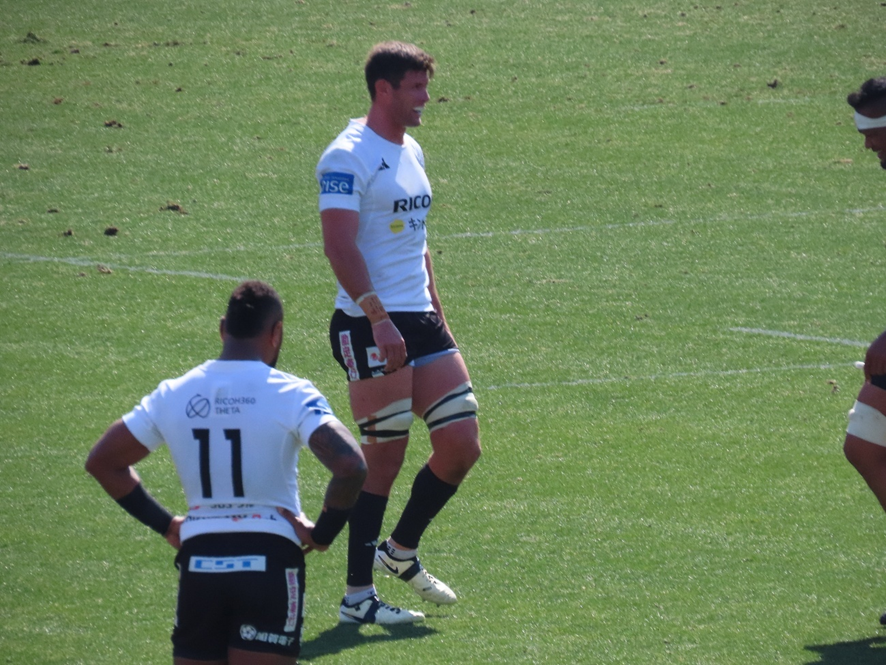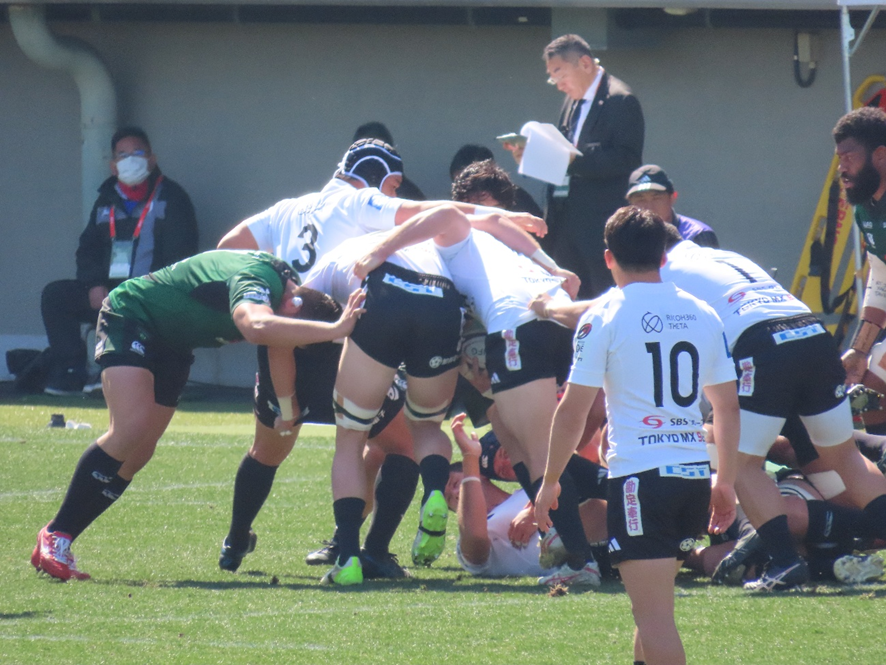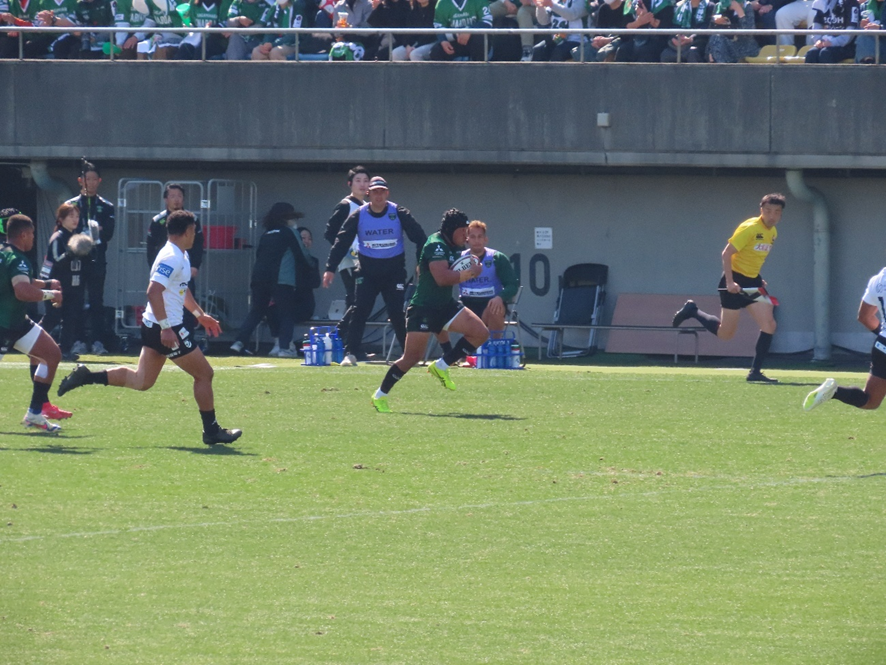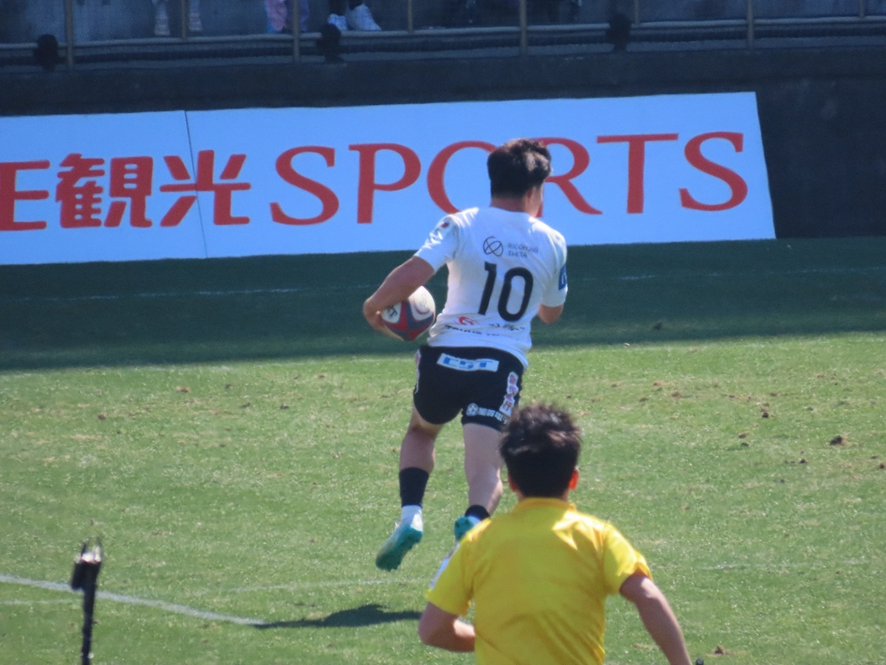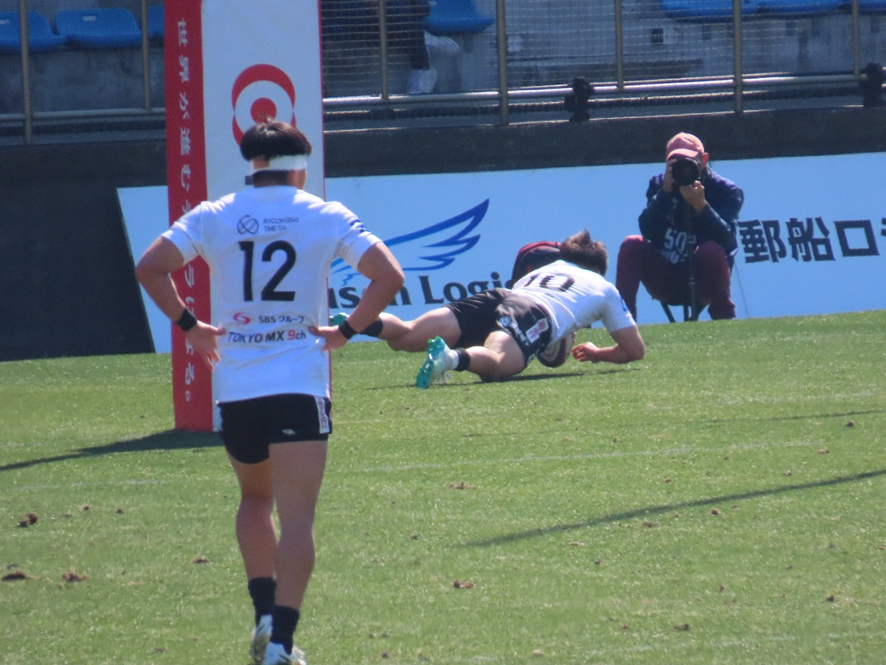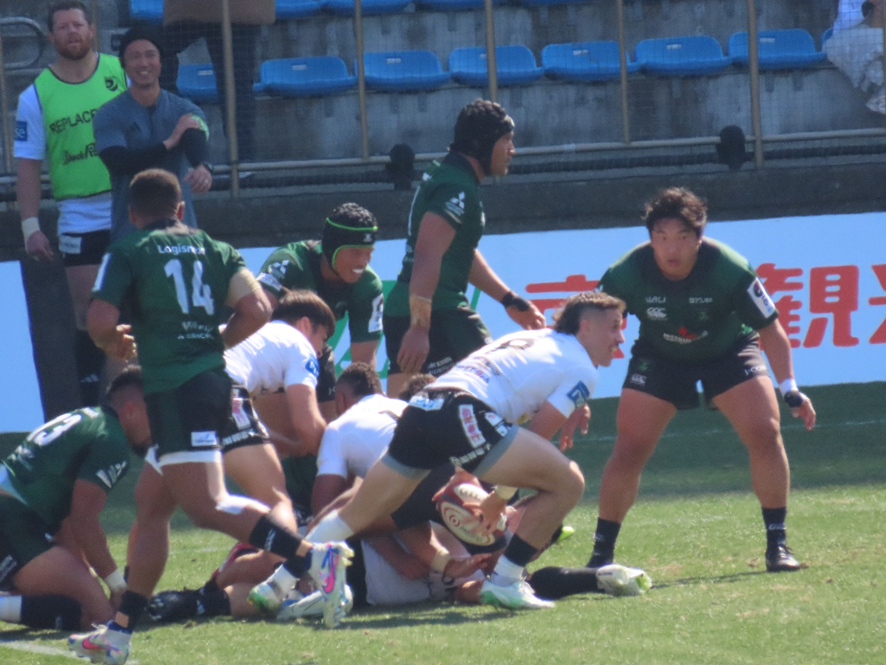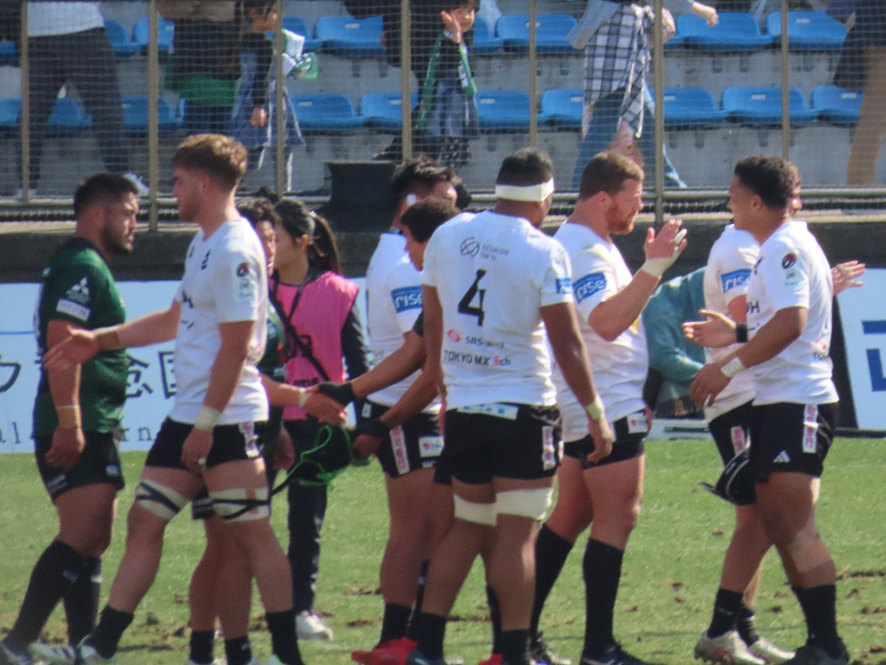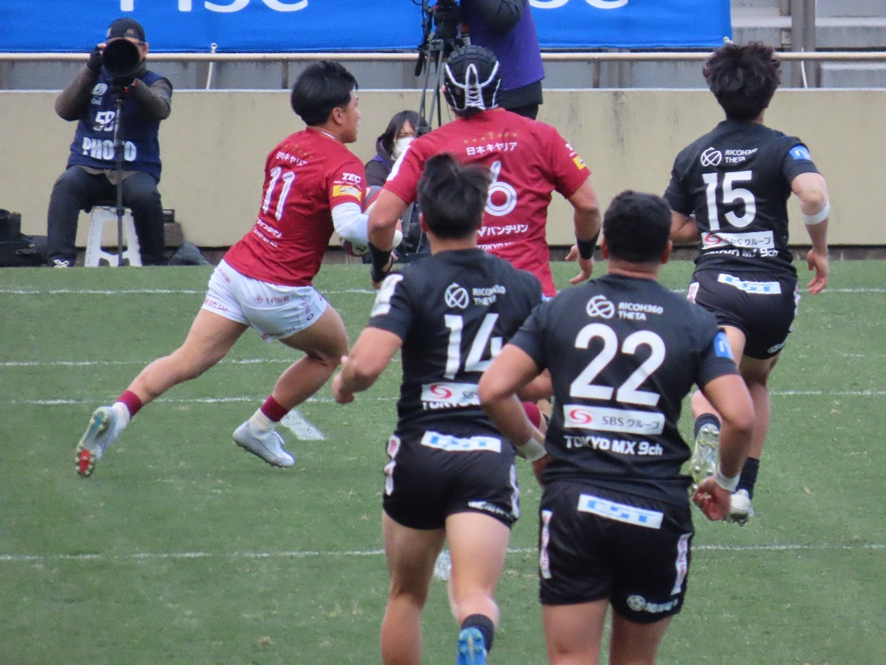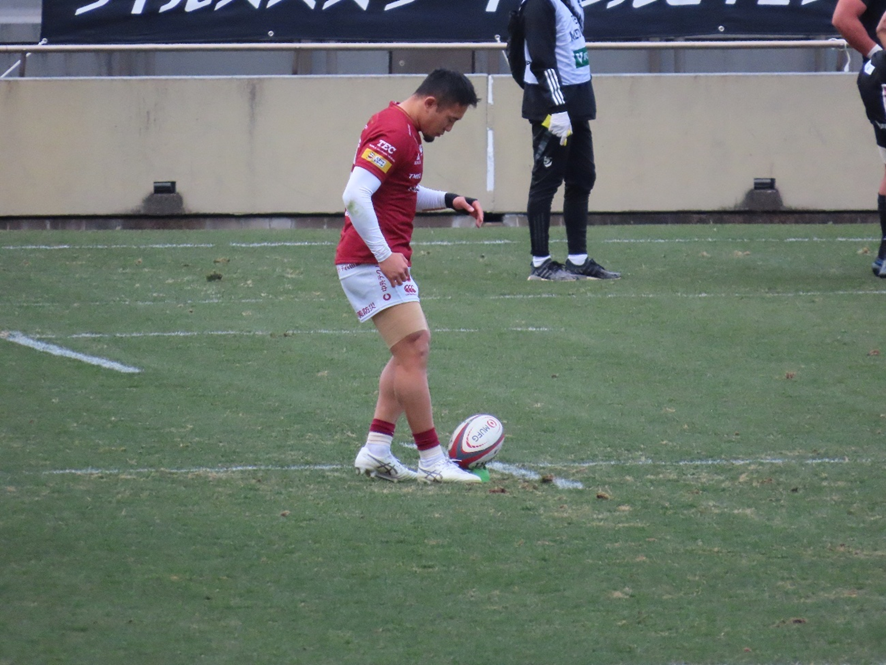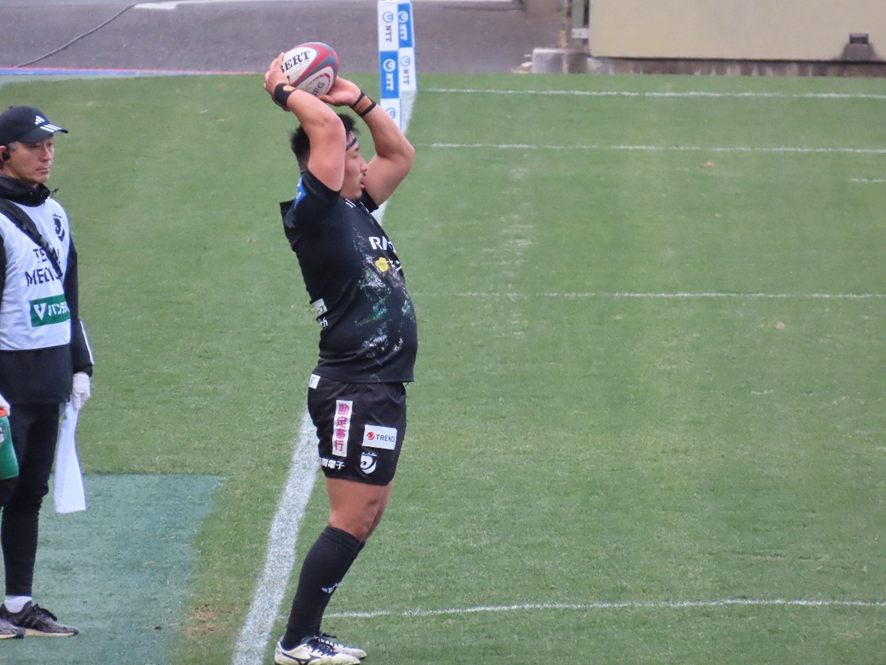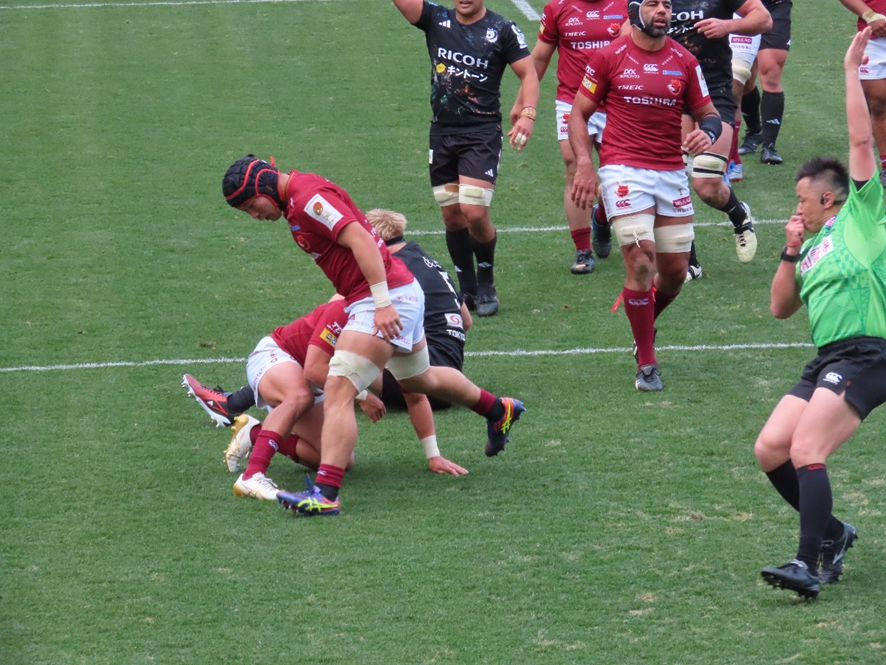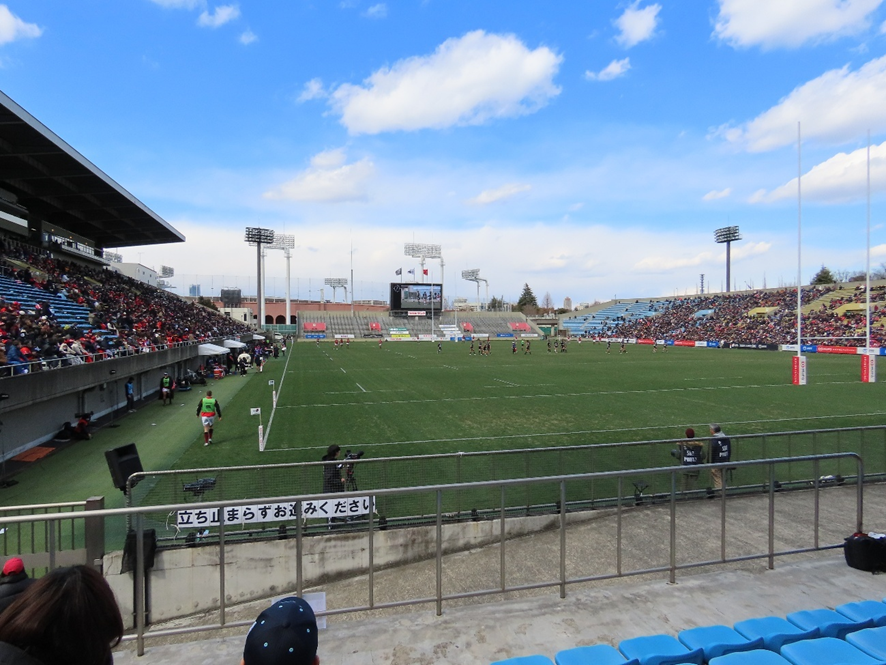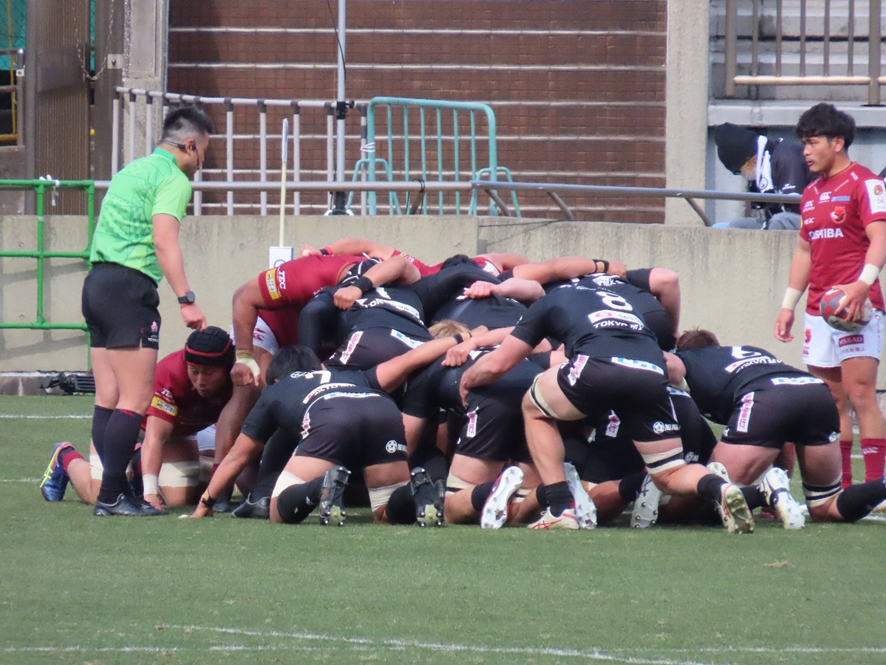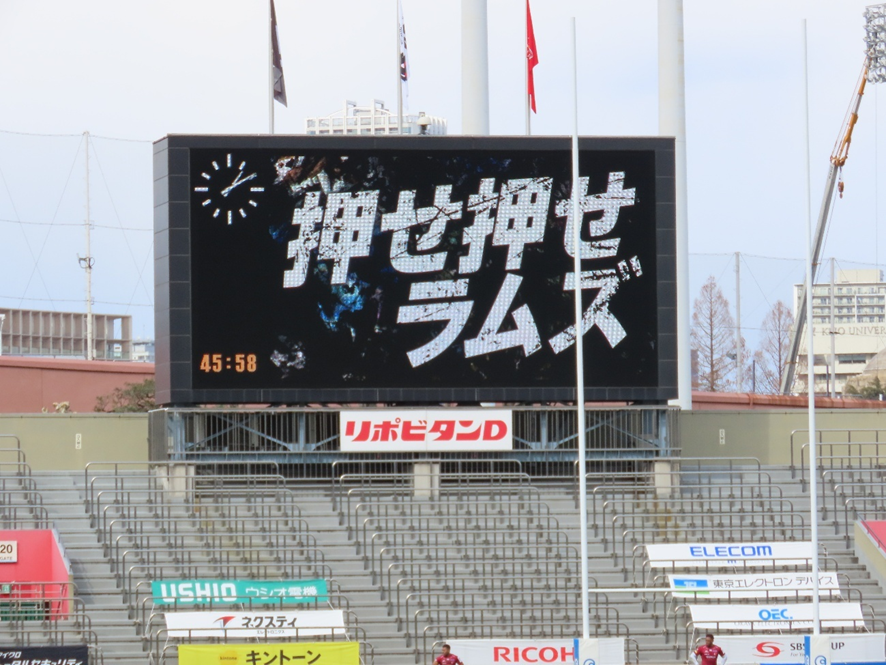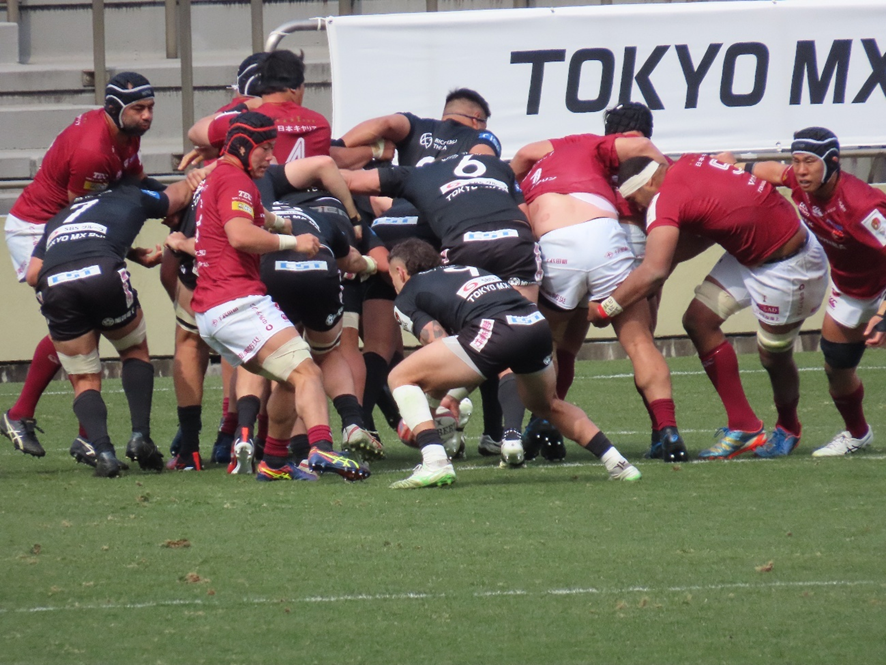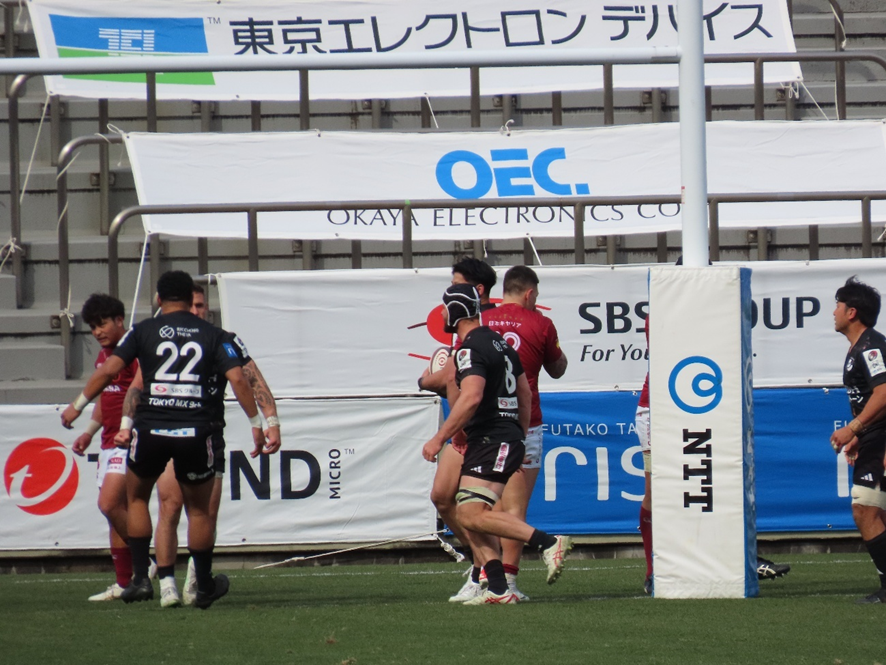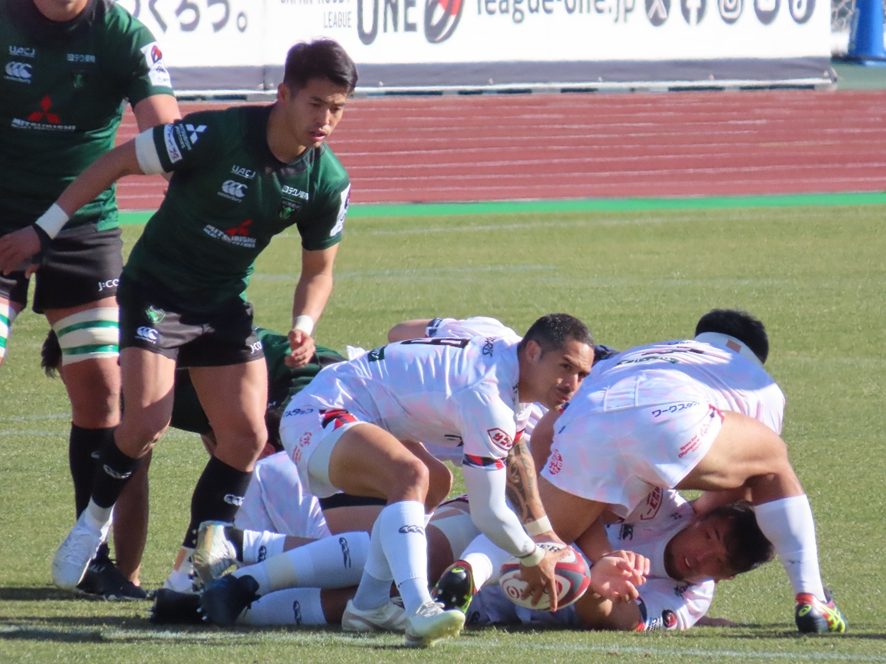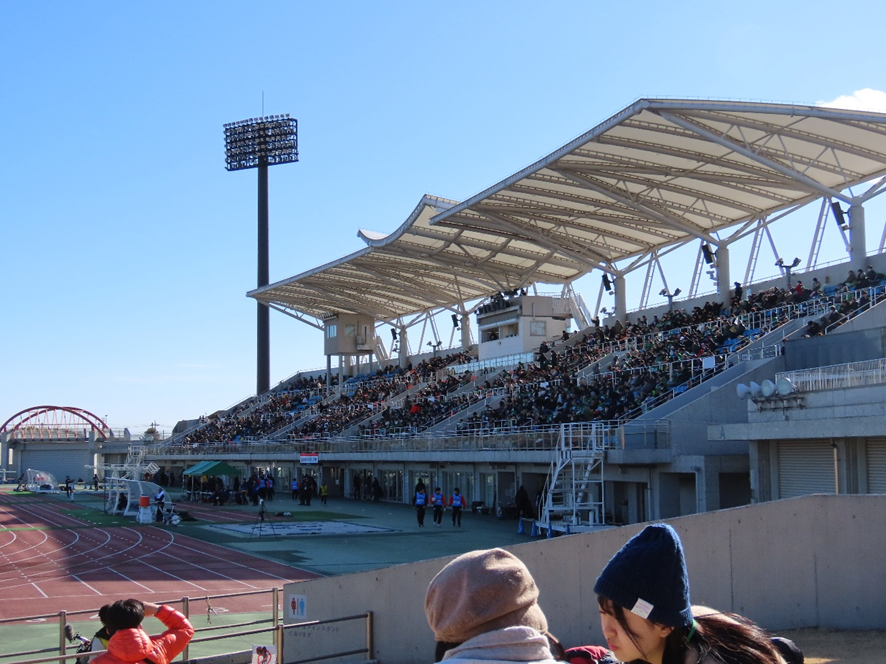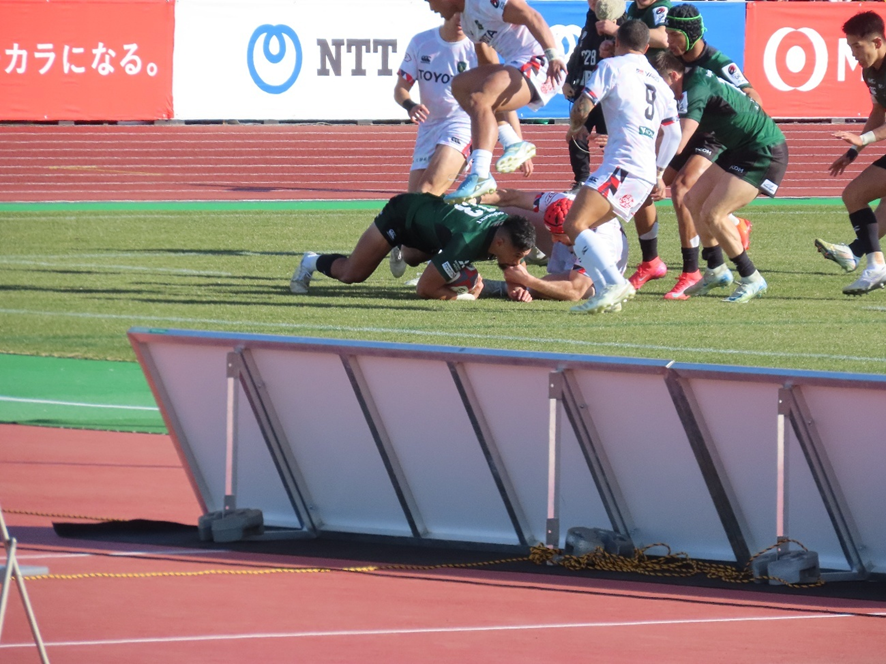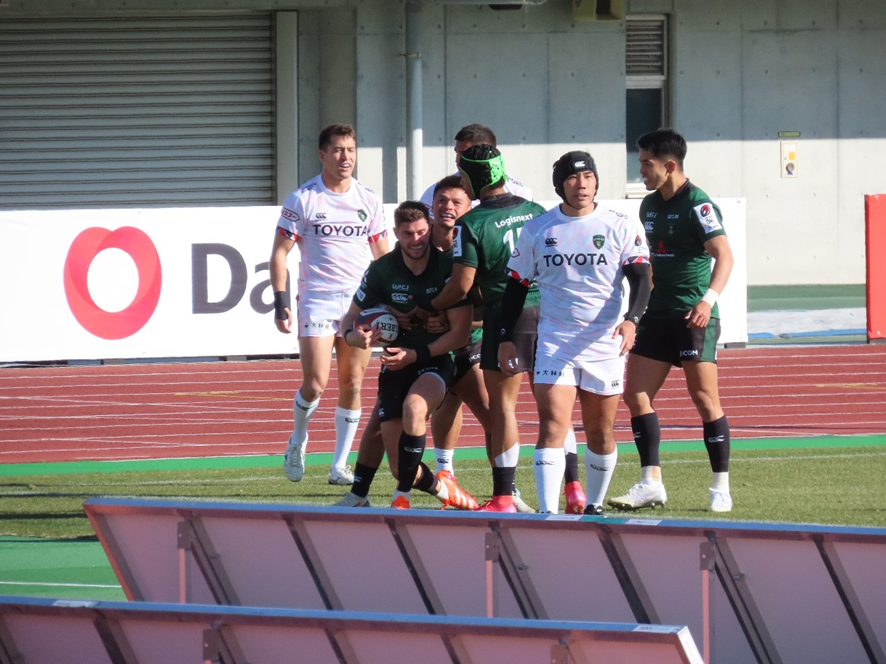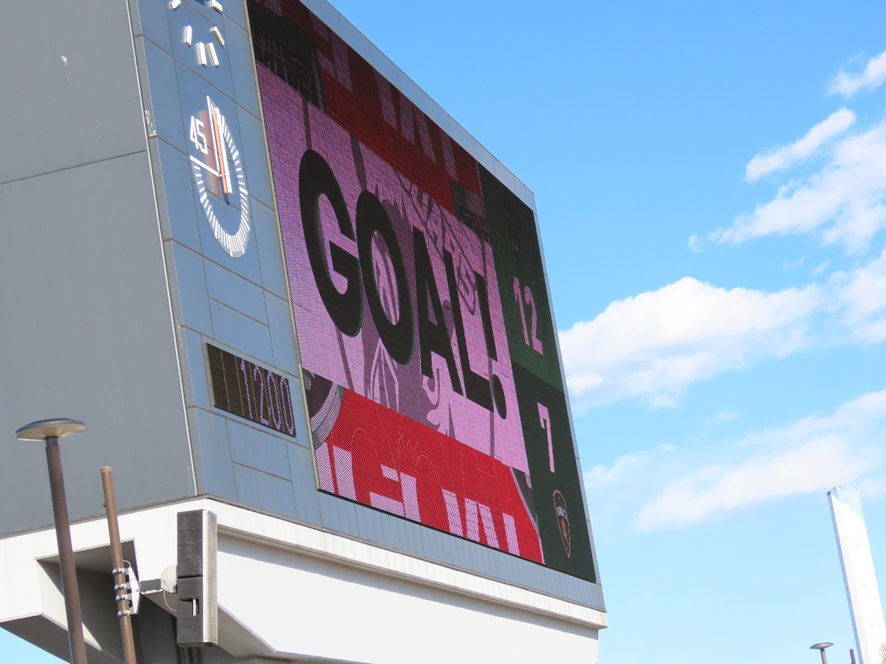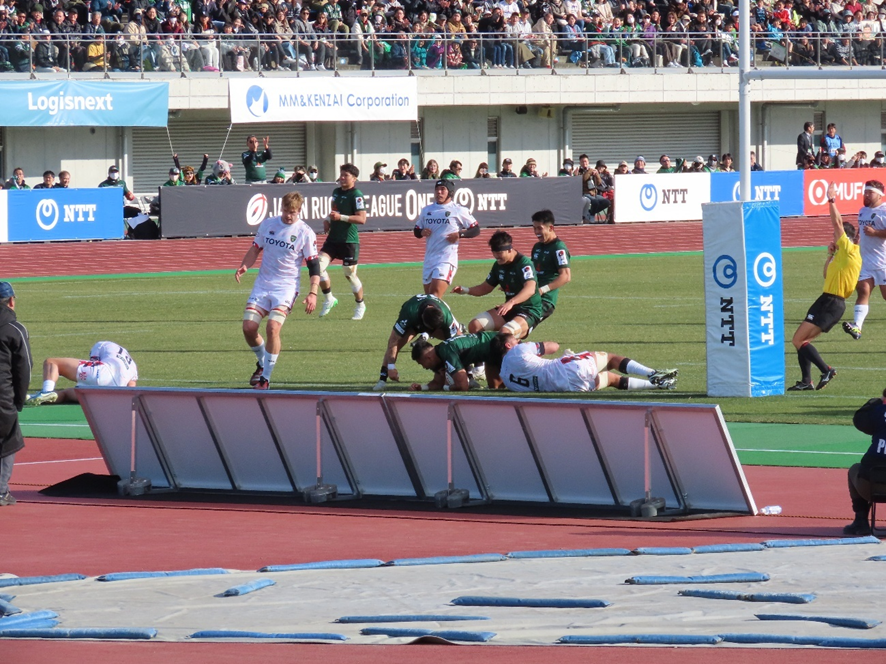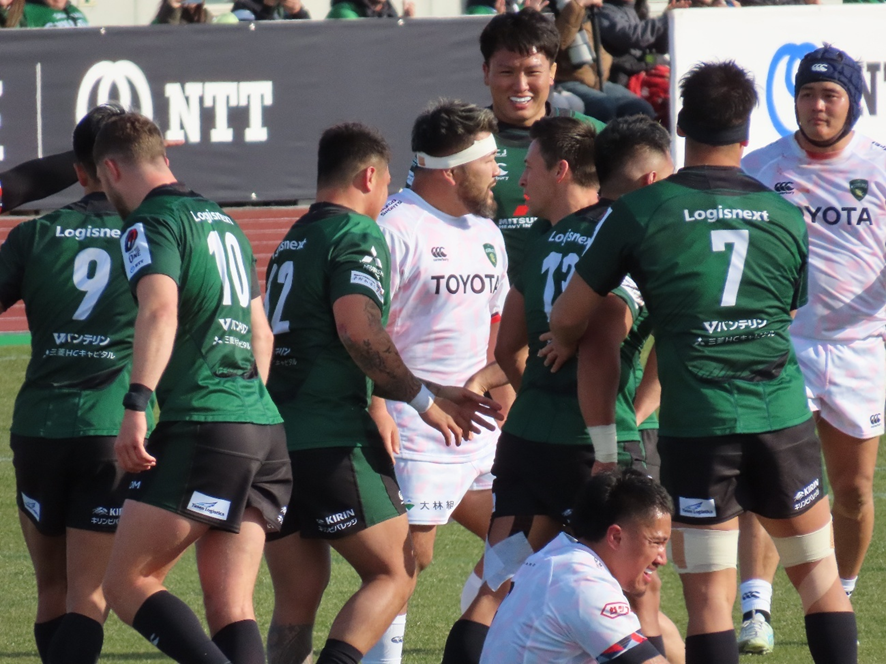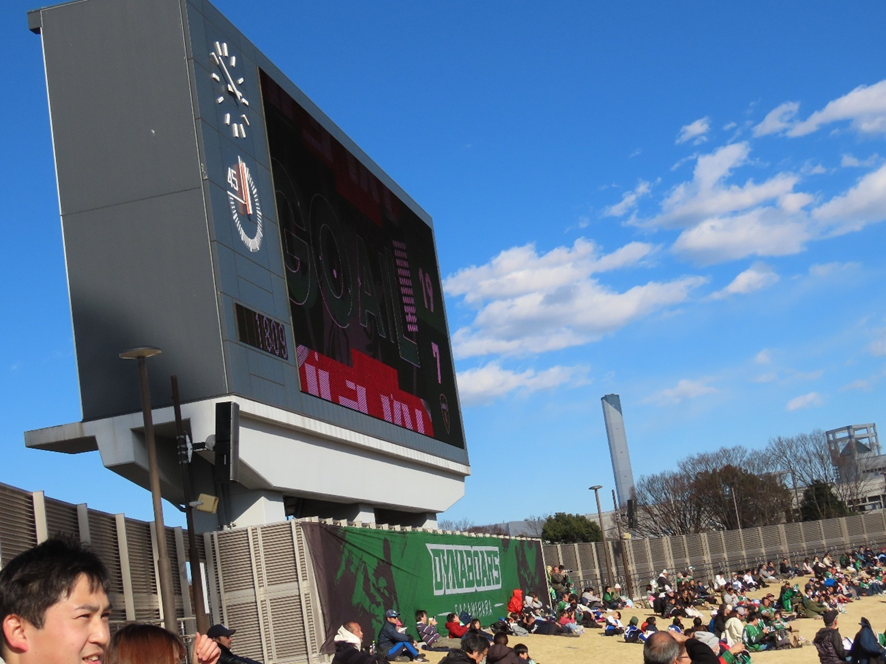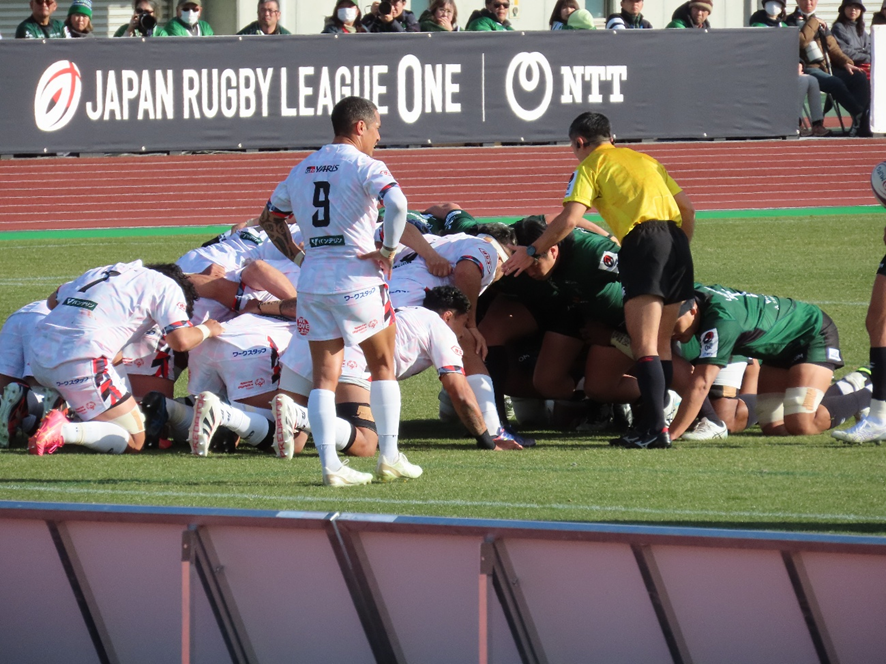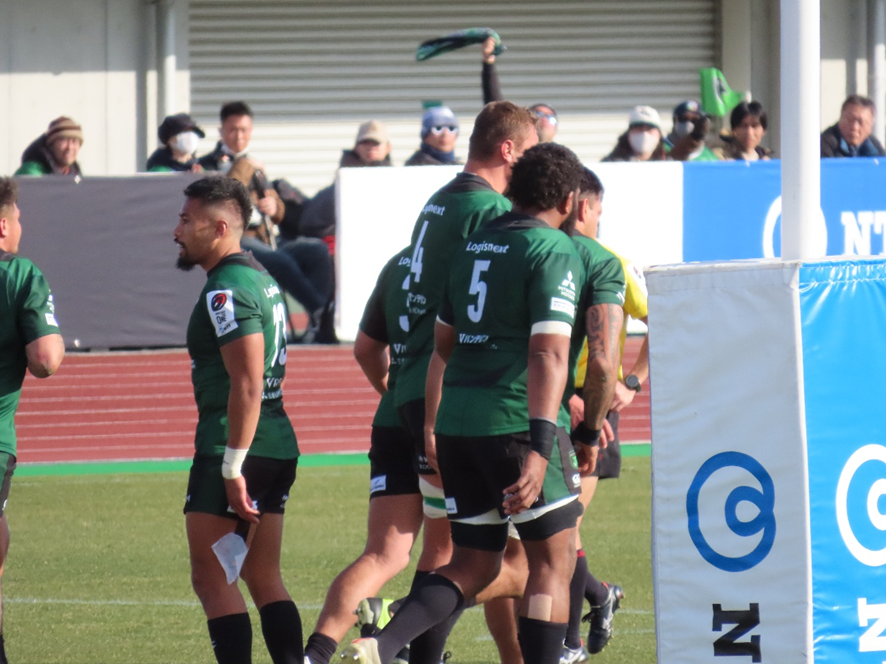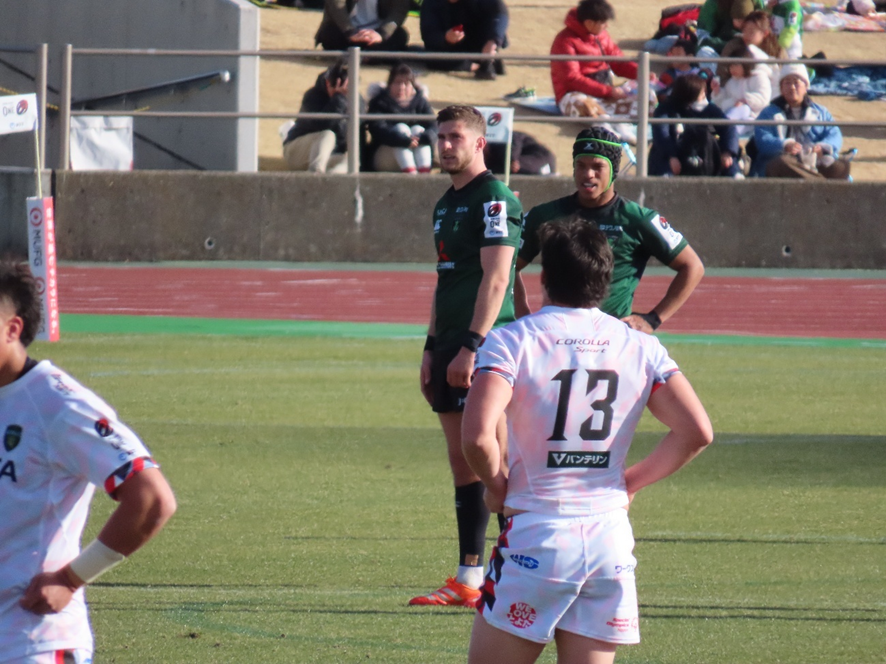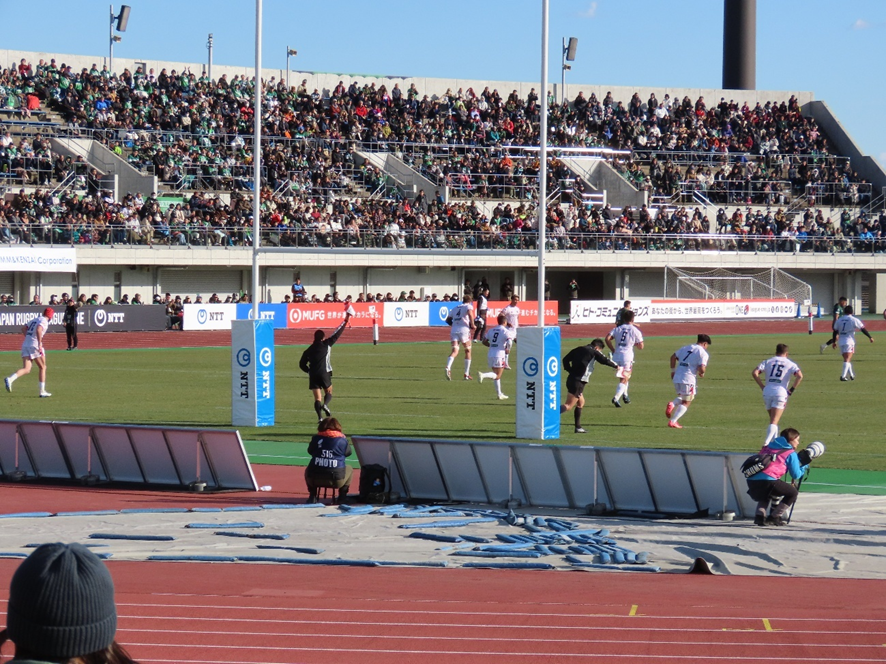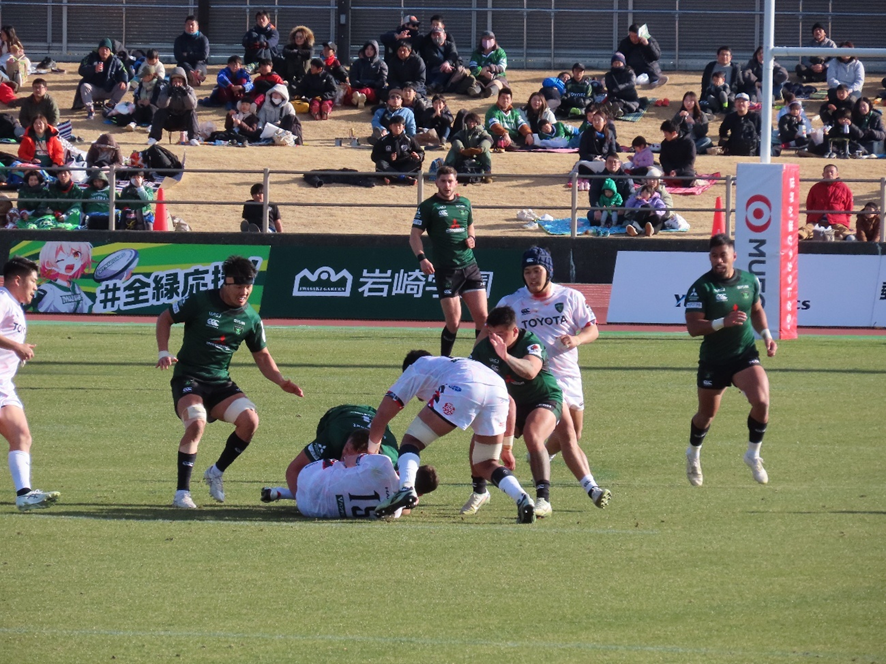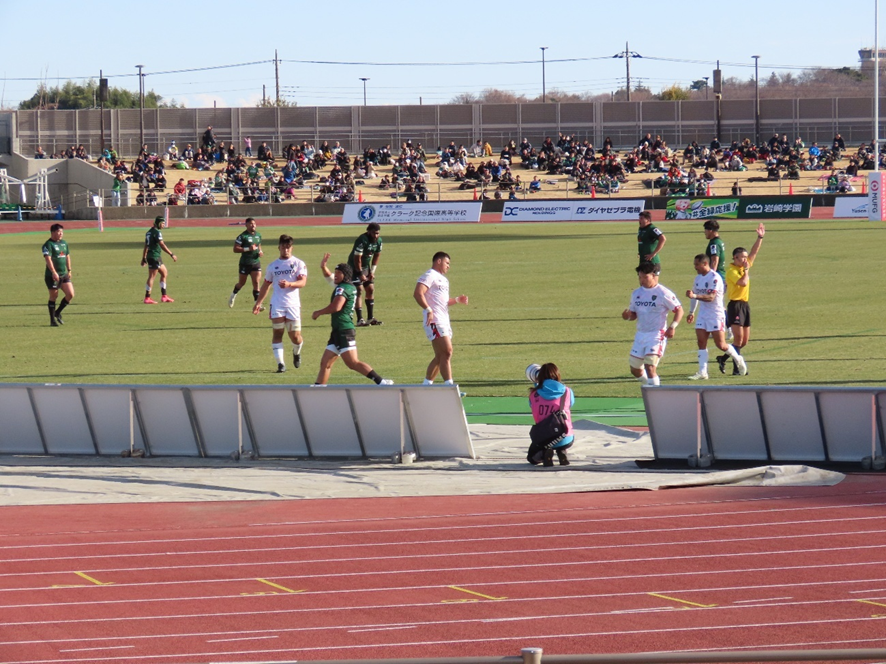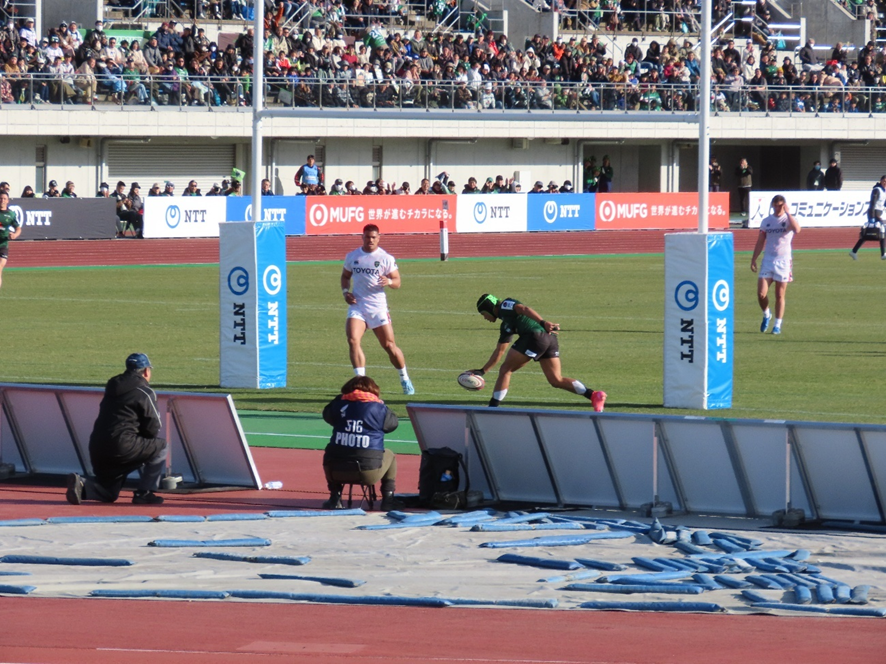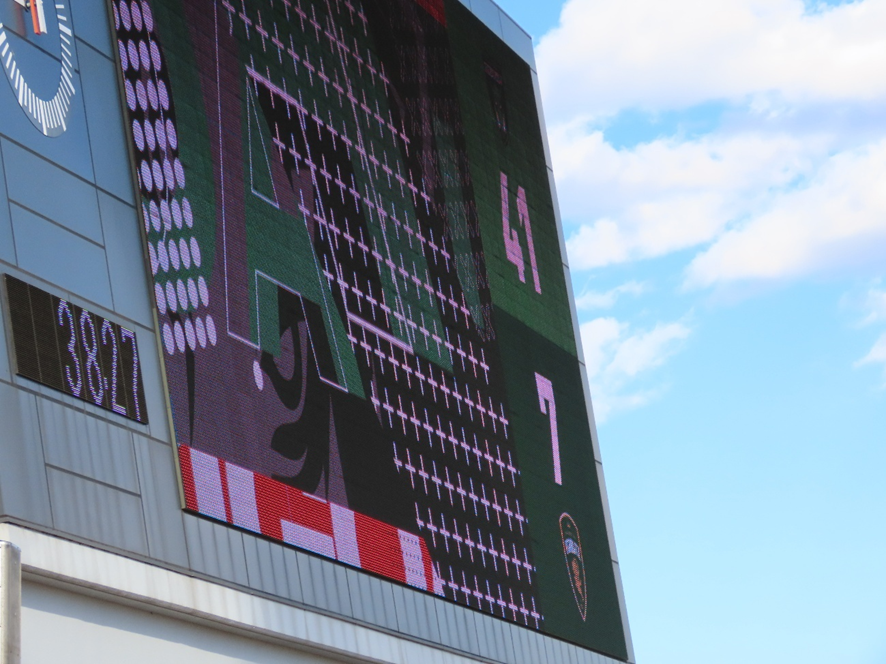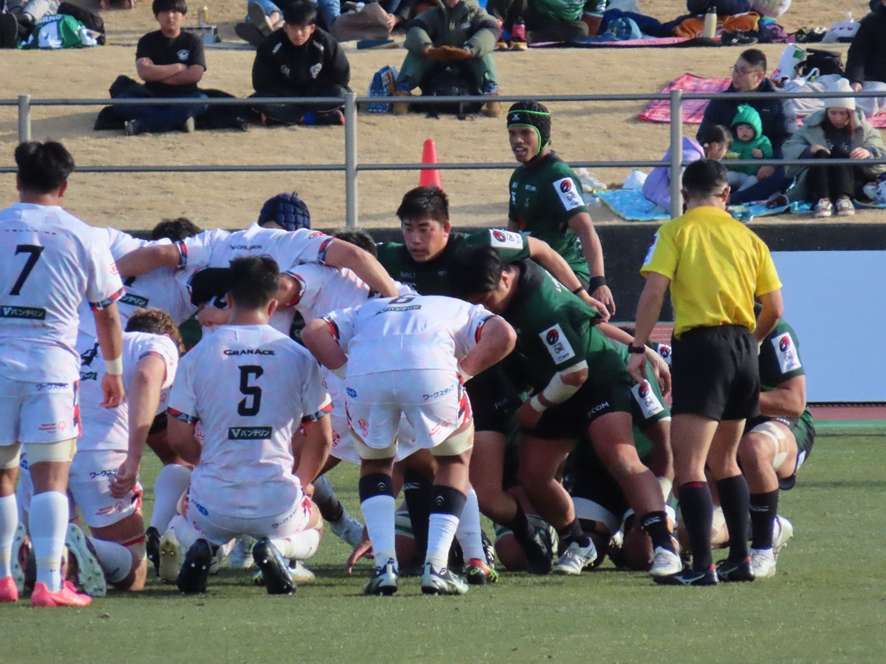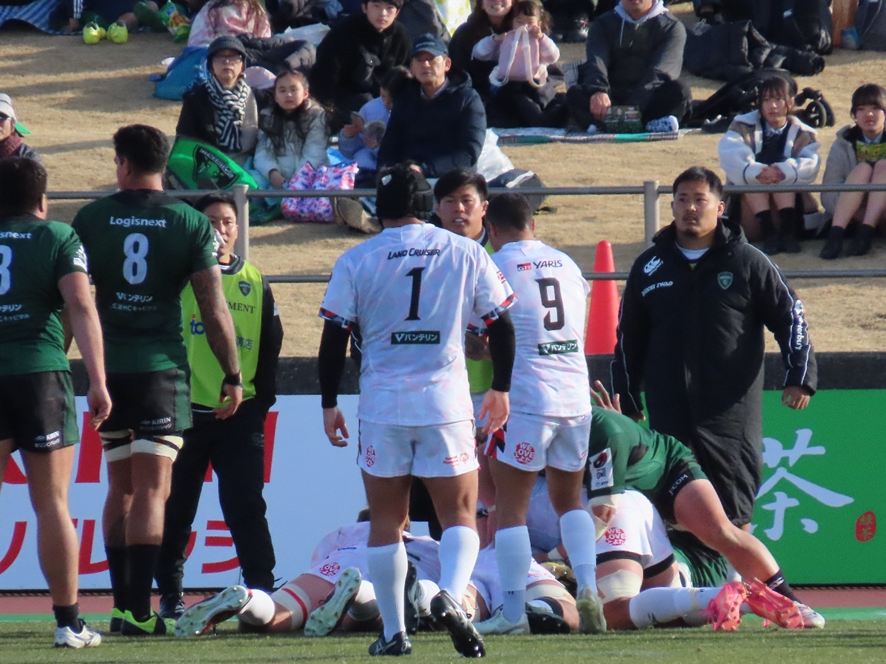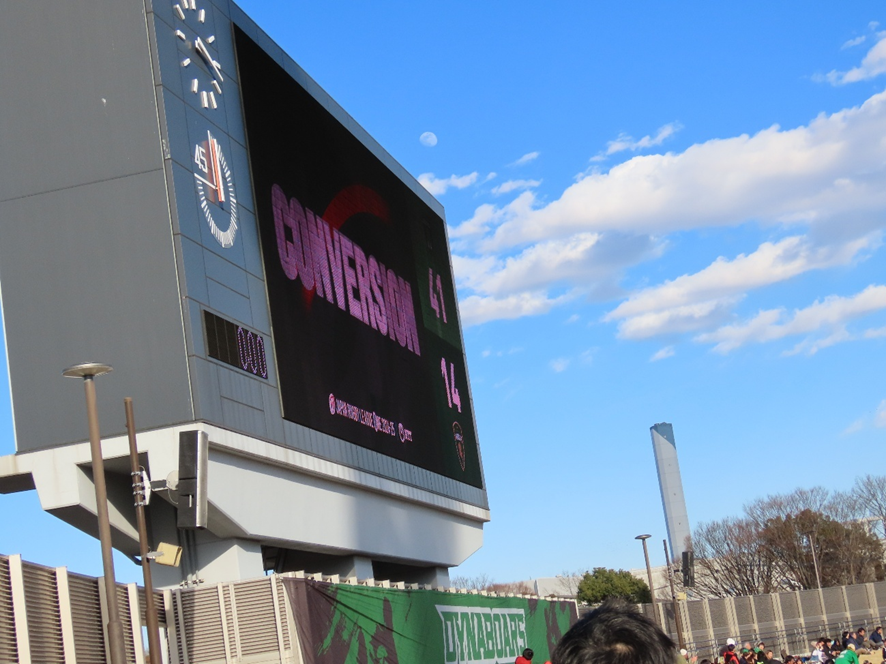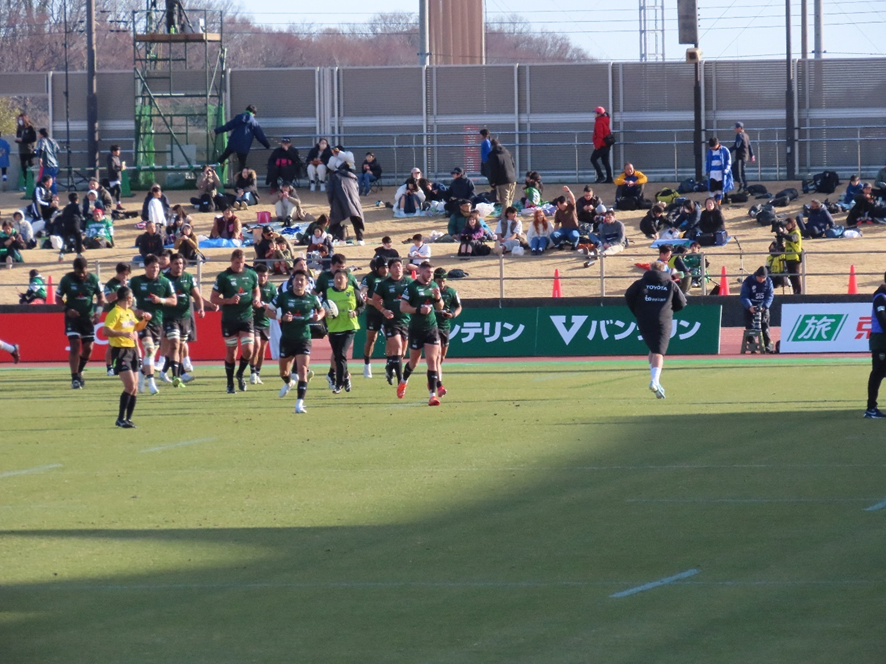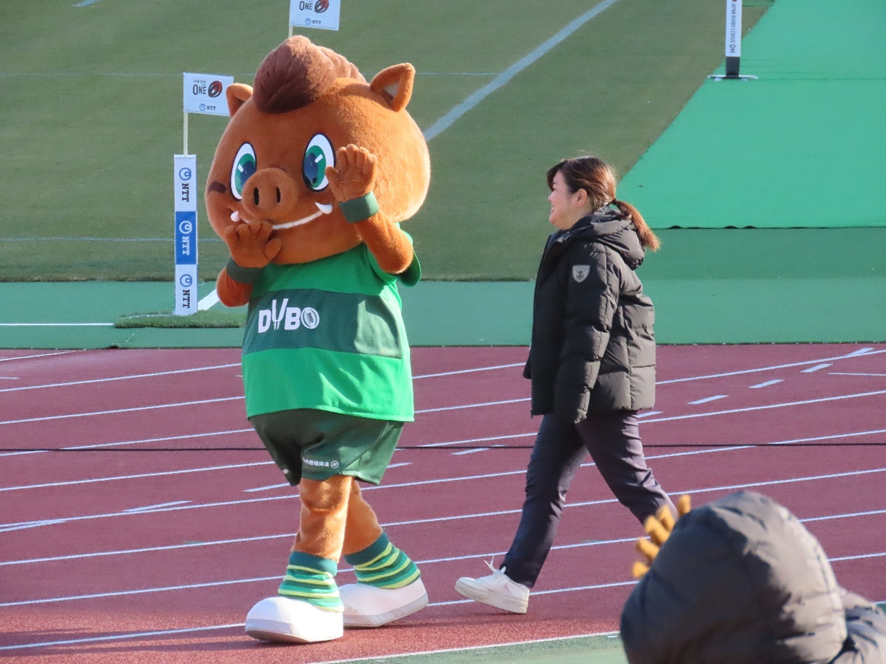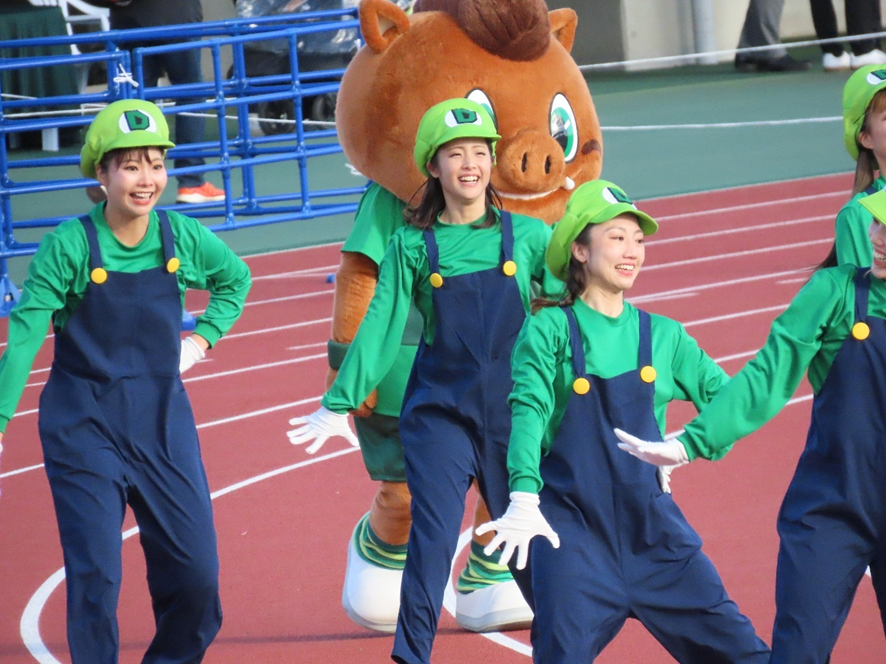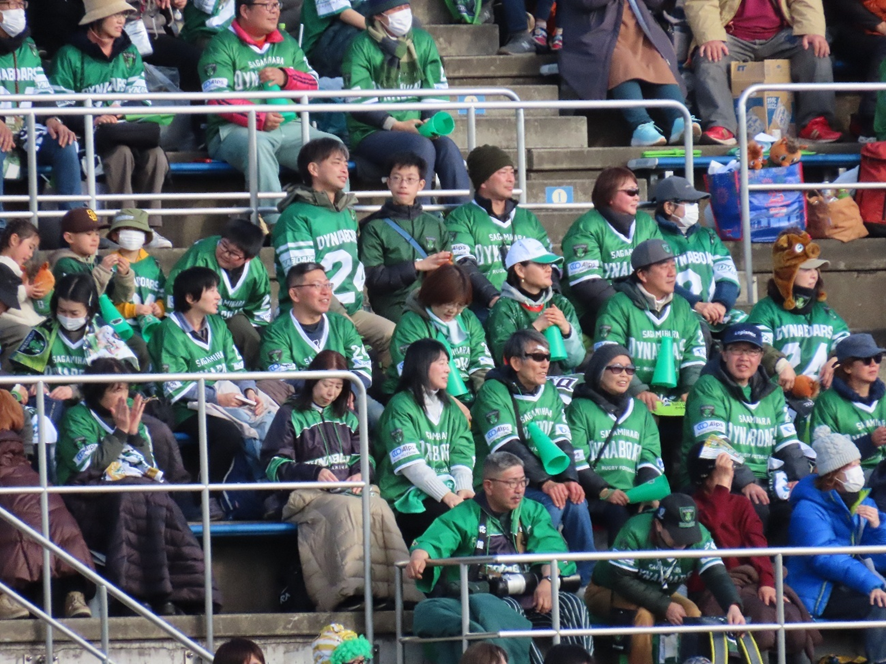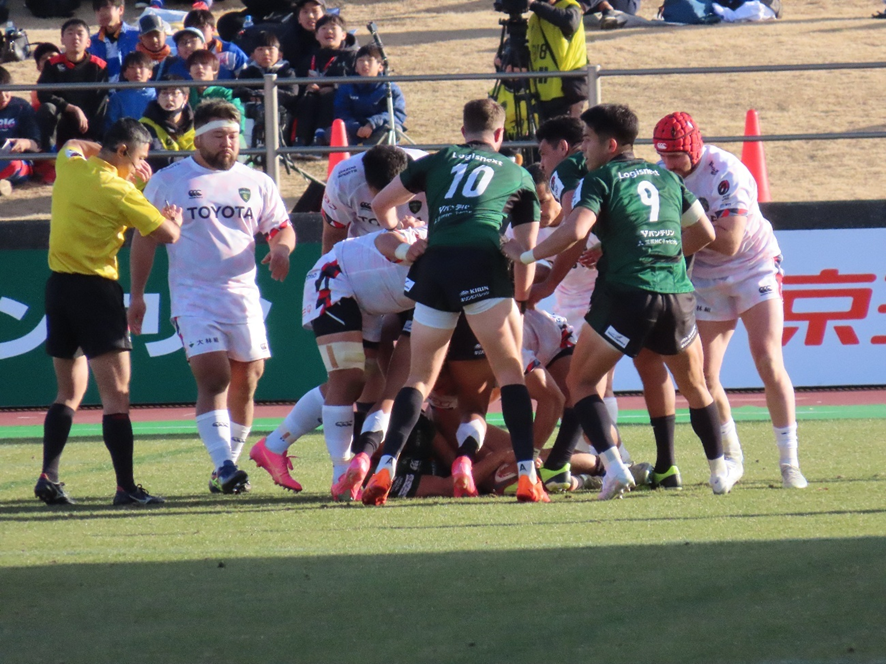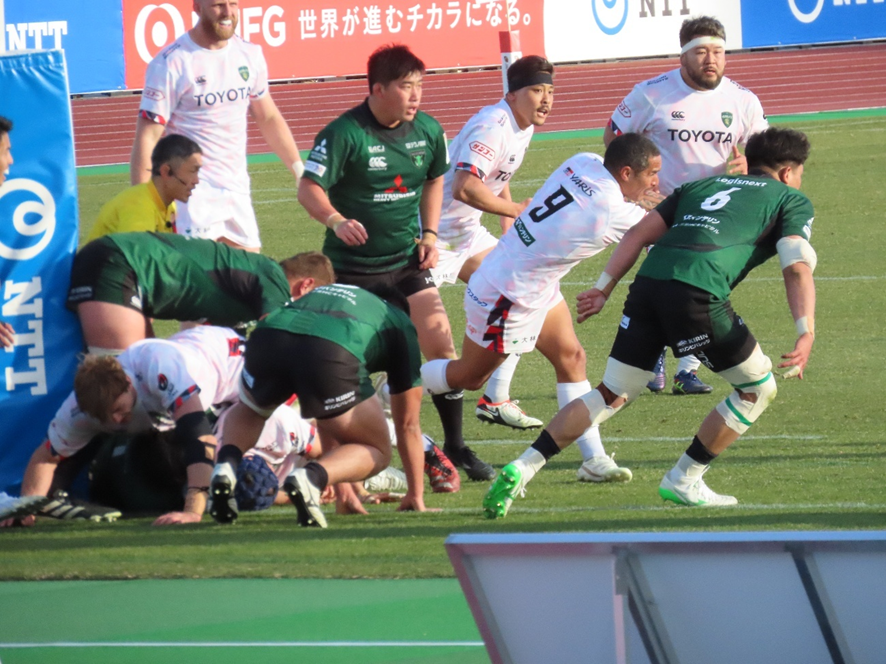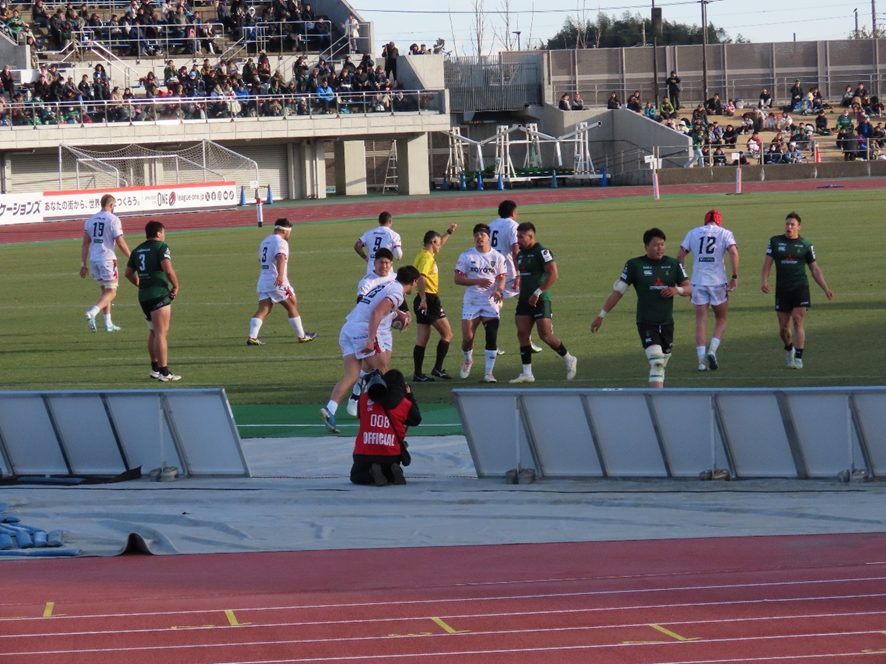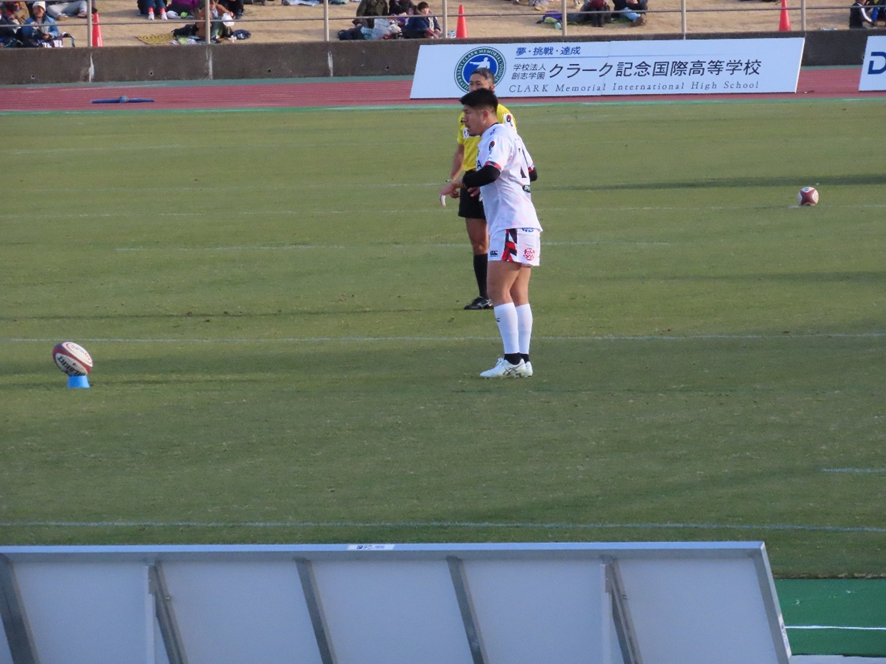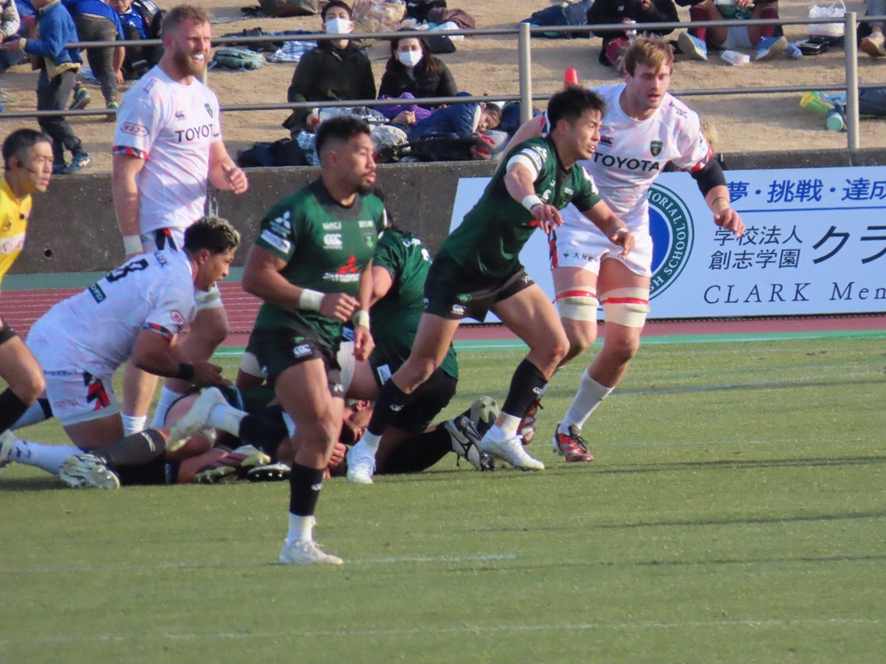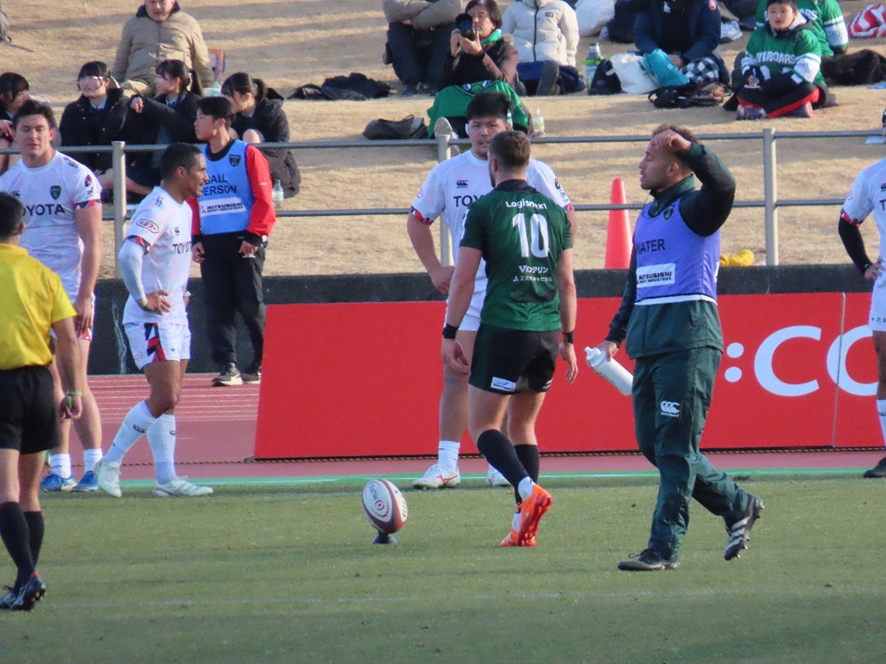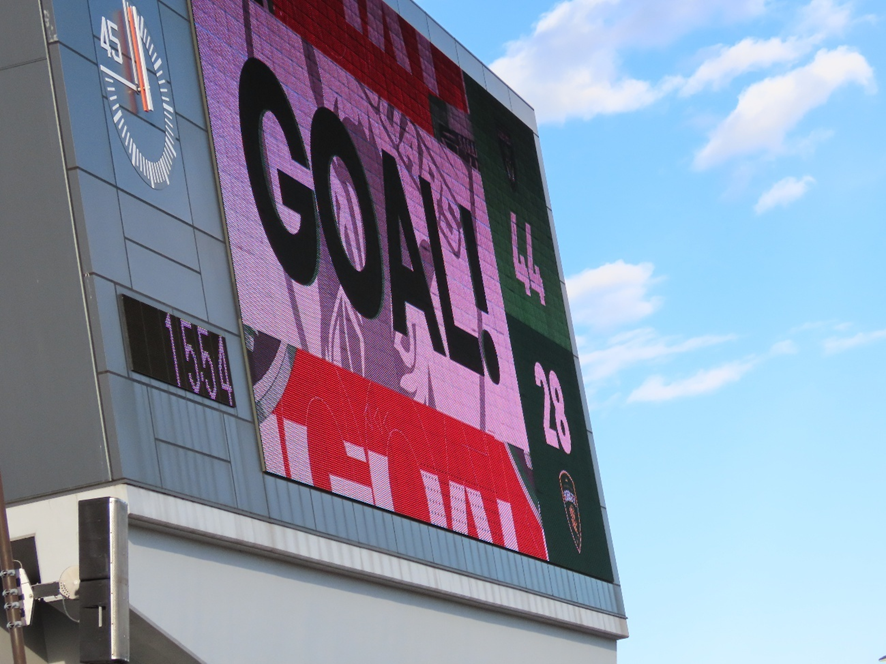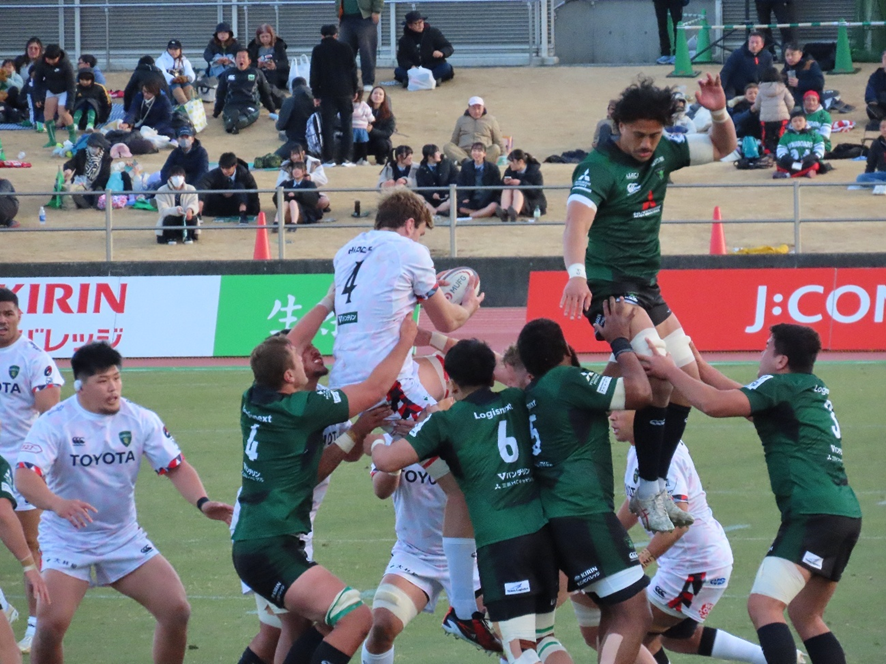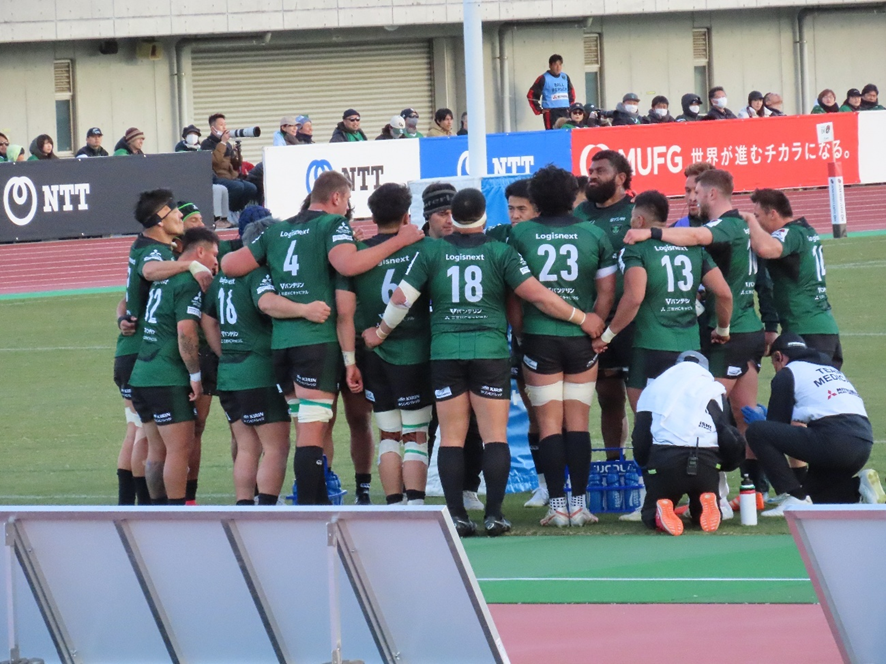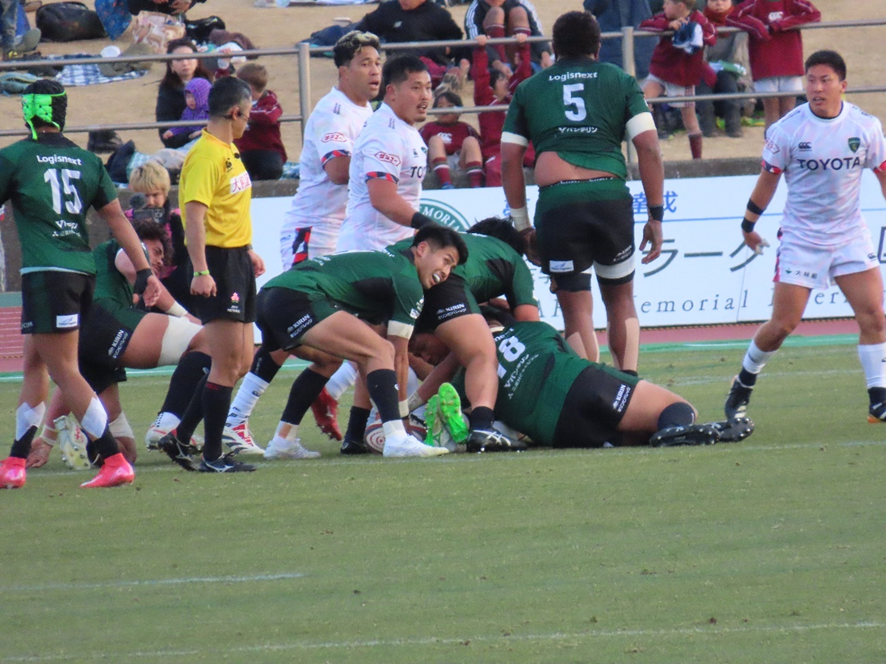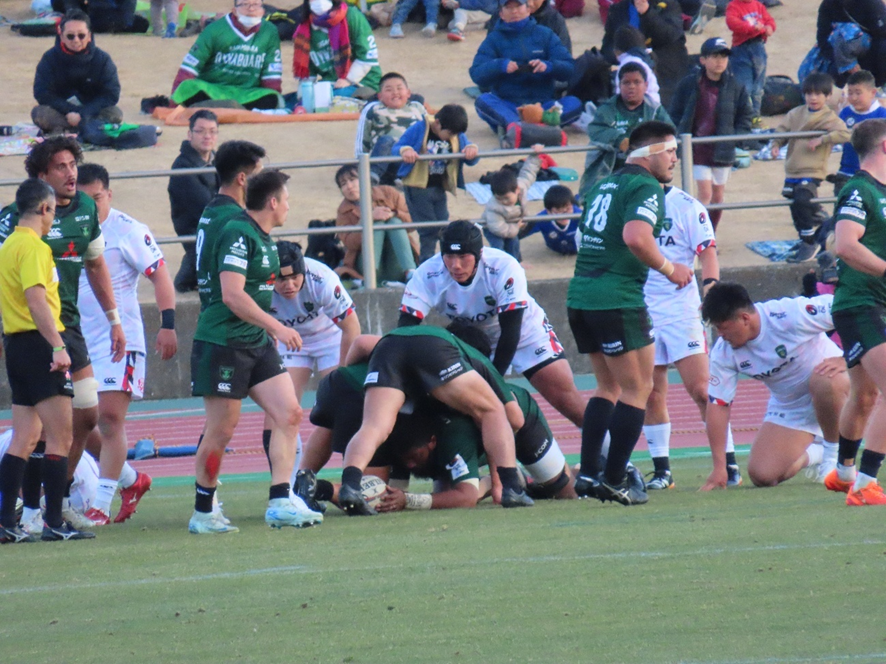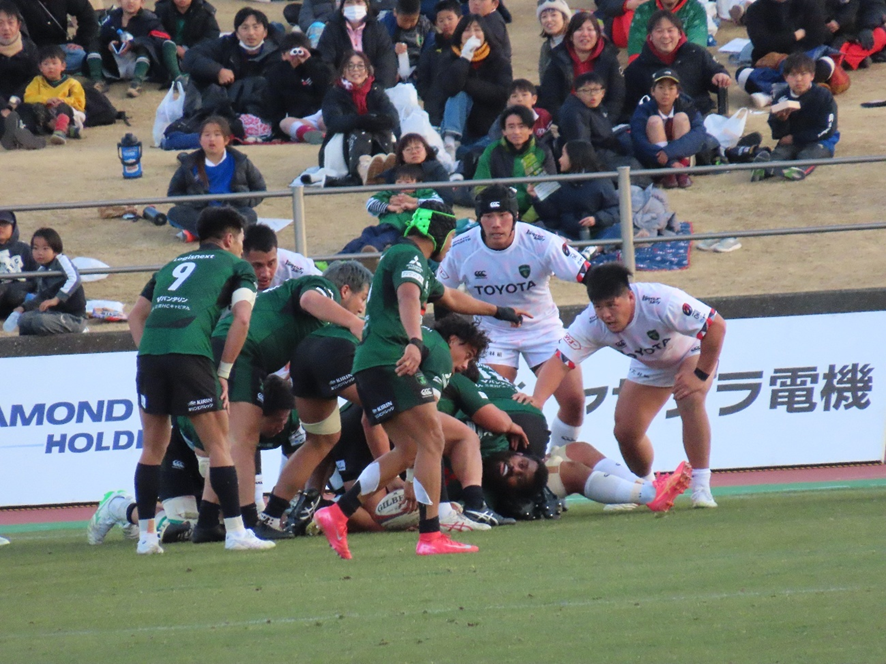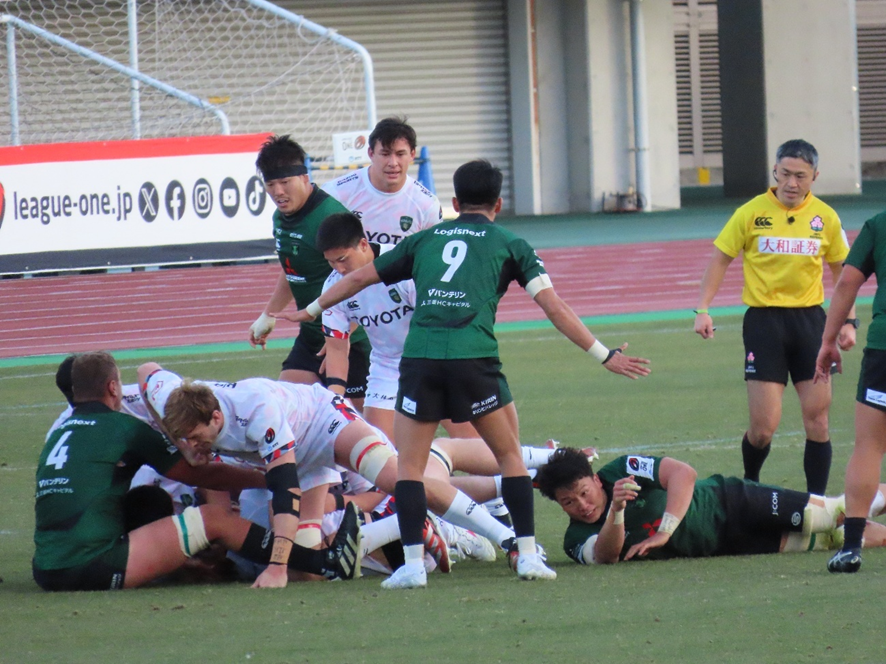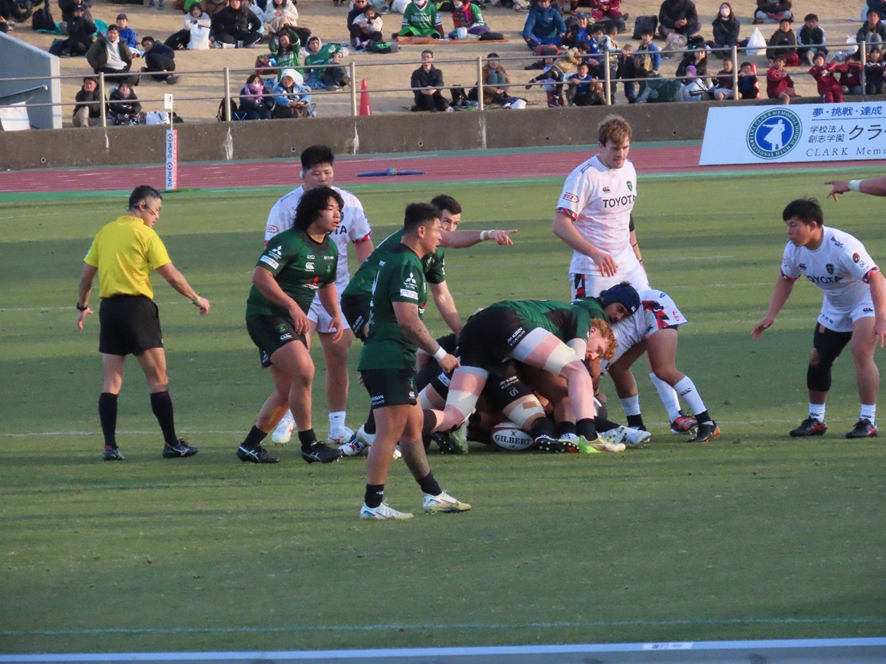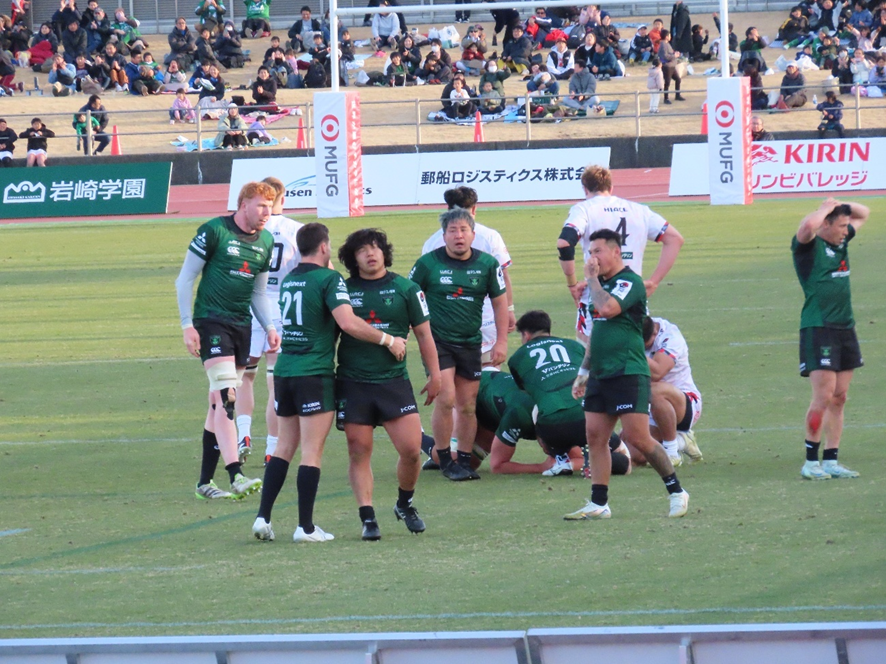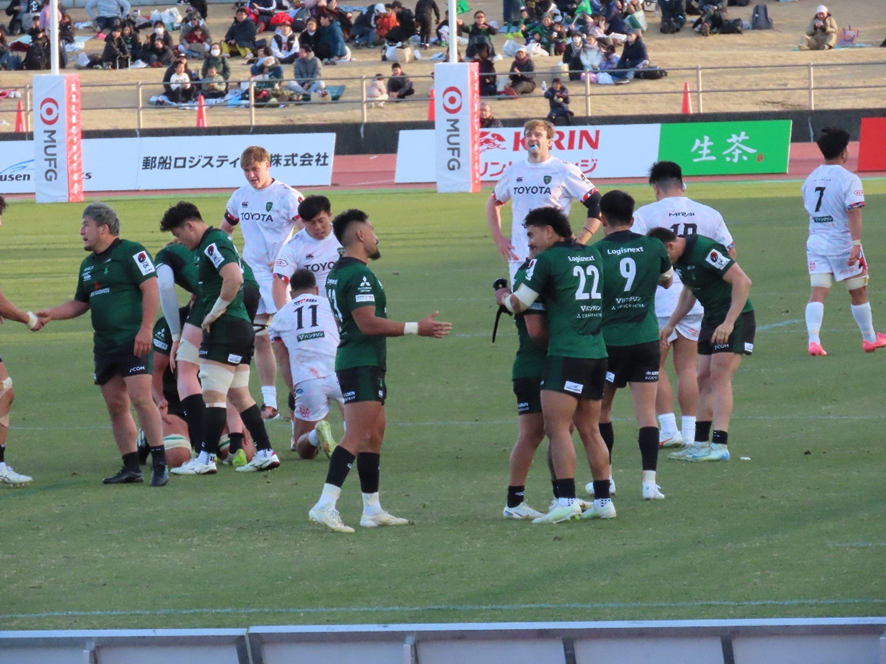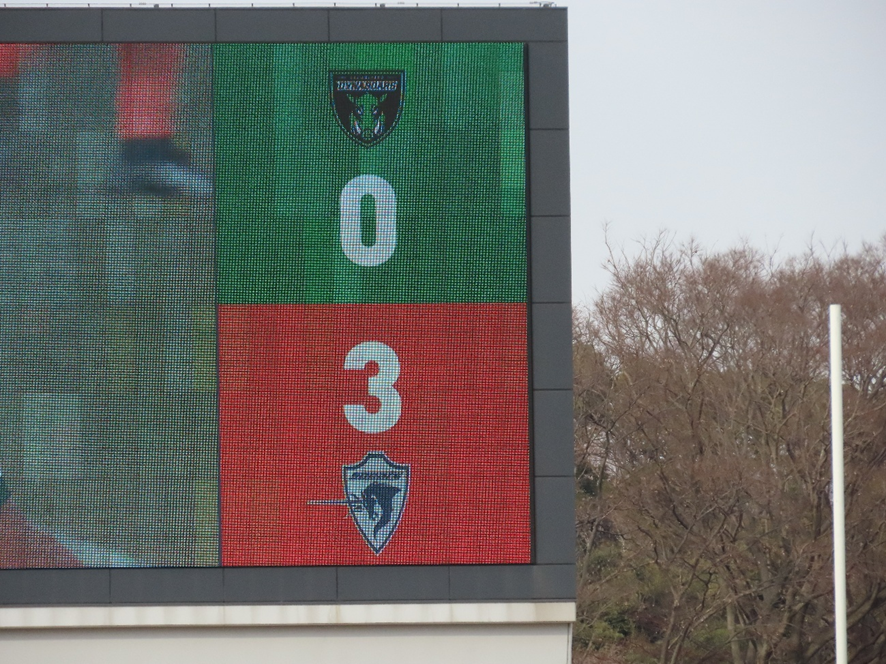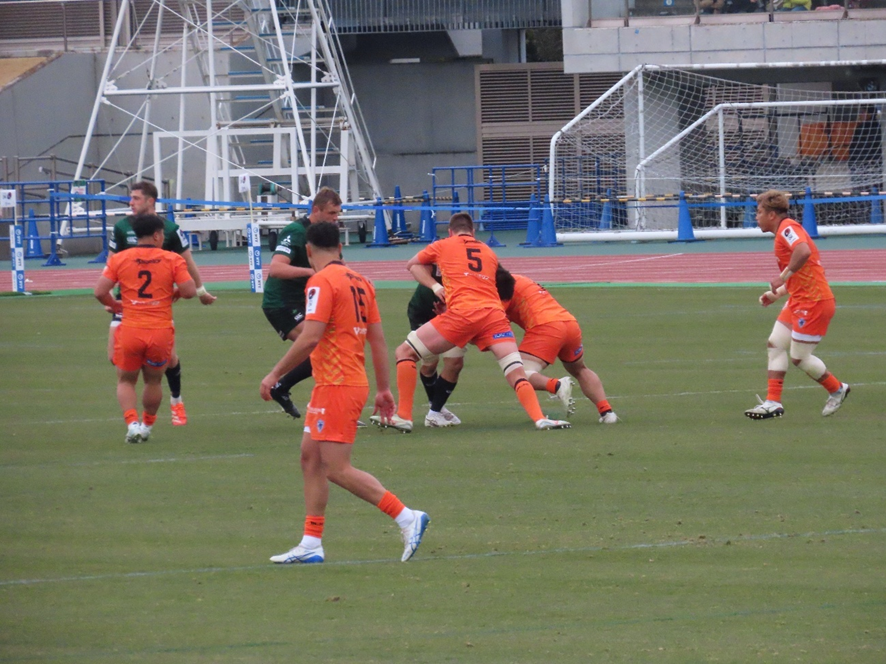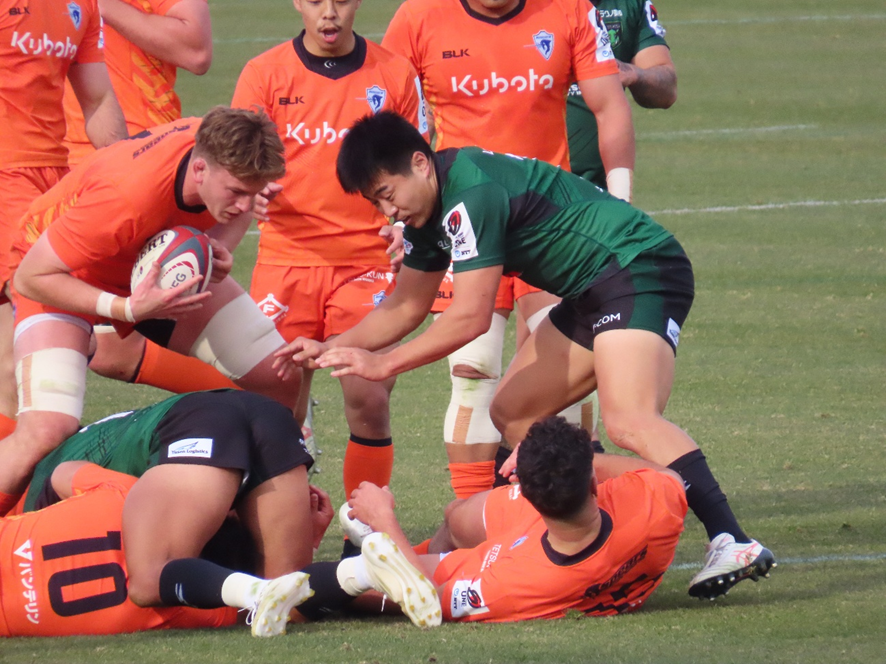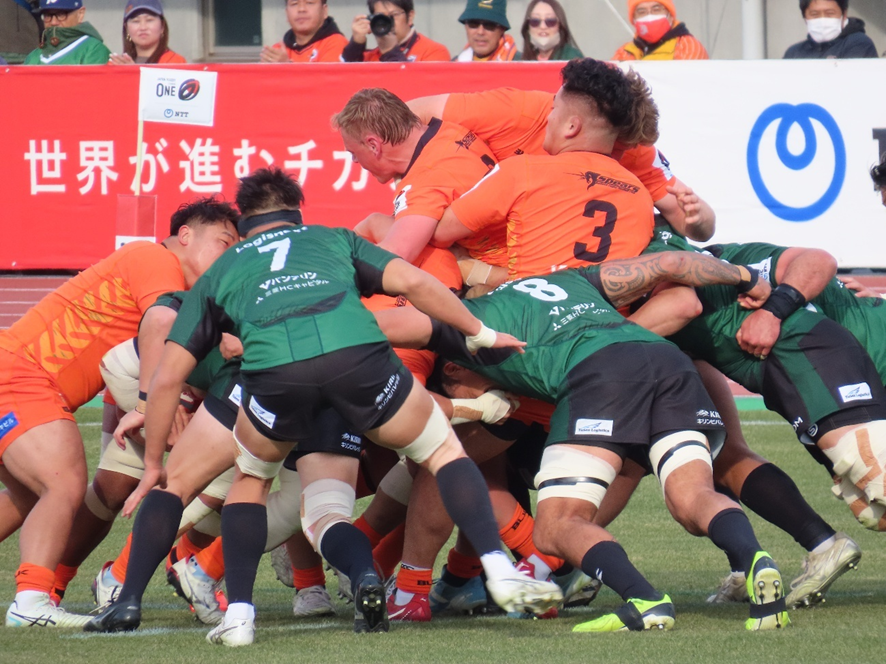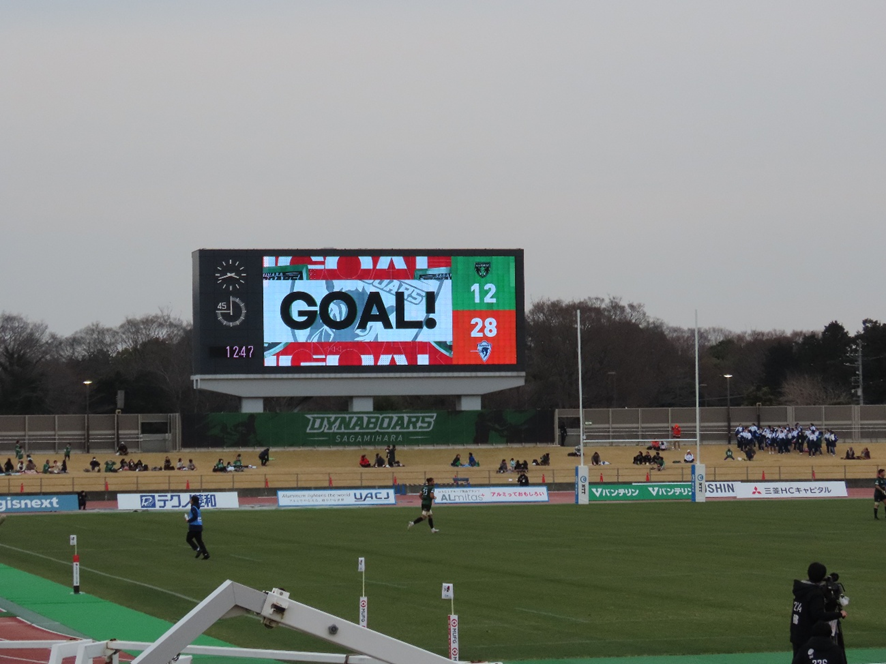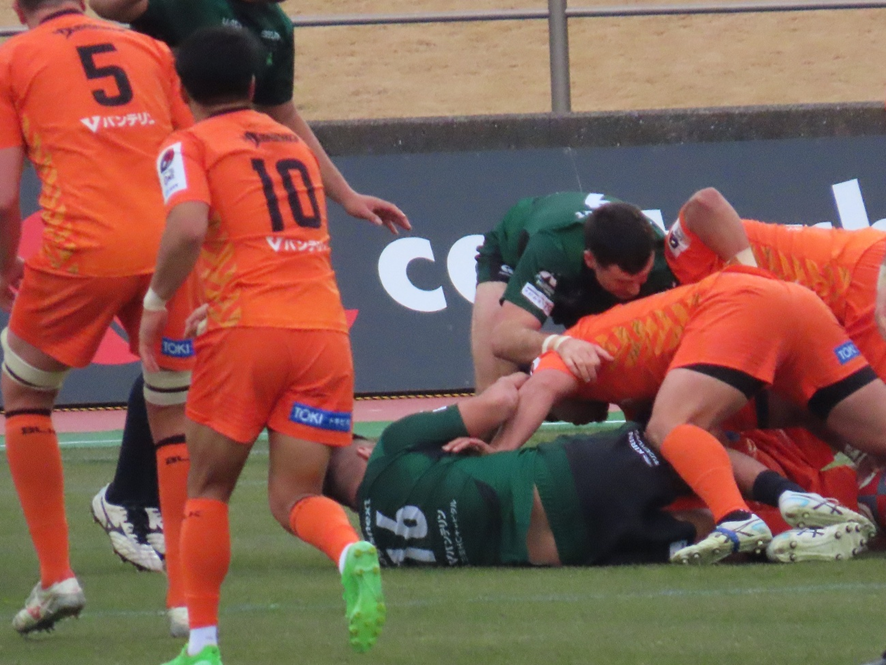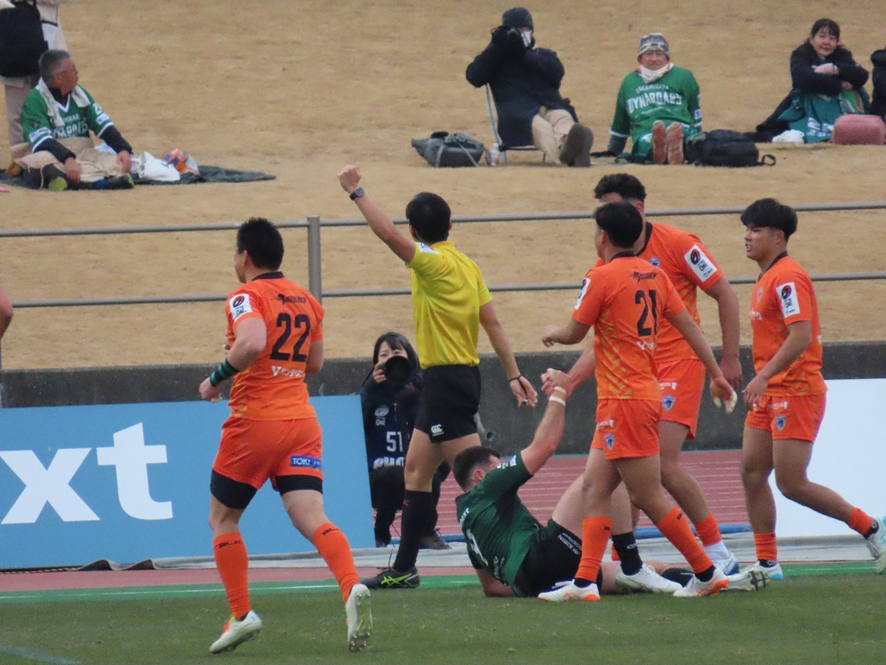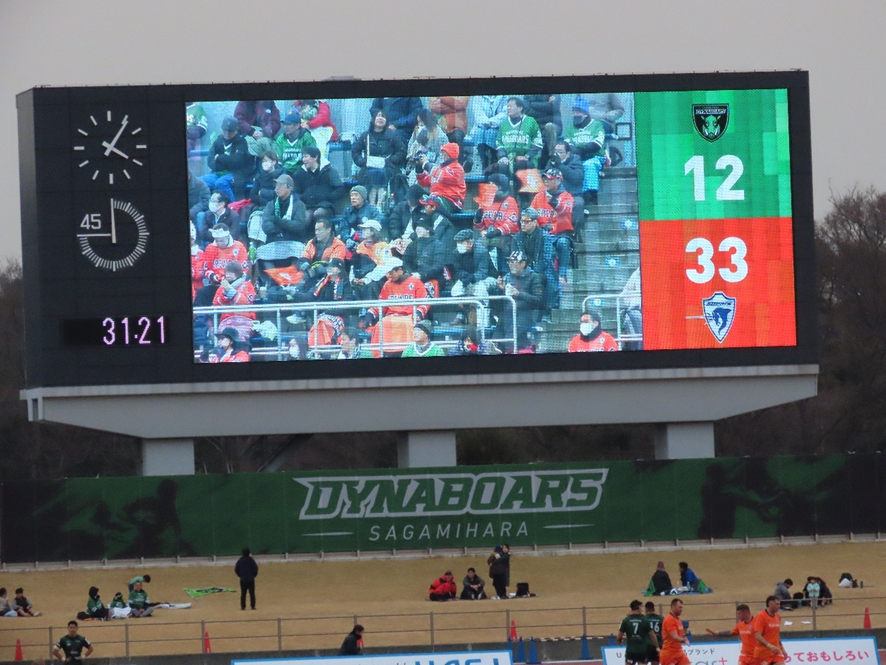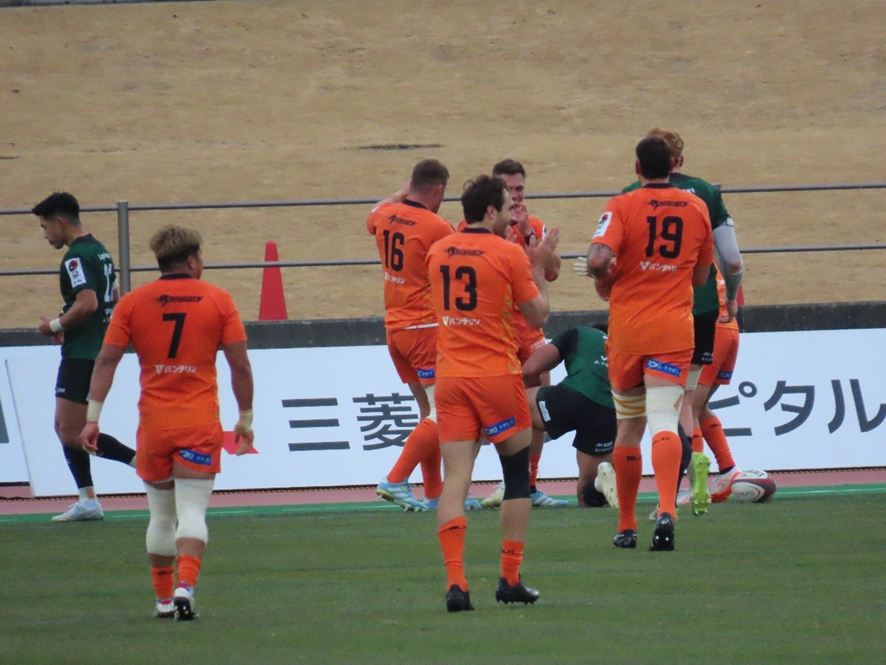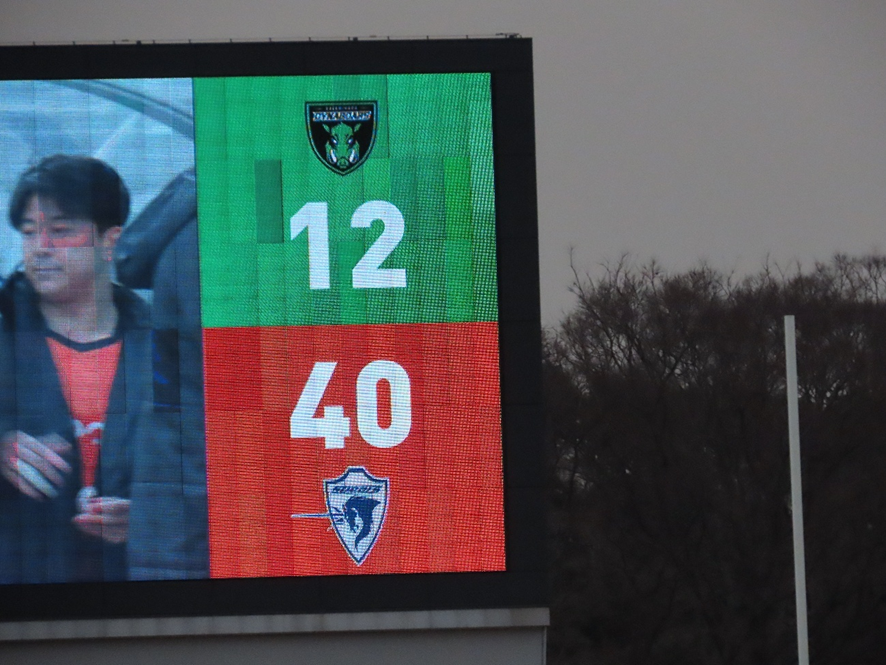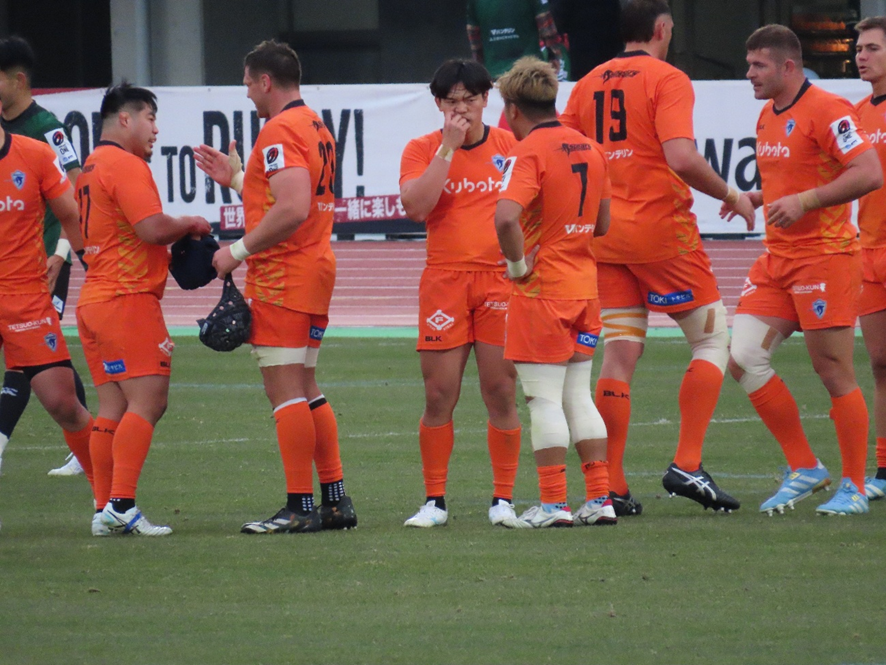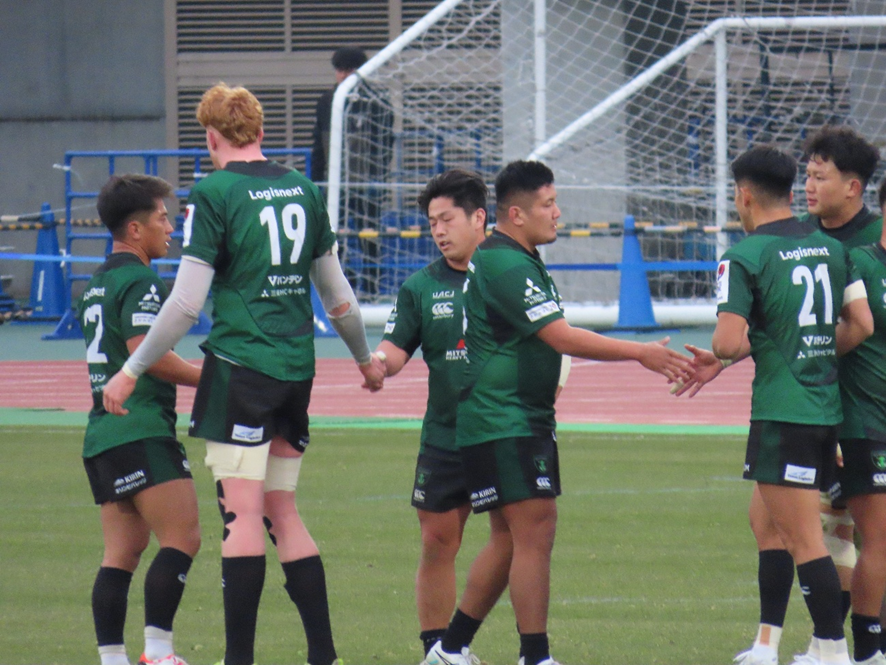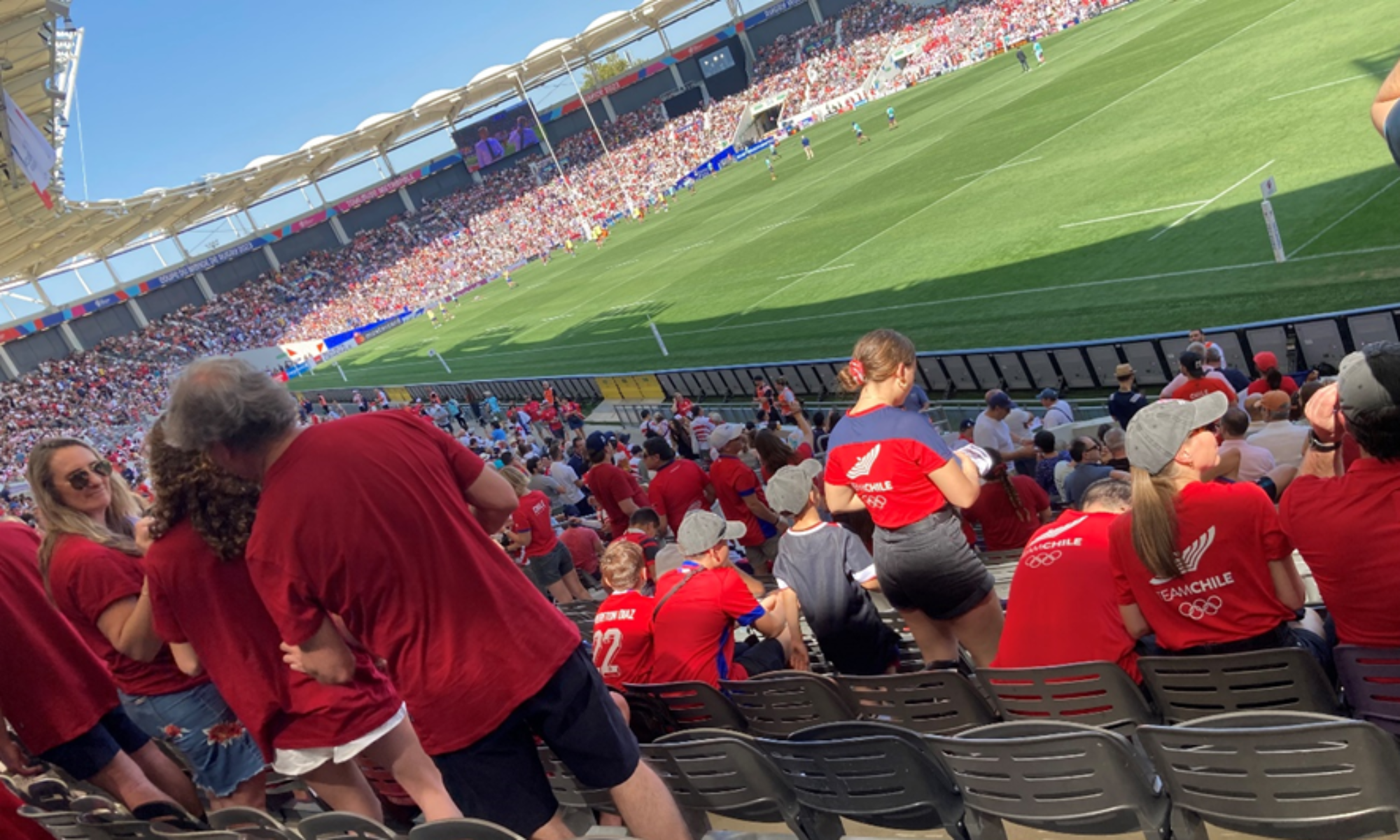
On January 13, 2025, the final match of the 61st National University Rugby Championship was held at the Chichibunomiya Rugby Stadium in Minato-ku, Tokyo. The semifinals were played at the National Stadium, which has a capacity of over 60,000, but the final was played at the Chichibunomiya Rugby Stadium, which has a capacity of about 23,000, and many rugby fans asked why. Since the final was held at a stadium with a small capacity, tickets were sold out five days in advance.
I bought a cheap unreserved ticket and entered the venue as soon as the doors opened to secure a good seat.
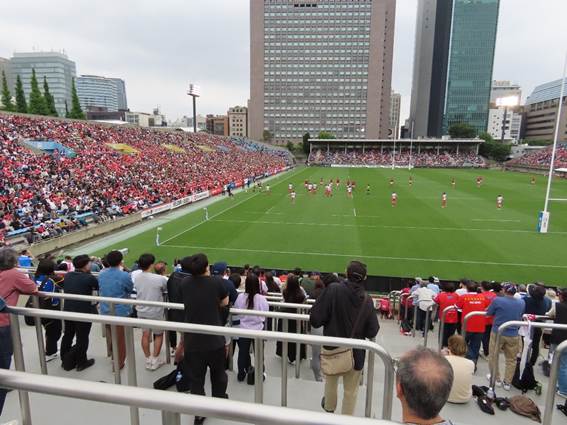
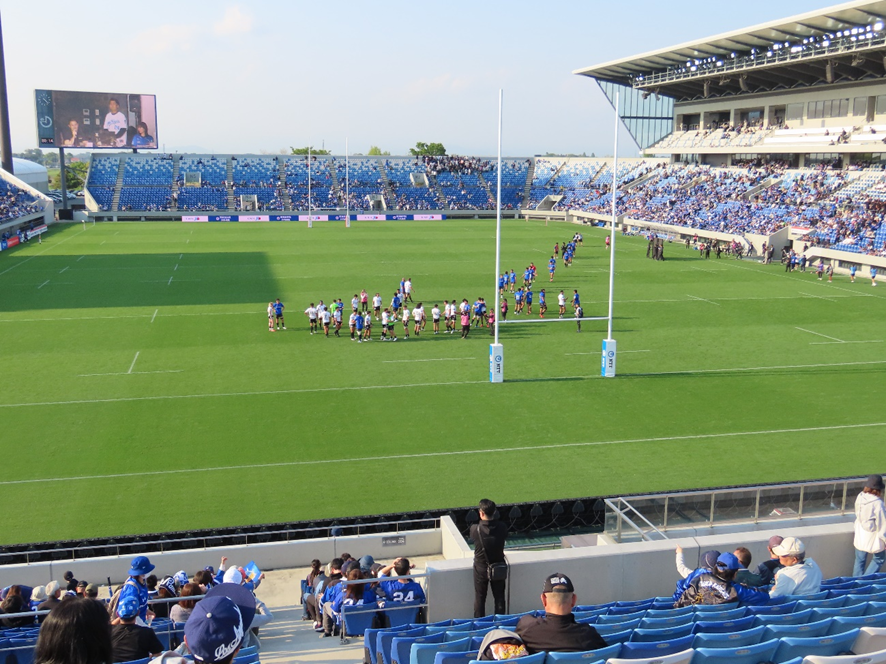
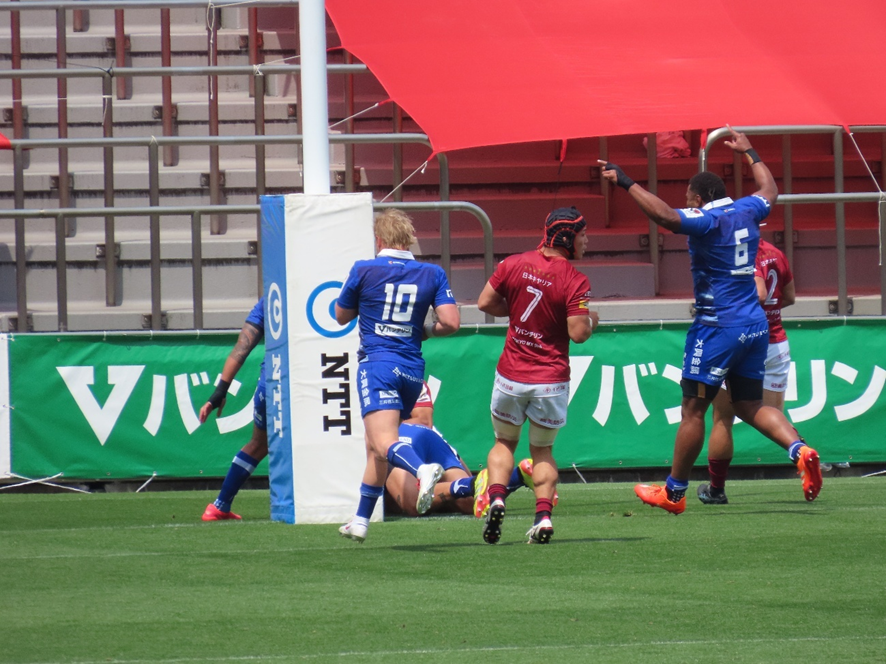
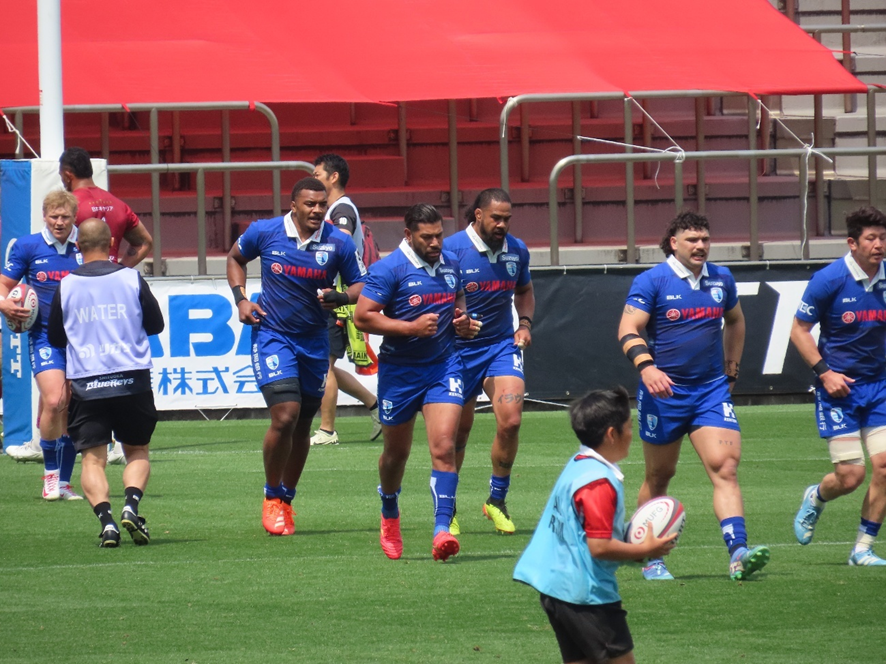
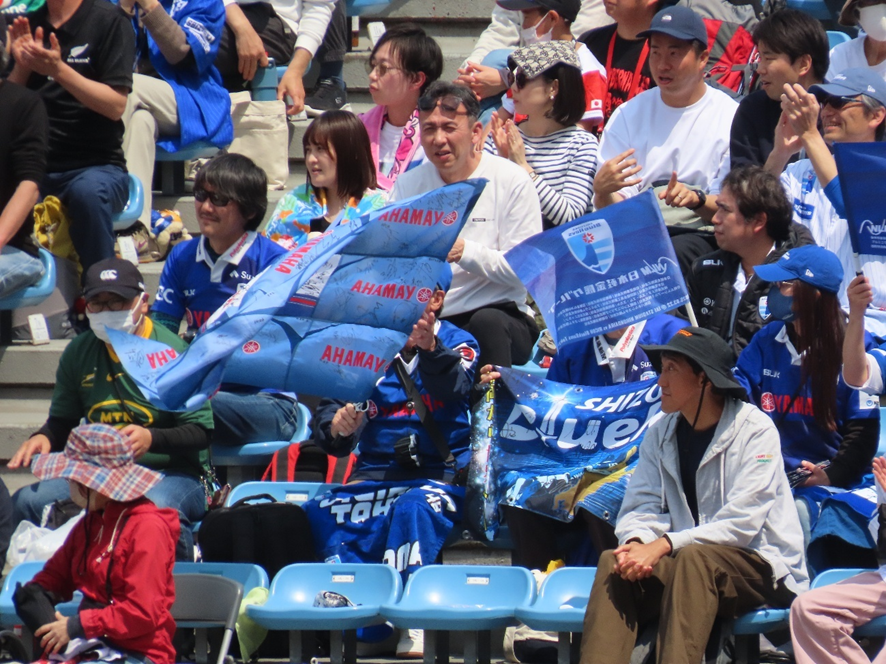
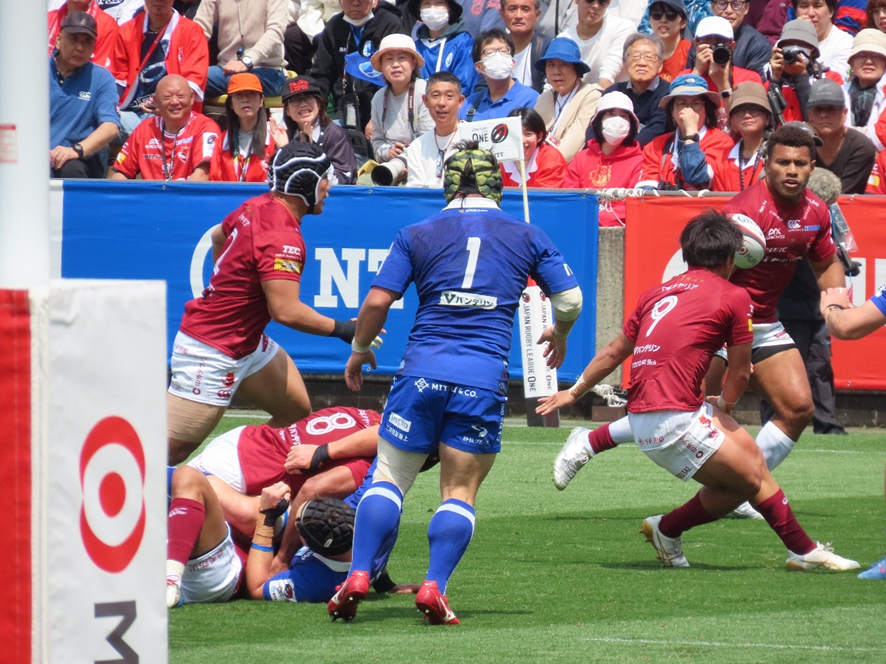
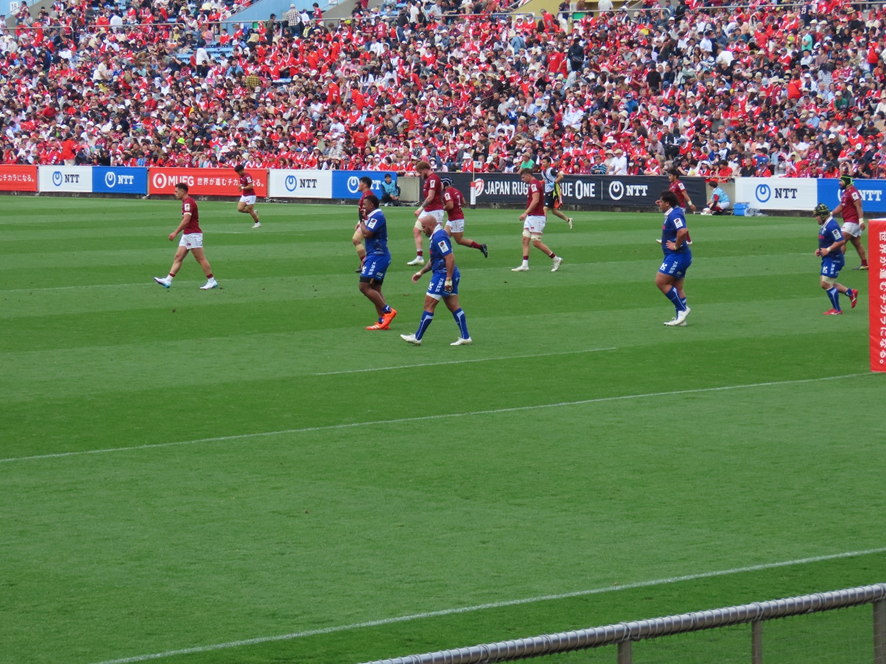
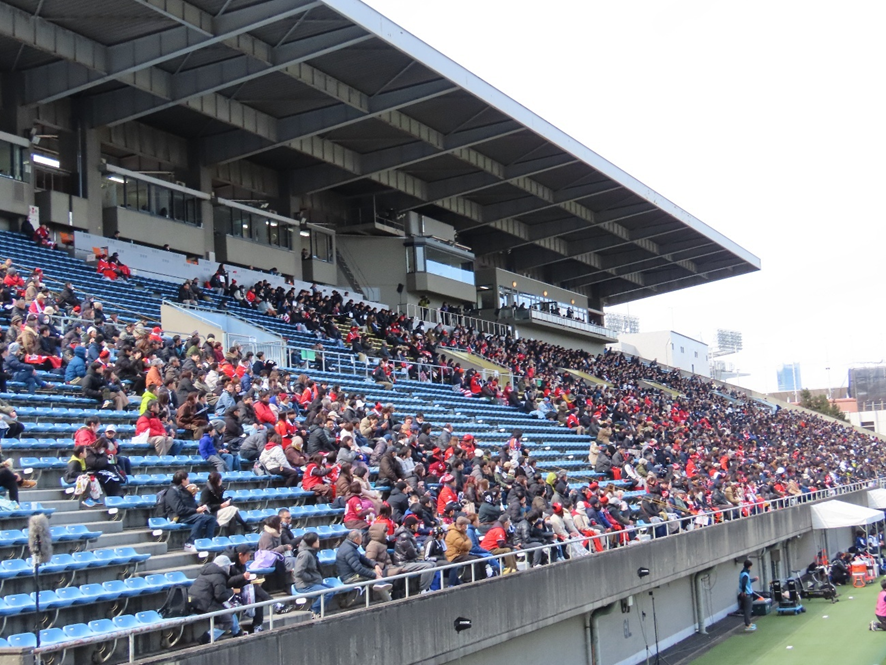
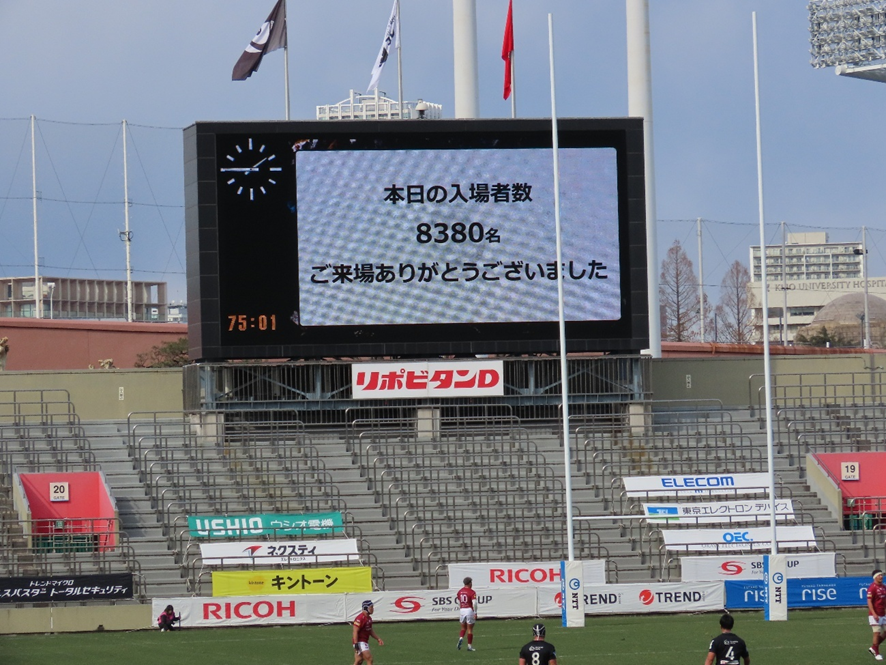
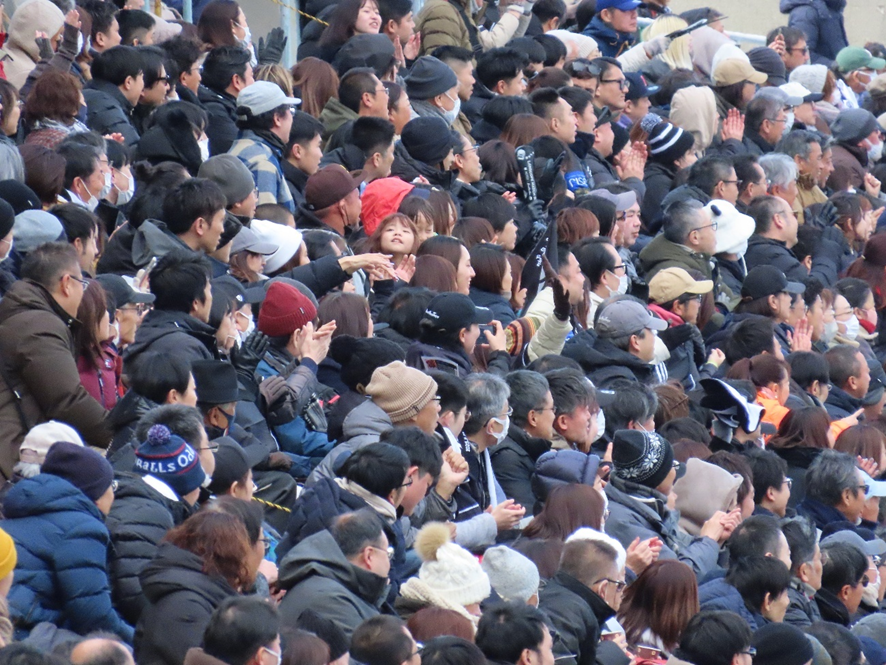
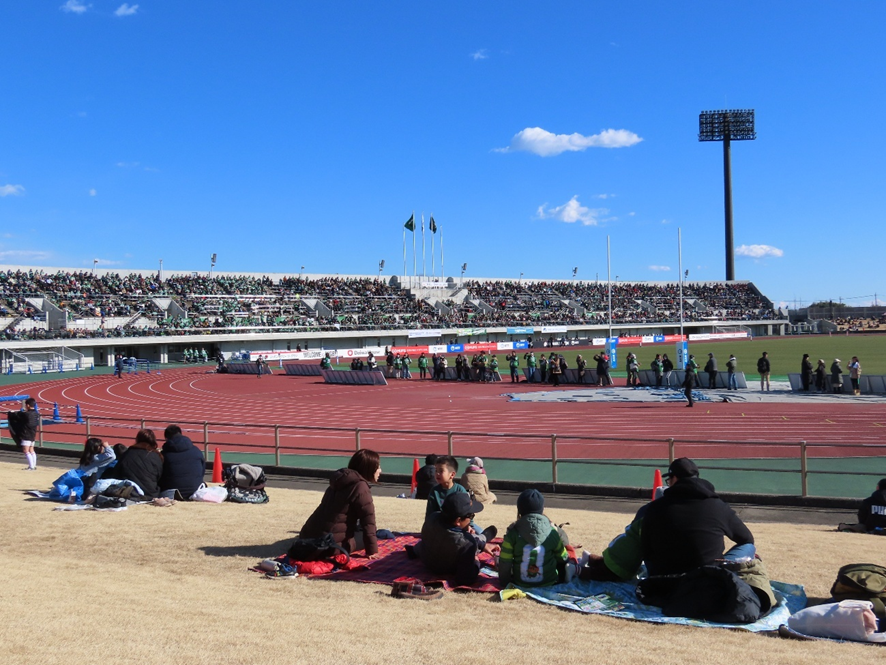
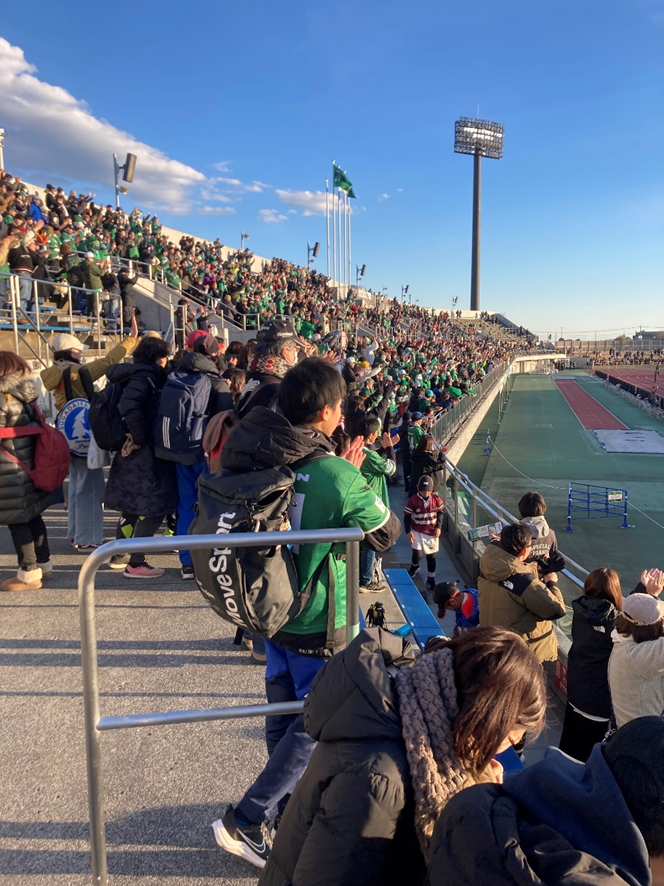
The photo above was taken around 11:40 when the doors opened.
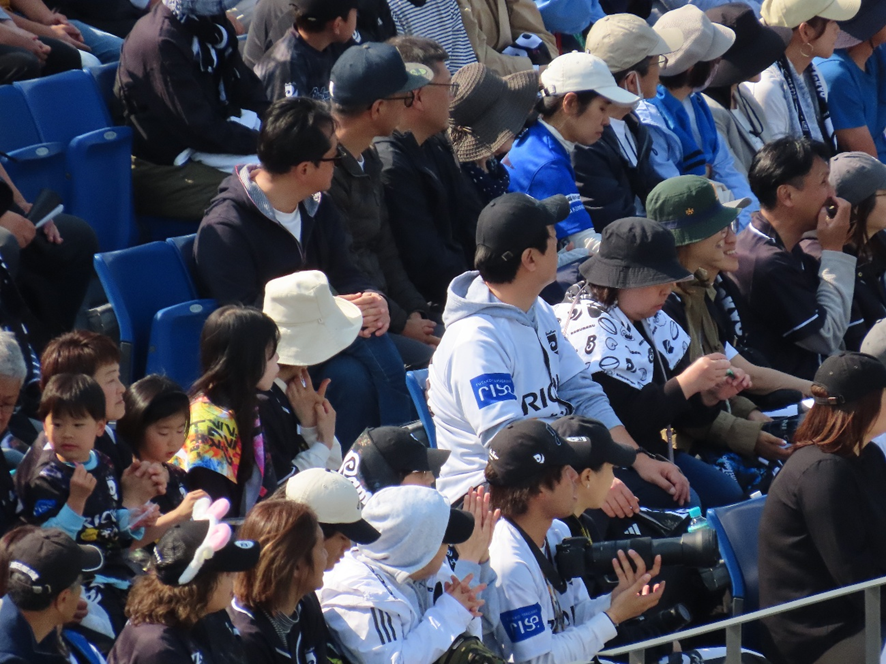
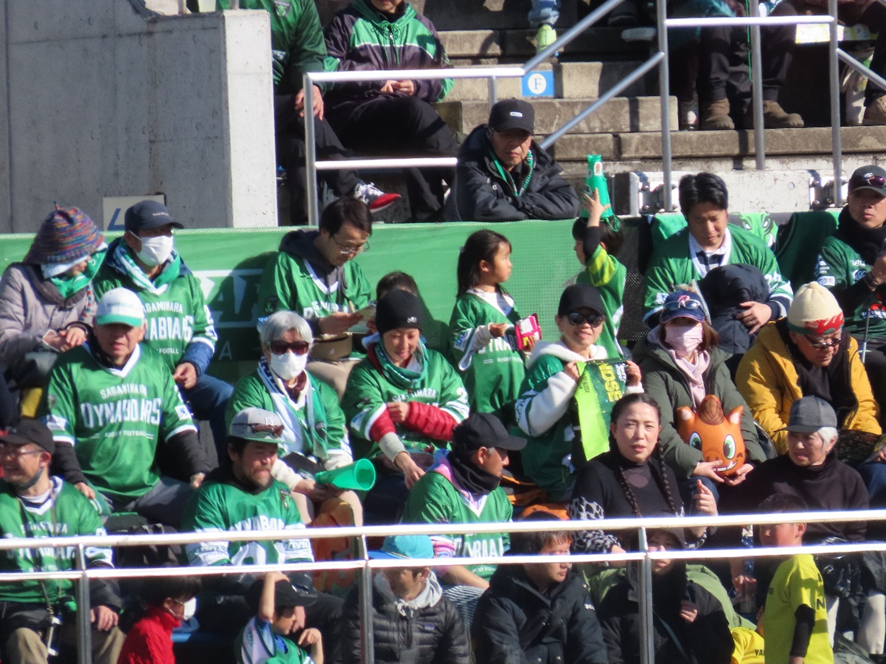
However, just before the game started, the seats were full, as you can see.
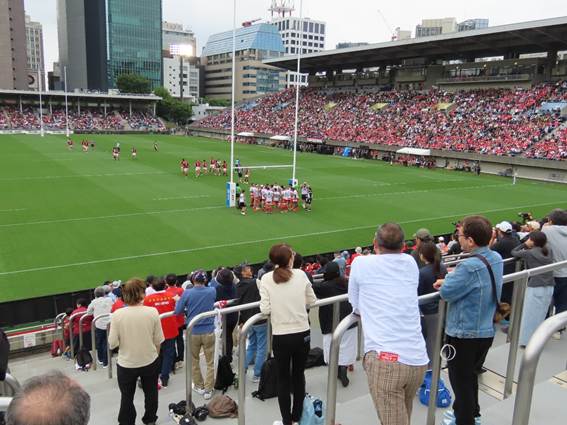
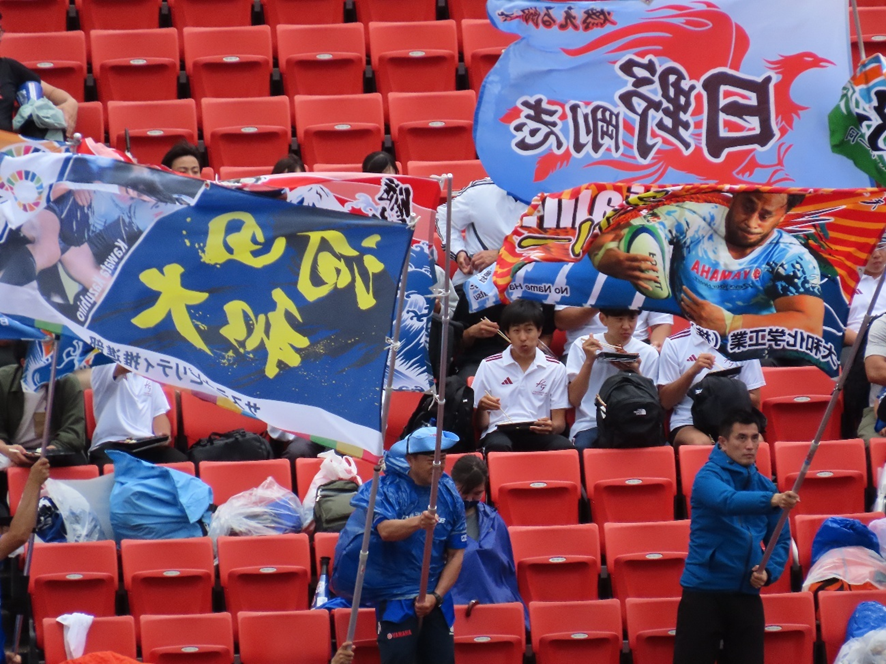
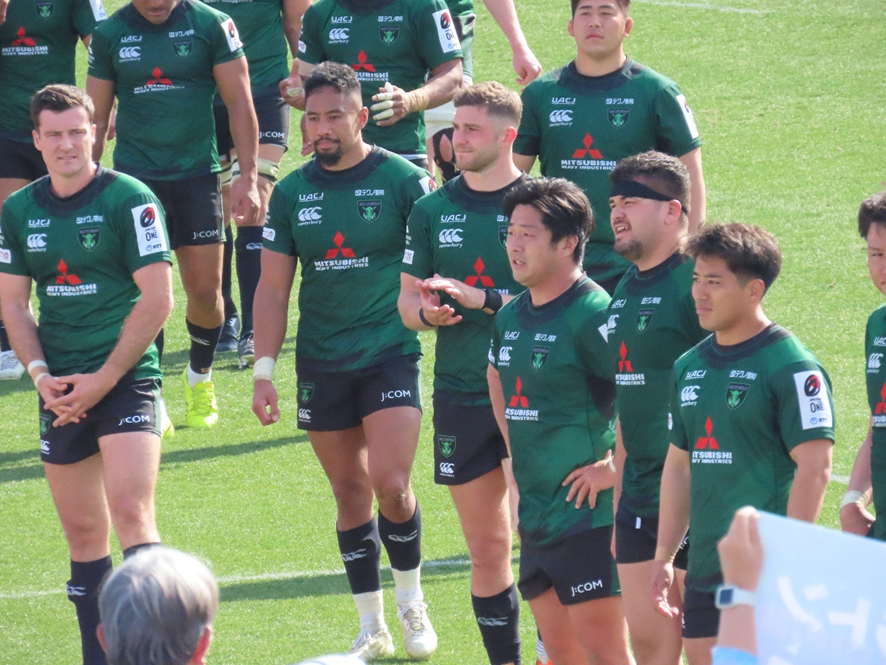
Before the game started, both schools sang their school anthems, and the officials of both schools stood up and sang together.
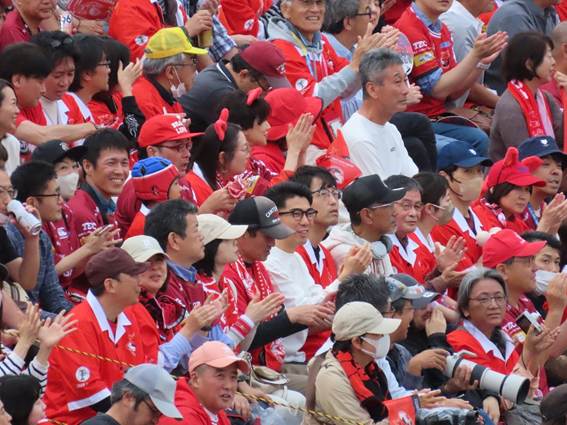
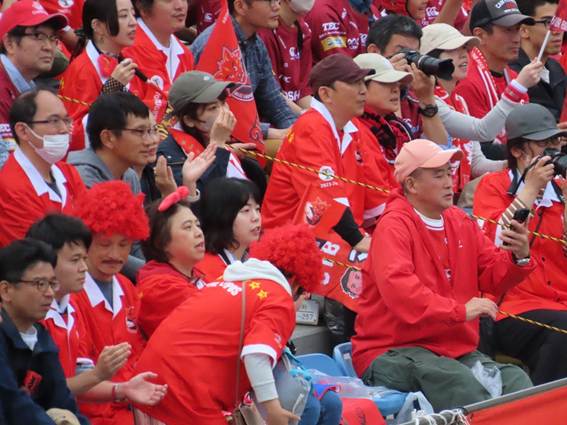
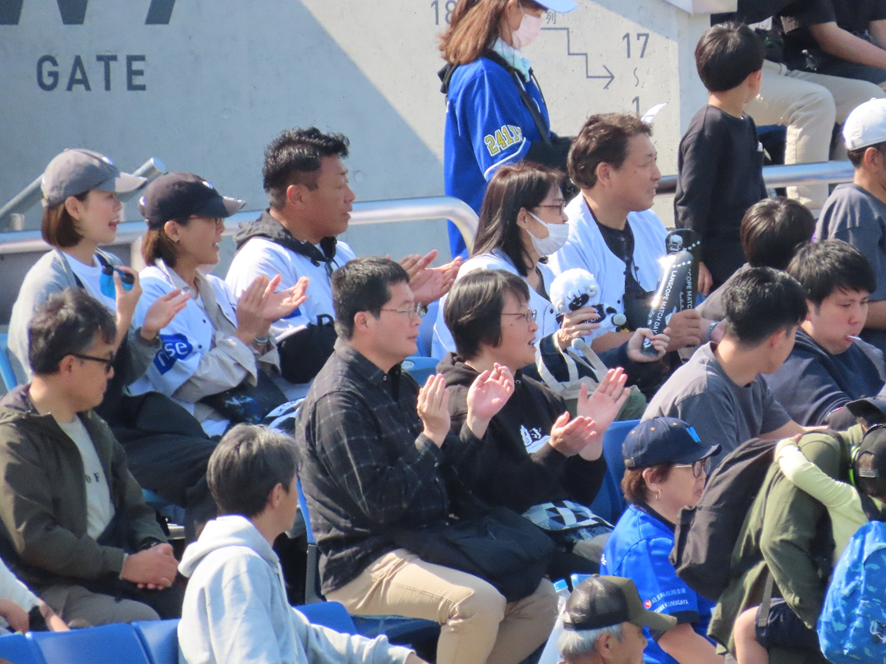
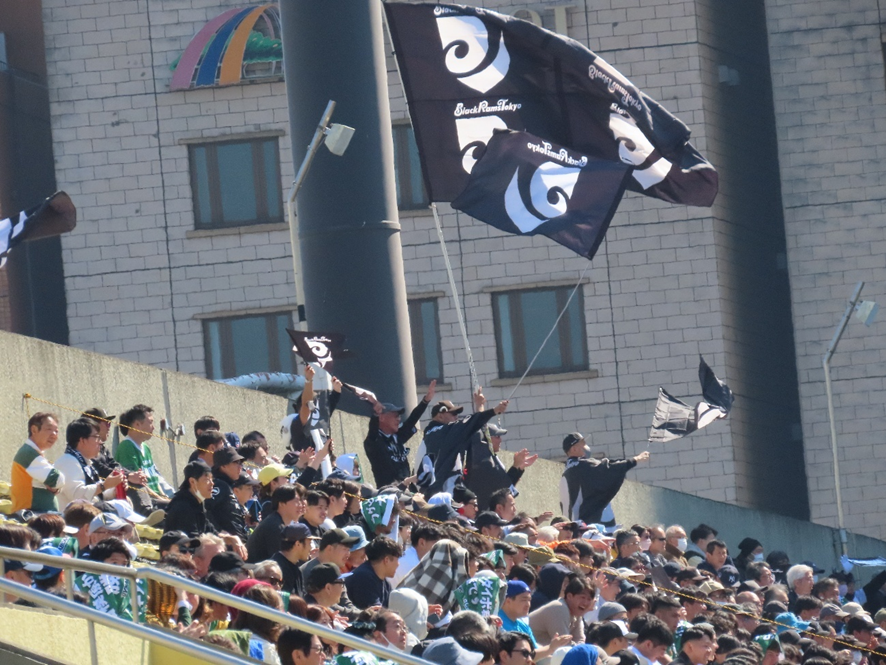
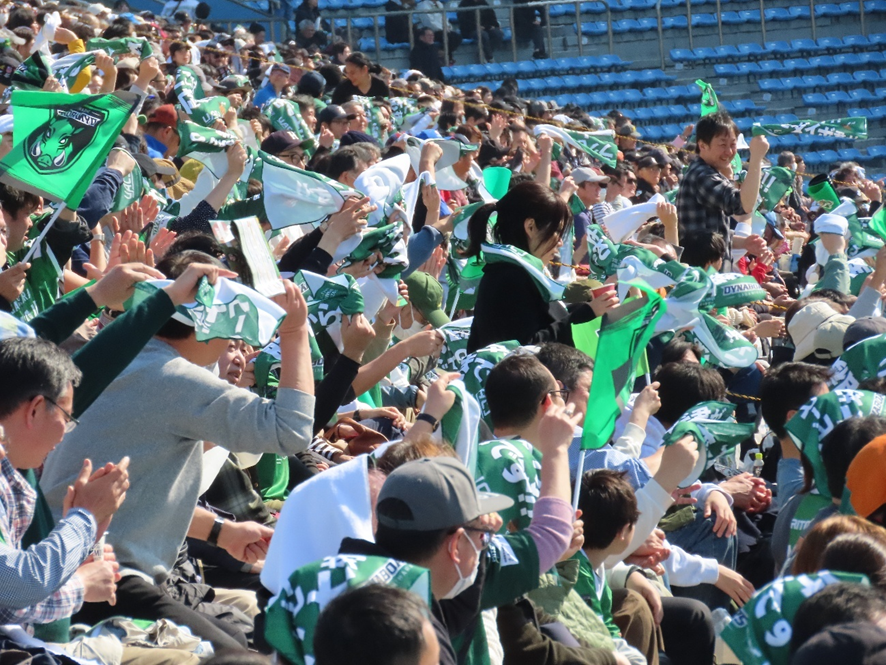
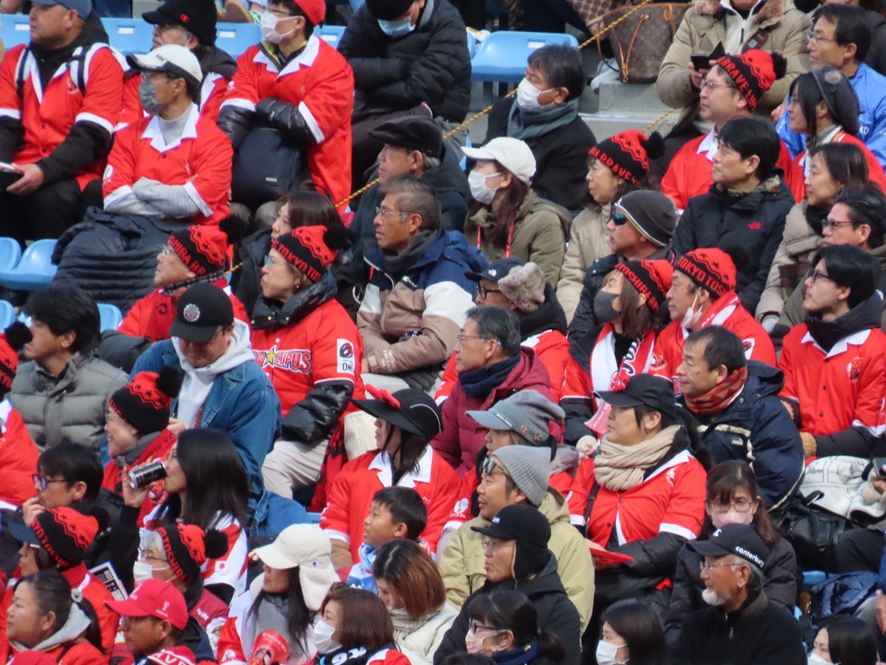
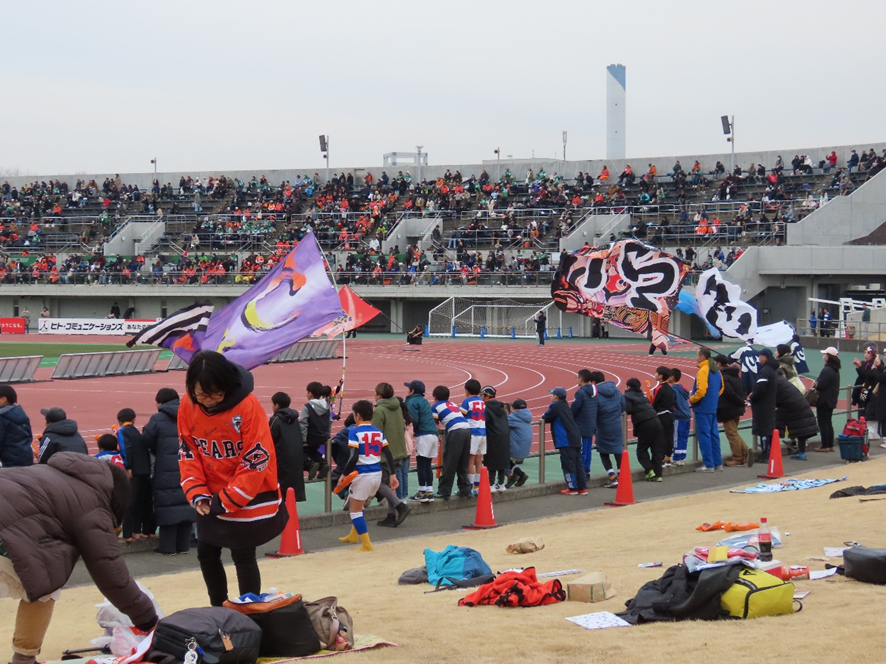
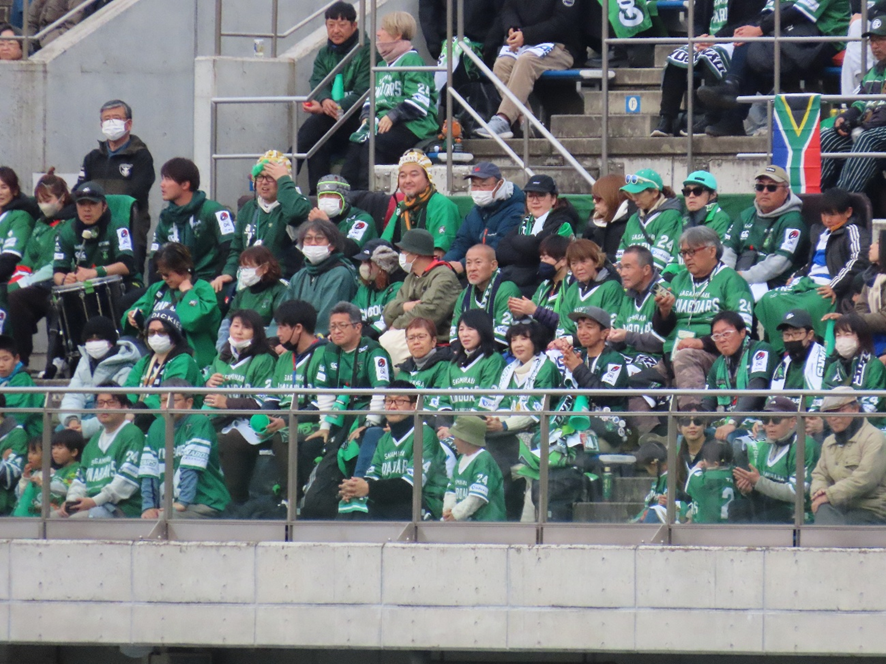
The photo above is an image of Teikyo University fans.
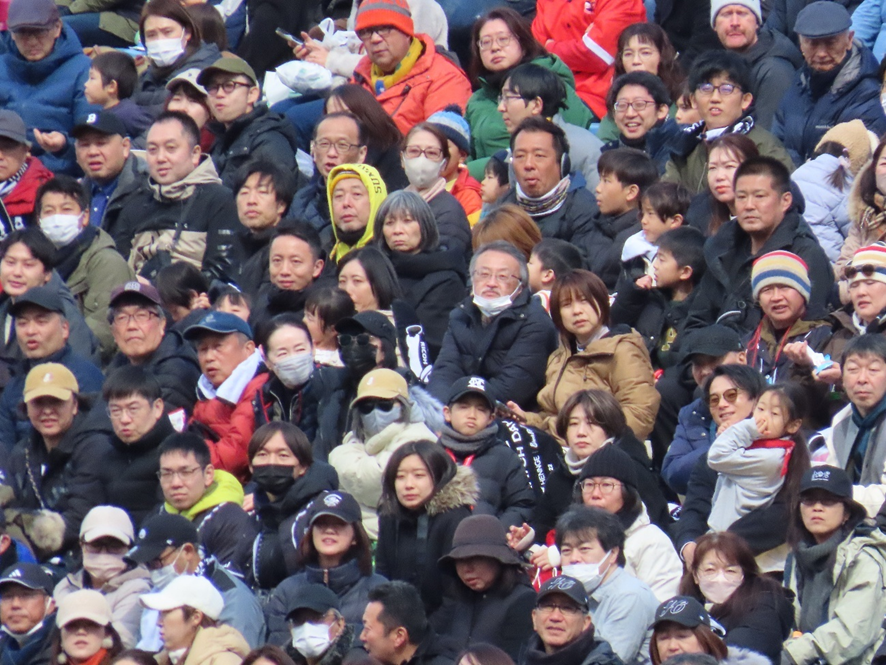
Next, here is an image of Waseda University fans.
Teikyo University is currently winning 3 consecutive university championships, but this season, Waseda University was expected to win the Japan championship for the first time in 5 years, so many Waseda University fans gathered at the venue.
Here is the latest information on the two schools that will be competing on this day.
First, the latest information on Teikyo University, the defending champion.
Teikyo University lost to Waseda University by the score of 48-17 in the official match of the Kanto University Rugby Rivalry Group on November 3. Teikyo University had not lost to any other university in the 3 seasons prior to last season, so this long-overdue defeat seemed to have come as a great shock not only to the players, but also to those involved at Teikyo University. Since then, Teikyo University has been studying hard, hoping to be humiliated in the University Championships, and the factors that led to Teikyo University’s defeat in the 11/3 match were,
(1) Overwhelmed in the FW game, especially in the scrum.
(2) Waseda University’s SO HATTORI’s long-range kicking was not able to be dealt with, and the players were worn out during the game.
3) The loss of 5 tries by WTB TANAKA of Waseda University. 5 tries scored by one player in the match on 11/3 was a collapse of Teikyo University’s defense.
How Teikyo University will correct these factors of defeat in the rematch on this day will be the highlight of this match.
The starting lineup for this day’s match was as follows
Teikyo University
No.
Name
height
weight
age
1
Kaisei UMEDA
176cm
108kg
22
2
Yura CHINEN
171cm
100kg
22
3
Tsubasa MORIYAMA
180cm
109kg
20
JXV,U18Japan,Japan
4
Kaisa DAUNAKAMAKAMA
182cm
120kg
21
U-18 Japan
5
Takuma MOTOHASHI
192cm
118kg
22
JXV,Japan
6
Keito AOKI
187cm
110kg
22
JXV
7
Ikki MORIMOTO
169cm
81kg
22
8
Kanta KURAHASHI
181cm
103kg
22
9
Kumsu LEE
174cm
80kg
22
10
Takaya MOTOHASHI
182cm
86kg
20
U-20 Japan,JXV,Japan
11
Taiyo HIGUMA
176cm
89kg
21
12
Yoshiki OMACHI
173cm
84kg
20
U-18,U-20 Japan,JJ
13
Yamato UEDA
180cm
84kg
19
U-18,U-20 Japan,JXV
14
Genki IKUTA
170cm
83kg
21
U-18,U-20 Japan,JXV
15
Shinya KOMURA
180cm
88kg
22
JJ=Junior Japan
JXV=Japan XV
** Player to watch **
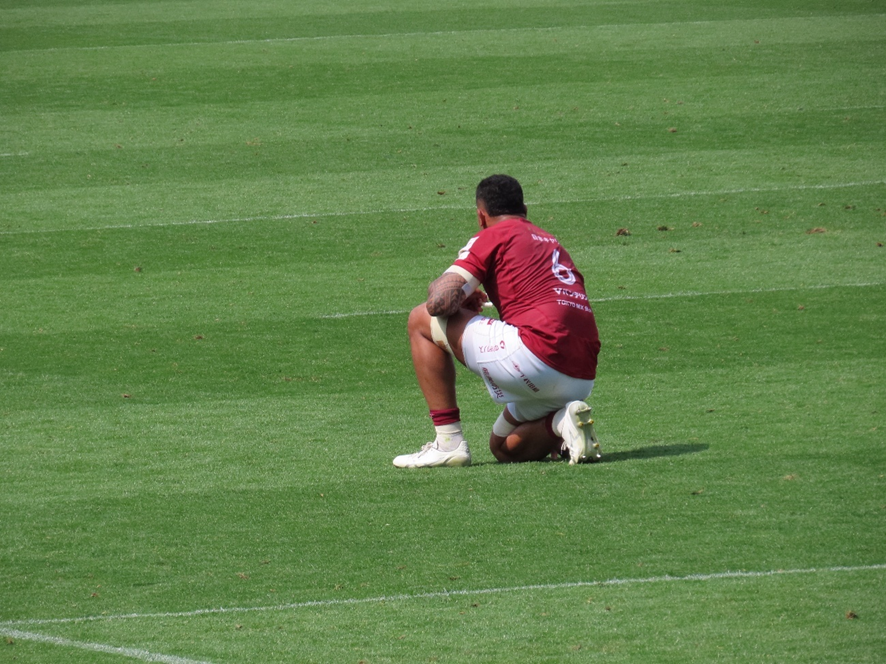
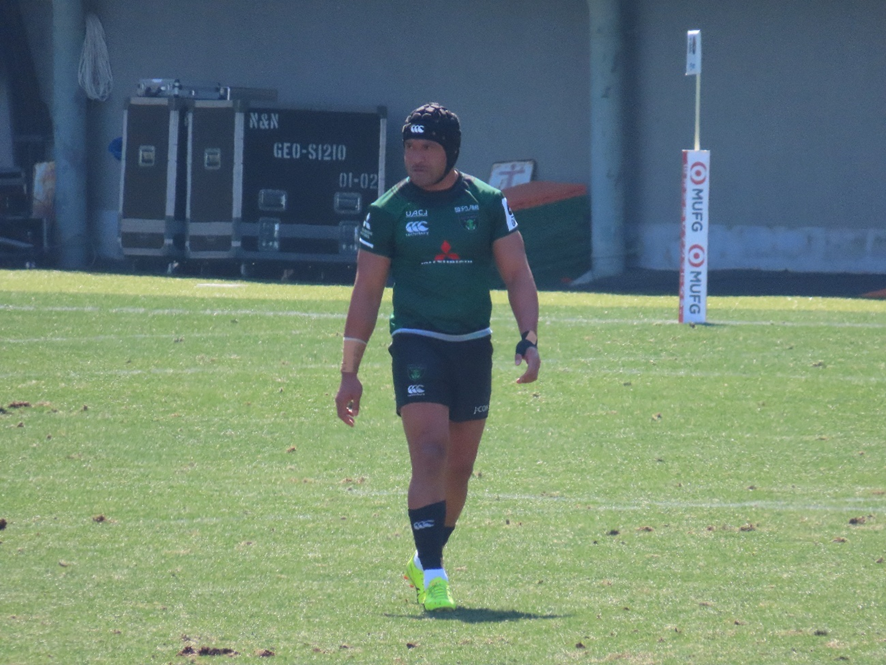
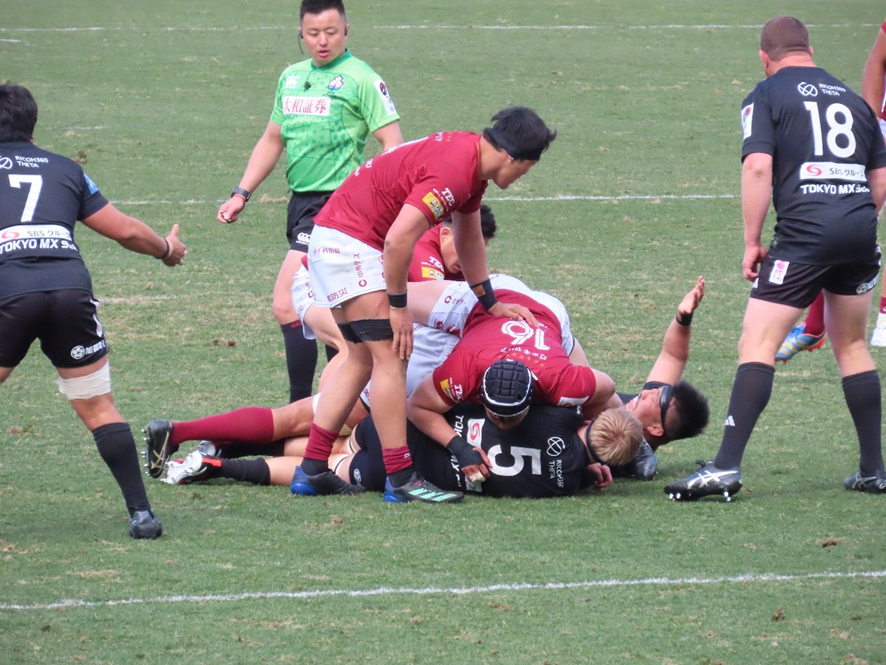
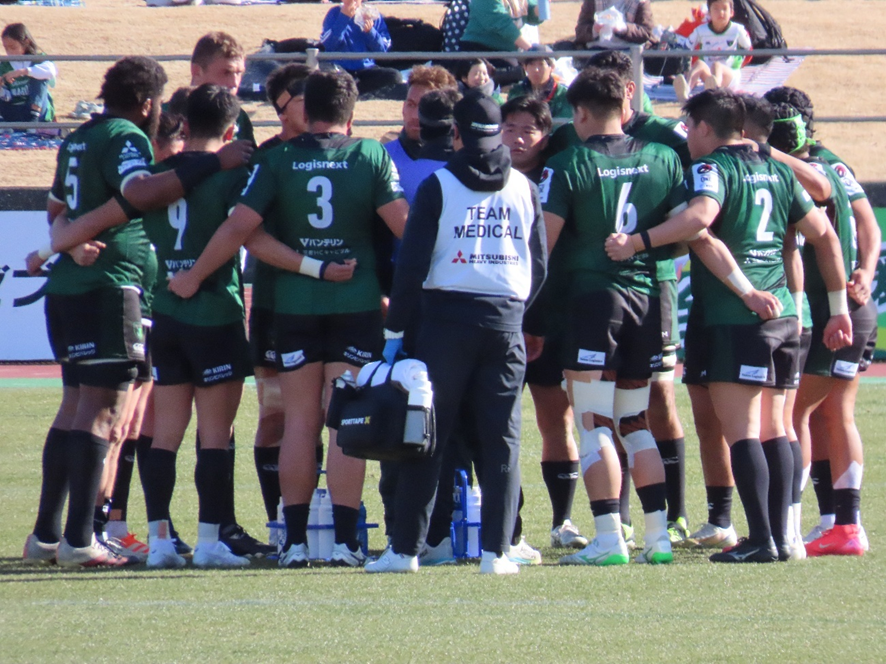
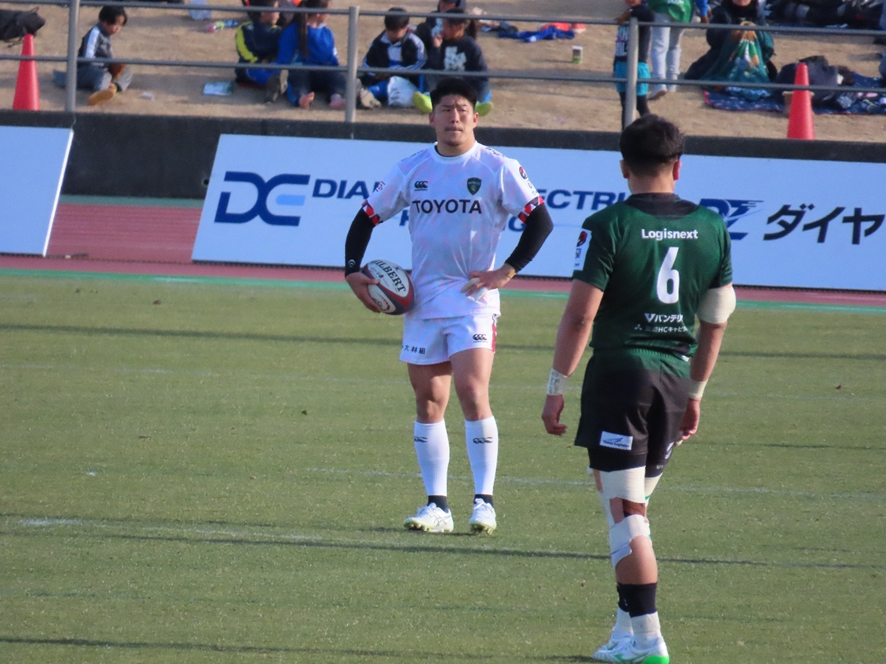
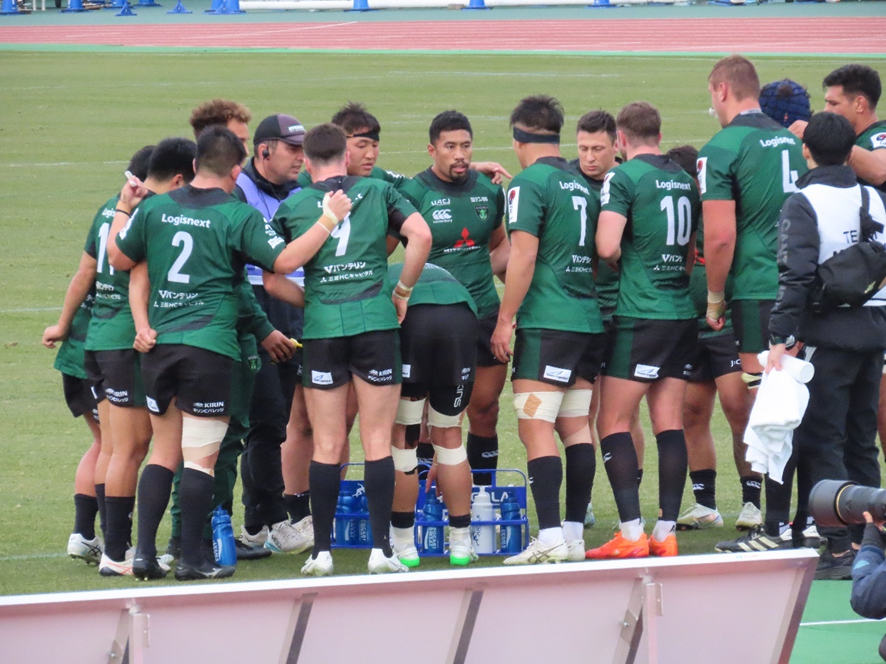
(The player with the number 6 is Keito AOKI)
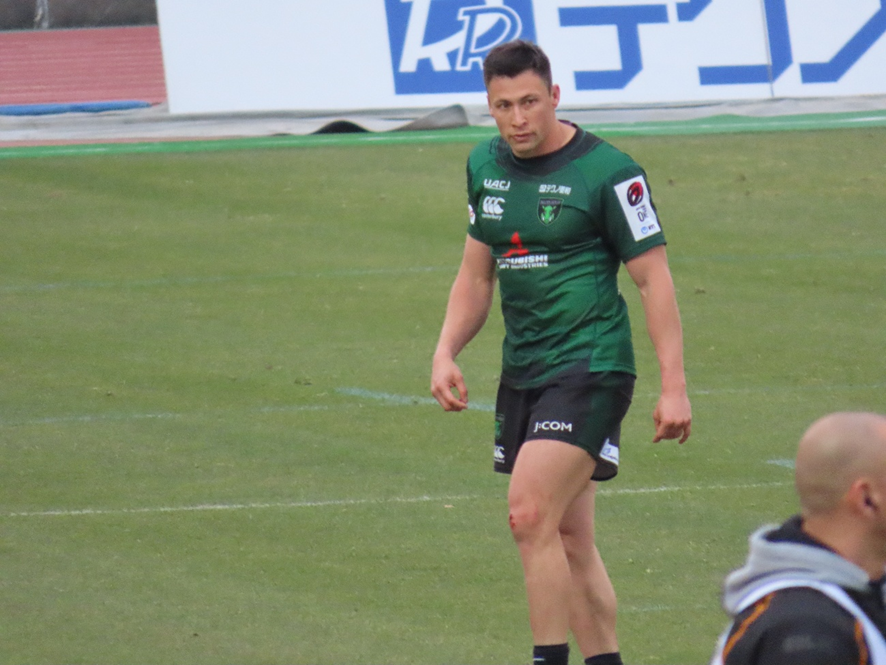
Keito AOKI. 187cm, 110kg, 22 years old. He is a graduate of Toin Gakuen High School and was selected for the Japan XV. Captain of Teikyo University this season. He has been a regular member of the top team since he was a freshman at Teikyo University. He has never been a captain before, but this season he was selected as a captain for the first time. As for his achievements as a player, he is impeccable, but as a team leader, he has had a lot of trial and error. As a leader-oriented captain, will he be able to lead his team to the top of the championship with his rugged back in the final game against Waseda University, the only team they have lost to so far?
Next, an update on Waseda University, the undefeated A-seeded school in this season’s University Championship.
Since losing to Kyoto Sangyo University in the quarterfinals of last season’s University Championship, they have remained undefeated, and were the only team to beat the reigning university champions, Teikyo University, in an official match on November 3, 2011. This season, under the leadership of captain Kenji Sato, the team tried to recapture the No. 1 position in Japan for the first time in 5 years. This season, the team has not only a strong BK attack, but also a powerful FW, and they will challenge this day’s final with a solid team structure. Will they be able to go undefeated in the final match of the day?
The starting lineup for this day’s match wsa as follows
Waseda University
No.
Name
height
weight
age
1
Airou SUGIMOTO
176cm
107kg
21
U19 Japan
2
Kenji SATO
177cm
107kg
21
Japan XV,Japan
3
Shotaro KAMEYAMA
176cm
116kg
22
4
Takeomi NISHIURA
184cm
94kg
22
5
Bunsuke KURITA
184cm
105kg
20
U20Japan
6
Osuke SHIRO
185cm
99kg
18
U18 Japan
7
Yusei TANAKA
166cm
87kg
21
8
Fuuta SUZUKI
183m
99kg
23
9
Sena HOSOYA
162m
64kg
21
10
Ryota HATTORI
178cm
80kg
18
U18 Japan
11
Haruto IKEMOTO
183cm
90kg
20
12
Kengo NONAKA
180cm
93kg
21
U20,U21Japan,Junior Japan
13
Shuhou FUKUSHIMA
183cm
95kg
21
U18 Japan
14
Kenzou TANAKA
172cm
76kg
19
15
Yoshitaka YAZAKI
180cm
86kg
20
U18,U20 Japan,JapanXV,Japan
JJ=Junior Japan
JXV=Japan XV
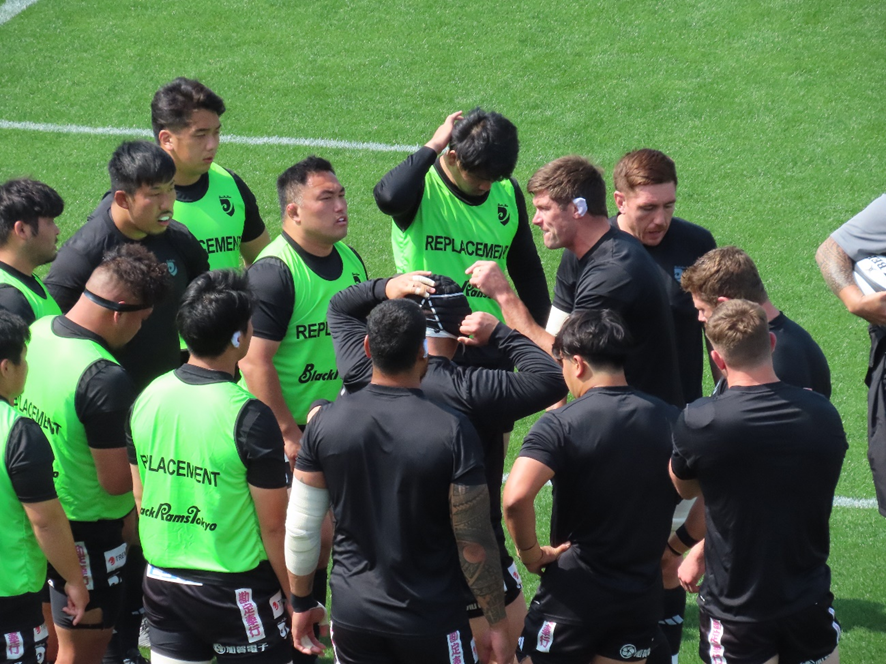
** Player to watch **
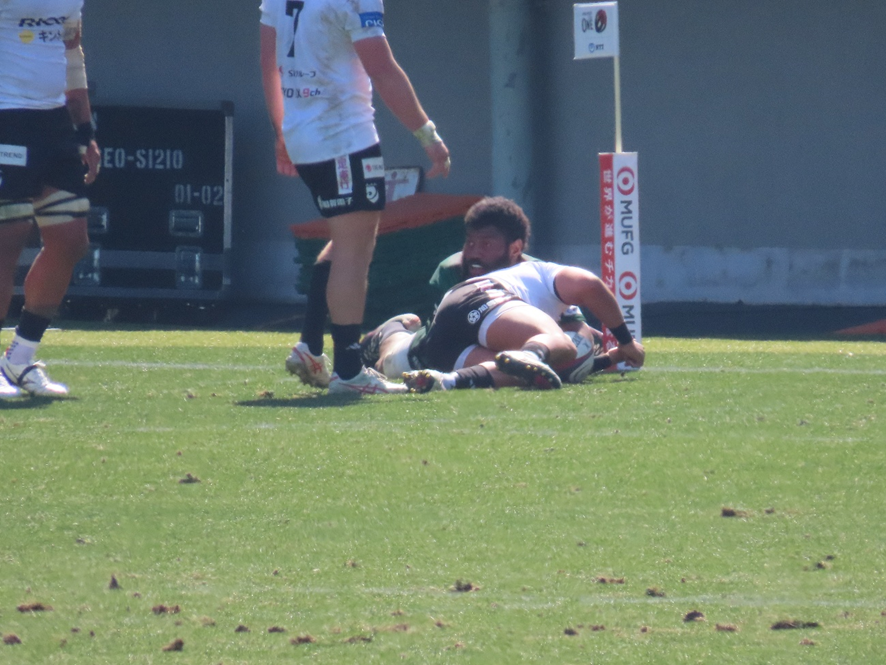
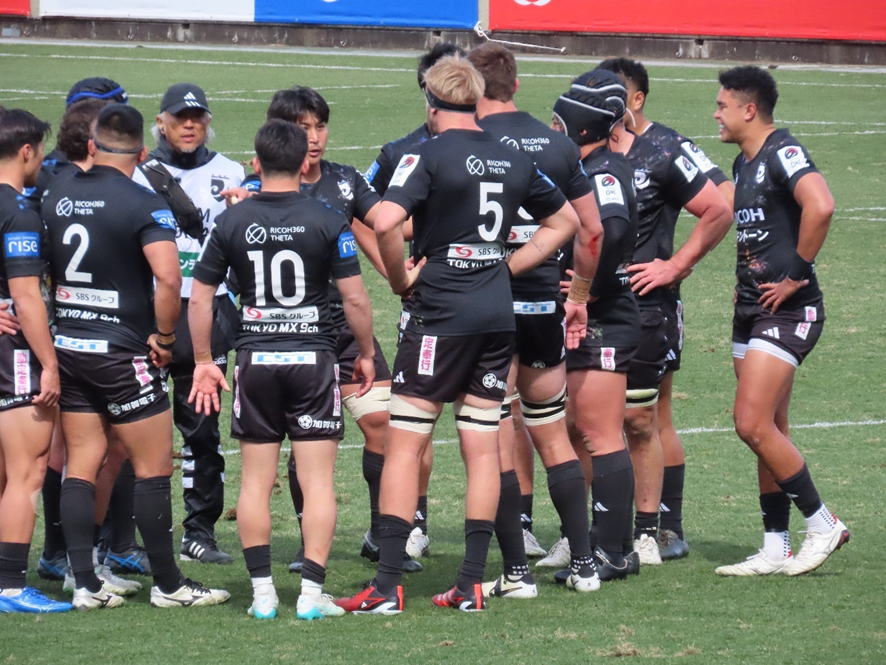
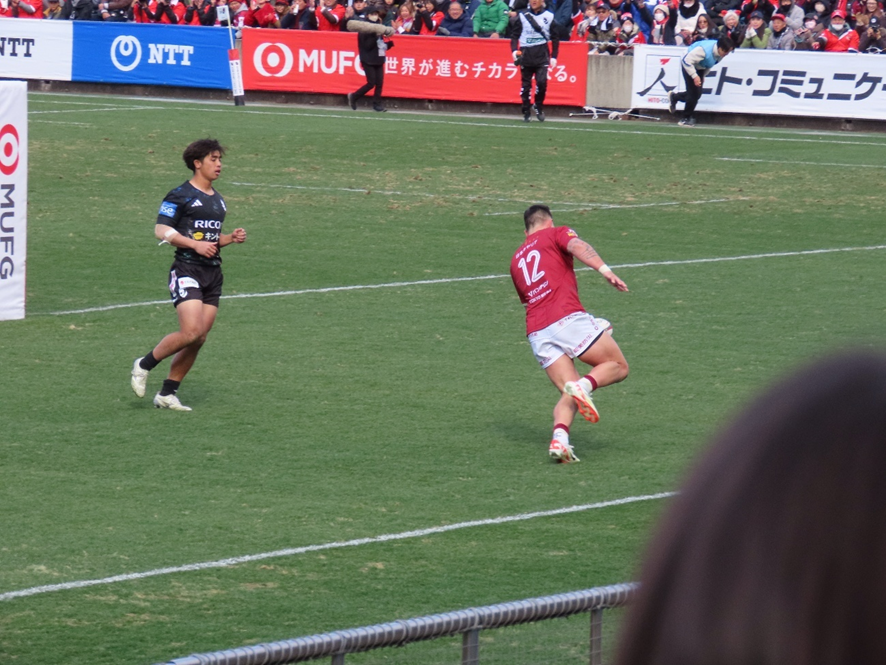
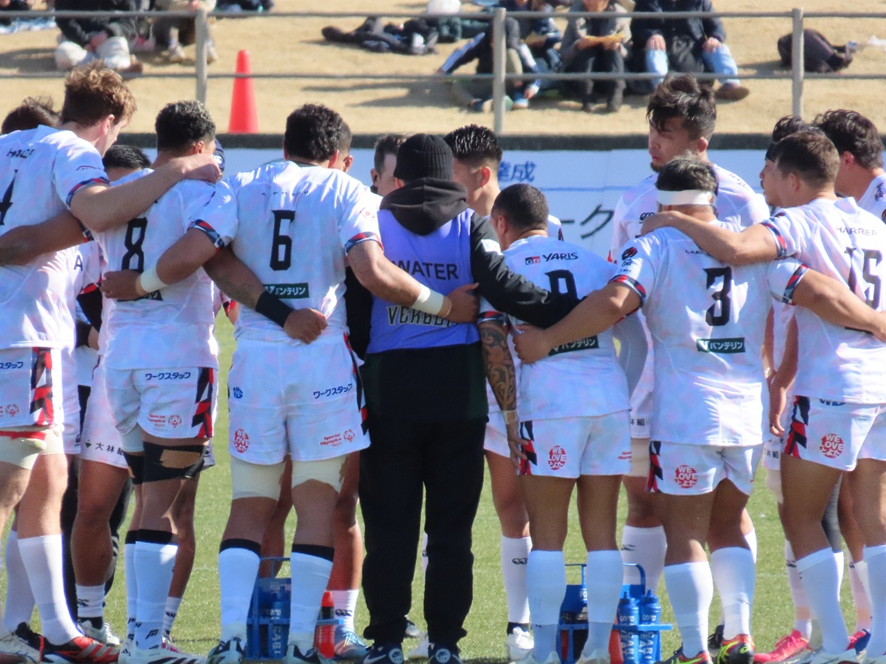
(The player in the black T-shirt on the left is SATO.)
177cm, 107kg, 22 years old. Position = Hooker. He is a graduate of Toin Gakuen High School. He and AOKI, captain of Teikyo University, were teammates in high school, and both experienced Japan’s top high school team when they were in their second and third years of high school. However, after entering Waseda University, he became a regular player in his freshman year, but has yet to win the University Japan championship. Unlike AOKI, who appears quiet on the outside, SATO has a strong charisma that makes him a natural born leader. The fighting spirit he displays during games inspires the team. Will Team SATO be able to grab the title of No. 1 university in Japan?
Let’s start the first half.
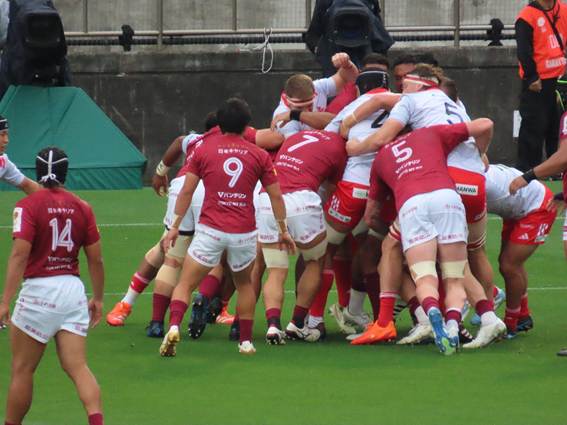
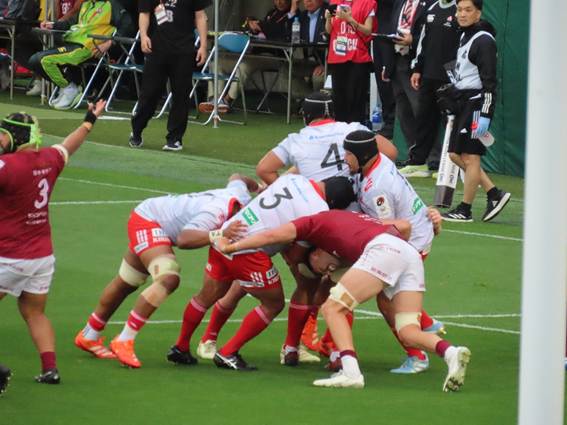
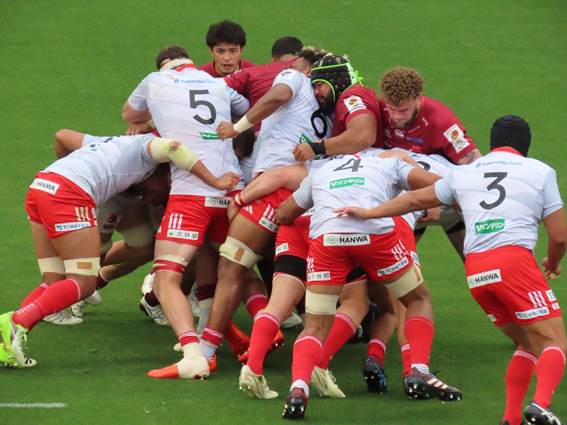
In the first scrum after the kickoff, Teikyo University pushed Waseda to take the lead.
5 minutes into the first half:
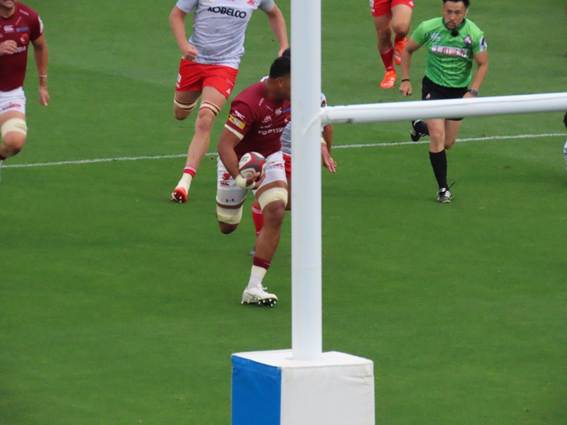
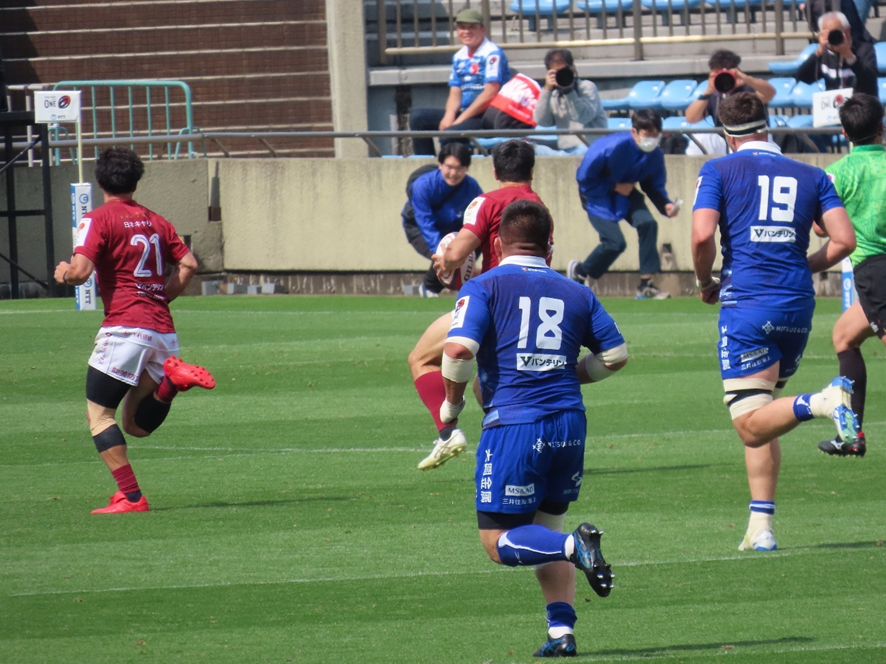
Waseda University penetrated deep into the enemy territory and almost created an opportunity, but Teikyo University’s BK defenders were calm and composed in this match. Teikyo University caught up with the ball kicked deep into their own territory and immediately tried to counter attack from there. Teikyo University deployed the ball to the left side, and FL AOKI bounced off the opposing defense and quickly approached the enemy’s in-goal. Waseda University’s defenders caught up with them in front of the in-goal, but Teikyo University’s prop MORIYAMA followed up and scored a try right in the middle of the enemy’s in-goal.
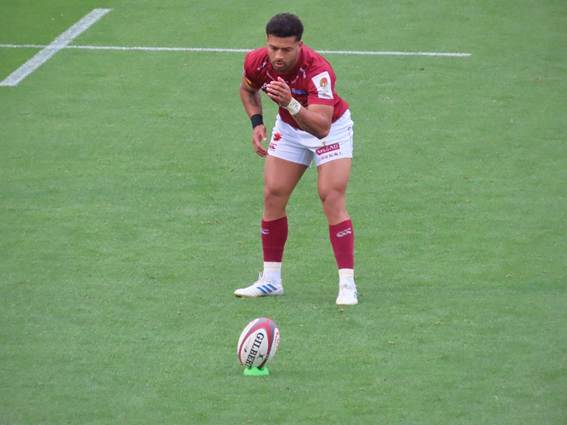
The conversion goal after the try was also successful, and Teikyo University scored the first points of the match. The score was 0-7.
12th minutes into the first half:
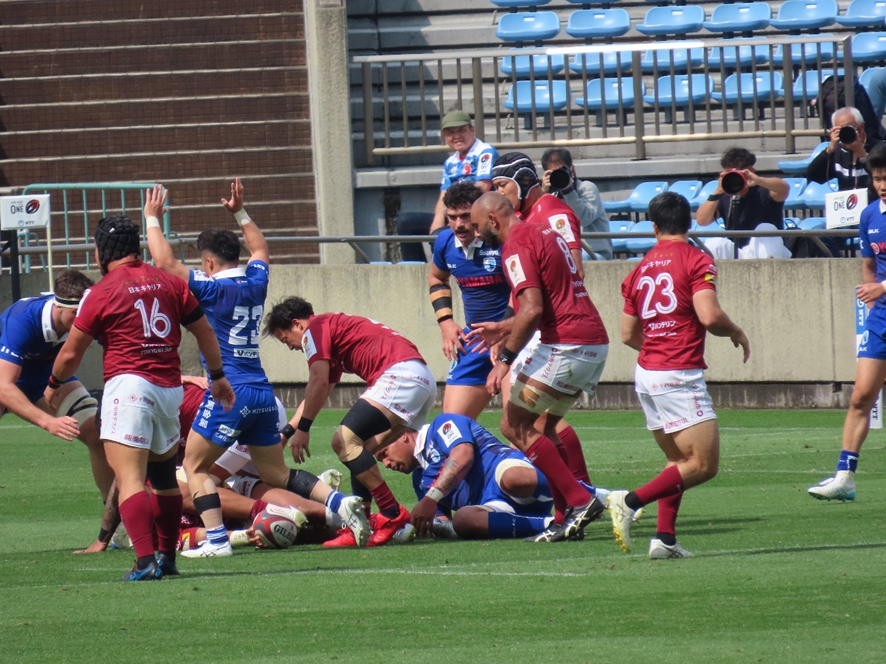
Waseda University made some minor mistakes due to their inferiority in the scrum and the upset caused by allowing the first score. They failed to get the ball out of their own lineout and gave it to their opponents, allowing Teikyo University to close in on their in-goal. Teikyo University’s flanks began to charge forward, and FL AOKI scored a try right under the goalposts.
The conversion goal after the try was also successful, making the score 0-14.
15 minutes into the first half:
Waseda University kicked off from the restart after the try, and attacked the enemy line. After Teikyo University was fouled for offside, Waseda University opted for a penalty kick and had a lineout opportunity on their own ball on the left side in front of the enemy in-goal.
Waseda University secured their own ball, and after a rightward move, FB YAZAKI received the ball, broke the line, and scored a try right under the enemy goal posts.
The conversion goal after the try was also successful, making the score 7-14.
24 minutes into the first half:
Waseda University recovered from the upset of scoring the first points and became more consistent in set plays other than scrums.
Waseda University won a series of dense battles and launched a series of attacks, with No.8 SUZUKI scoring a try in the left corner of the enemy’s in-goal.
The conversion goal after the try failed, and the score was 12-14.
The first half ended with Teikyo University holding a two-point lead. Teikyo University overcame the weaknesses seen in the previous defeat and came into this match
The first half ended with Teikyo University holding a 2-points lead. Teikyo University came into this match having overcome the weaknesses seen in their previous defeat. Teikyo University won the scrum battle, dealt with the long kick by SO HATTORI of Waseda University, and when the ball was kicked in, the back-3 players responded calmly and did not allow WTB TANAKA to get a chance to get the ball rolling. Waseda University, as the undefeated No. 1 seeded school, also evened up their game, and it was not a surprise to see either team win.
Let’s get the second half underway.
2 minutes into the second half:
Both teams were looking to see what their opponents were up to, and near the halfway mark, the teams traded positions via contested kicks.
Teikyo University committed an infringement just inside their own half, and Waseda University opted to go for the PG. Waseda’s CTB NONAKA scored to give Waseda the lead for the first time in the match, 15-14.
5 minutes into the second half:
Waseda University kicked the ball into their own territory, and SO HATTORI attempted a counter attack, which was caught by the Teikyo University defense.
From there, Teikyo University connected with a series of attacks and finally prop MORIYAMA dived into the enemy’s in-goal for the try.
However, this was ruled a no try as a result of video judgment.
After this, the game started with a penalty kick by Teikyo University. Immediately after, Teikyo’s FWs surged forward from sign play, and lock MOTOHASHI scored a try right under the enemy’s goalposts.
The conversion goal after the try was also successful, making the score 15-21 in favor of Teikyo University.
Waseda University then had several good scoring chances to close in on the enemy in-goal, but Teikyo University was able to overcome them.
27 minutes into the second half:
Teikyo University took control of the scrum and used it as a starting point to attack deep into Waseda University’s territory. Waseda University defended well, but in the end, Teikyo’s lock, Daunakamakama, scored a try in the middle of the enemy’s in-goal on the right.
The conversion goal after the try was also successful, making the score 15-28 in favor of Teikyo University.
With just over 15 minutes remaining, Teikyo University was one step closer to victory. Can Waseda University come back from this deficit?
37 minutes into the second half:
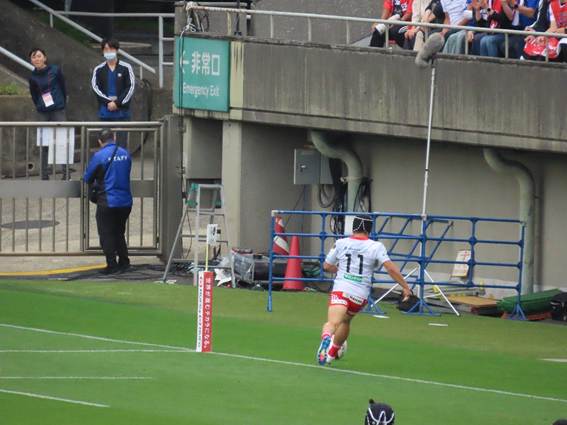
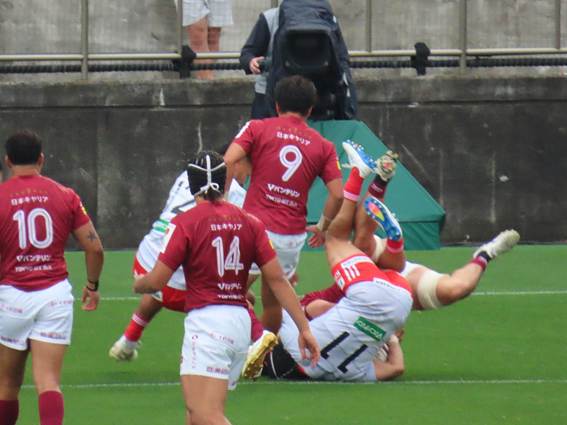
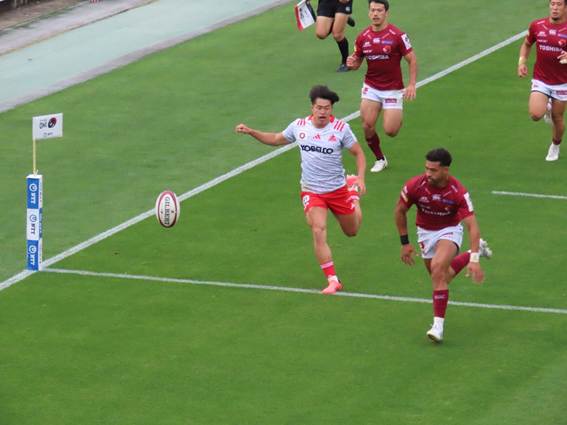
Waseda University tried their best to connect the ball in a final counterattack, but were penalized for a series of knock-on penalties that dropped the ball forward. With this foul, the game would restart from the scrum, and since Teikyo University had complete control of the scrum, Waseda University was on the defensive. Teikyo University’s WTB HIGUMA kicked the rolling ball, picked up the ball himself, and scored a try right in the middle of the enemy’s in-goal.
The conversion goal after the try was also successful, making the score 15-33.
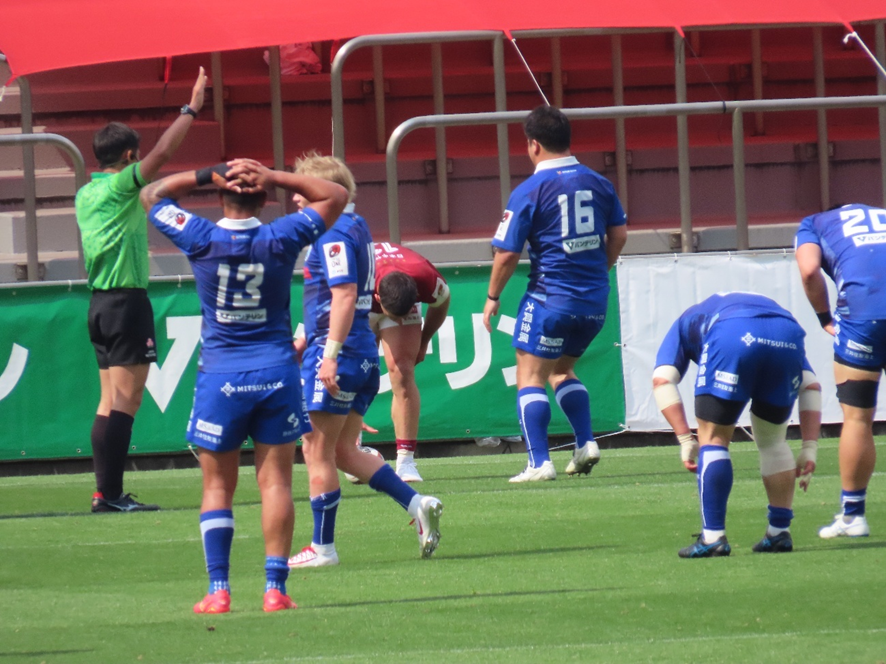
The score remained at 15-33 until the end of the game. Waseda University was eventually held to one PG in the second half. Teikyo University successfully avenged their loss against Waseda in the November rivalry game in the final of the University Championship, the last decisive match of the tournament.
With this victory, Teikyo University has now won the University Championship for four consecutive years. Unlike the previous seasons, Teikyo University added a new page to the history of the Teikyo University Rugby Club as they bounced back from a loss to Waseda University.
Waseda University, who also lost, fought evenly until the middle of the second half, and came close to winning the University Championship for the first time in 5 years. The match was a hopeful one for the next season. The packed house of fans cheered them on. We wish both teams good luck next season, and we also wish the graduates good luck in their future careers.
On January 2, 2025, 2semifinal matches of the 61st National University Rugby Championship were held at the National Stadium in Shibuya, Tokyo. The four schools that remained through to that day were as follows
(1) Teikyo University (last season’s champion, 2nd in the 2024 Kanto Rivalry Rugby group)
(2) Meiji University (last season’s runner-up, 3rd in the 2024 Kanto Rivalry Rugby Group)
(3) Waseda University (last season’s top 8, 1st in the 2024 Kanto Intercollegiate Rugby Group)
(4) Kyoto Sangyo University (last season’s top 4, 2nd in the 2024 Kansai University Rugby League)
2 semifinal matches were played on the day.
The first match was Teikyo University vs. Meiji University (12:25 kick-off)
The second match was Waseda University vs. Kyoto Sangyo University (14:45 kick-off)
Let us first introduce the 2 schools that played in the first match.
* Teikyo University’s record in the University Championship this season:
Seeded in the 3rd round (no games)
Quarterfinal: Defeated Keio University 73-24.
Meiji University’s record in the University Championship this season:
3rd round: Defeated Tokai University (3rd in league group), 50-17.
Quarterfinal: Defeated Tenri University (No.1 in Kansai University Rugby League) by 24-21.
(Note: Meiji University played against Teikyo University on 11/17 and lost 48-28)
Game 1: Meiji University vs Teikyo University
The first semifinal match has the same combination as last year’s final, but the major difference from previous years was that Teikyo University, which was undefeated until last season and had won three consecutive championships, played with Waseda University in the league match on 11/3 this season and lost by a 17-48 margin. During their 3 consecutive university championships, they have dominated other universities as the undefeated absolute champions, but they were coming into this year’s university championships as challengers.
Here is an update on the two schools that played each other in the first match.
First, let’s talk about the Meiji University Rugby Club.
Meiji University, which celebrated its 100th anniversary last season, is the No. 1 university in terms of the depth of its players. Of the current 20-year-old Japanese high school players who are considered to be the golden generation of rugby players, 6 players have joined Meiji University, which is outstanding in comparison to other universities. If they develop well, the future of the Meiji University Rugby Club is extremely promising. On the other hand, if they do not perform well, it will be said that Meiji University does not have the ability to develop.
The starting lineup for the day was as follows.
Meiji University
No.
Name
height
weight
age
1
Sosuke HIYAMA
176cm
108kg
20
U18 Japan
2
Hampei NISHINO
176cm
104kg
21
U18,U20 Japan,JJ
3
Kodai KURASHIMA
174cm
108kg
22
U18 Japan
4
Kantaro TAJIMA
197cm
100kg
21
U20 Japan,JJ
5
Daichi SATO
185cm
103kg
21
6
Taison MOGAMI
185cm
105kg
22
U18,U20 Japan,JJ
7
Taisei FUKUDA
173cm
95kg
22
8
Taishiro KIDO
185m
104kg
22
9
Ryusei SHIBATA
174m
81kg
21
10
Ryunosuke ITO
172cm
79kg
20
U18,U20 Japan
11
Kohaku EBISAWA
173cm
80kg
20
JXV,U20 Japan,Japan
12
Shota TAIRA
178cm
94kg
21
U18,U20 Japan,JJ
13
Yuta AKIHAMA
174cm
86kg
22
JXV
14
Eito SHIRAI
178cm
85kg
19
U18,U20 Japan
15
Jingo TAKENOSHITA
180cm
86kg
20
U18,U20 Japan,JXV
JJ=Junior Japan
JXV=Japan XV
The majority of Meiji University’s starters have been selected for the Japan national team for their age group. From the perspective of other schools, Meiji University can be said to be a star-studded group of players.
** Player to watch **
Ryunosuke ITO. 172 cm, 79 kg, 20 years old. He is a graduate of Toin Gakuen High School. He was a key player in Japan’s high school team that toured Ireland and played a key role in the victory over U19 Ireland, and his vision and sharp running play as a SO are a crowd-pleaser. Many rugby fans hope that he will continue to develop well and be selected for the national team.
Next, an update on Teikyo University, the Defending Champion.
Last season, they won the National University Rugby Championship for the third consecutive year, and this season they are the absolute champions, aiming for another consecutive championship. This season, however, the team lost to Waseda University in the November tournament, and they have come this far in their quest to make up for it. Rugby fans can now finally see Teikyo University in action. Expectations are high for the serious Teikyo University to show us what kind of rugby they can play.
The starters for the day were as follows.
Teikyo University
No.
Name
height
weight
age
1
Hanjiro HIRAI
177cm
95kg
22
2
Ren TOMA
176cm
92kg
22
3
Tsubasa MORIYAMA
180cm
109kg
20
JXV,U18Japan,Japan
4
Kaisa DAUNAKAMAKAMA
182cm
120kg
21
U-18 Japan
5
Takuma MOTOHASHI
192cm
118kg
22
JXV,Japan
6
Keito AOKI
187cm
110kg
22
JXV
7
Ikki MORIMOTO
169cm
81kg
22
8
Kanta KURAHASHI
181cm
103kg
22
9
Kumsu LEE
174cm
80kg
22
10
Takaya MOTOHASHI
182cm
86kg
20
U-20 Japan,JXV,Japan
11
Taiyo HIGUMA
176cm
89kg
21
12
Yoshiki OMACHI
173cm
84kg
20
U-18,U-20 Japan,JJ
13
Yamato UEDA
180cm
84kg
19
U-18,U-20 Japan,JXV
14
Genki IKUTA
170cm
83kg
21
U-18,U-20 Japan,JXV
15
Shinya KOMURA
180cm
88kg
22
JJ=Junior Japan
JXV=Japan XV
** Player to watch **
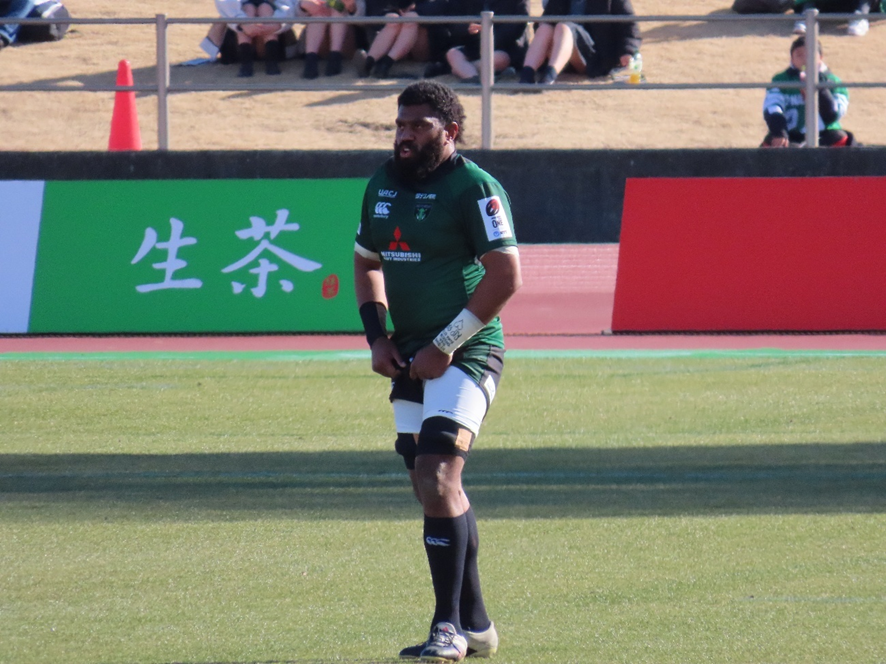
(The number 4 player in the red jersey is DAUNAKAMAKAMA)
Kaisa DAUNAKAMA. 182 cm, 120 kg, 21 years old. Position = lock, FL. Place of birth = FIJI. U18 Japan national team. While many international rugby players are more attack-oriented, DAUNAKAMAKAMA is a player with a high awareness of his defensive abilities. Even when the opposing team deployed him on the outside and threatened to break the line, he showed on many occasions that he was able to detect the hole and make a hard tackle. Also, as a FW, he is of standard height, but his instantaneous dash is strong and makes an impact when he makes contact. He is an indispensable player for Teikyo University to win back-to-back championships.
Let’s start the first half.
7 minutes into the first half:
In the early stages of the match, both sides exchanged contested kicks, and the contest became one of high ball and densely-packed battles for re-gaining the ball. Teikyo University won the battle for the loose ball, and with individual breakthroughs by each player, the FW and BK worked together to connect the ball to the enemy in-goal.
Teikyo University scored the first points of the game with a successful conversion goal, making the score 7-0.
16 minutes into the first half:
Both schools pride themselves on the ability of their FWs to break through, but Teikyo University’s defense deep in their own territory was solid. Meiji University’s powerful FWs, who had won the quarterfinal against Kansai champion Tenri University, were unable to make a frontal breakthrough and gain ground against Teikyo University.
Meiji University, unable to make a frontal breakthrough, tried to advance from both sides of the field, but Teikyo University’s BK was also unable to make a decisive breakthrough. Both teams therefore tried to punt the ball back deep into the enemy territory. In the kicking battle here, it was Teikyo University who had the advantage. Teikyo University’s FB Komura lifted the punt, and Teikyo University’s WTB IKUTA regained the ball, and ran all the way to the enemy’s in-goal, where Meiji University’s SO ITOH tackled him, but IKUTA dragged it away and scored a try in the left corner of the enemy’s in-goal.
The conversion goal after the try was also successful, and the score was 0-14.
19 minutes into the first half:
Meiji University kicked off from the restart and kicked deep into the enemy territory. Teikyo University FB Komura tried to escape with a run play, but Meiji University defenders caught him and it became a tight battle. The ball went to WTB EBISAWA who was in the left corner,
He scored a try in the left corner of the enemy’s in-goal.
After the try, the conversion goal failed, and the score was 5-14.
The score was 5-14:
32 minutes into the first half:
In this period, Meiji University won a scrum and drew a second collapsing infringement from Teikyo University. Meiji University then launched a series of attacks from their own lineout deep in enemy territory. In this attack, Meiji University did not just rush vertically, but also developed a combined FW and BK attack. Finally, SO Itoh’s long pass was passed to WTB Shirai, and finally prop HIYAMA received the ball and scored a try in the right corner of the enemy in-goal.
The conversion goal after the try was also successful, making the score 12-14.
The first half ended with the score at 12-14. Meiji University had lost their last match against Teikyo University in November 2024, but the teams were evenly matched in the first half of the match.
Which team will advance to the finals of the University Championship?
4 minutes into the second half:
At the start of the second half, Meiji University won the scrum and drew a collapsing foul from Teikyo University. Meiji University was beginning to dominate the flow of the game. However, Meiji University kicked the ball deep into enemy territory, and Teikyo University’s FB Komura caught the ball and counter attacked from there, where the two teams engaged in a tight battle, but Teikyo University regained the ball and quickly expanded. Teikyo University’s CTB UEDA received the ball and scored a try directly to the left of the enemy’s in-goal.
The conversion goal after the try failed, and the score was 12-19.
8minutes into the second half:
Meiji University replaced EBISAWA with YASUDA at WTB in an attempt to regroup on the defensive side of the field. Meiji University then had a lineout on their own ball, and a mishandling of the ball resulted in a tight battle, with Teikyo University winning the ball back. Teikyo University then launched a series of attacks, closing in on the enemy’s in-goal, forming a tight group, where lock DAUNAKAMA picked up the ball and scored a try on the right side of the enemy goal post.
The conversion goal after the try was also successful, and the score was 12-26.
Within 10 minutes of the start of the second half, the teams scored one try after another, and Teikyo University was finally gaining momentum.
17 minutes into the second half:
Meiji University fought hard at set pieces to turn the tide of the game in Teikyo University’s favor. They were not to be outdone in the scrums, and won the ball in the lineout as well, trying to advance into the enemy territory.
However, as in the first half, Teikyo University’s defense was strong, making it difficult for Meiji University to stay in the enemy territory. Teikyo University won the ball back, and the FW and BK worked in unison to keep moving forward and close in on the enemy’s in-goal. Meiji University could no longer stop Teikyo University’s advance. Teikyo University’s lock Motohashi then drove close to the enemy’s in-goal, dragging four Meiji University defenders behind him, and scored a try in the middle left of the enemy’s in-goal.
The conversion goal after the try failed, but the score was 12-31, giving Teikyo University a big lead.
32 minutes into the second half:
With less than 10 minutes left in the second half, Teikyo University skillfully took their time and put the pressure on Meiji University. While Meiji University wanted to close the gap quickly, Teikyo University took their time and consumed time in the set piece scrums. In the process, Teikyo University drew an offside infringement from Meiji University when they were deep in enemy territory. The position of the foul by Meiji University was directly in front of the goal post. Here, Teikyo University opted for the PG. Teikyo University’s CTB OMACHI scored to make the score 12-34.
35 minutes into the second half:
Meiji University’s offensive efforts were all but crushed by Teikyo University, except for SO ITOH’s run play, which was unstoppable even by Teikyo University. 172 cm, 77 kg, ITOH is not a physically gifted player, but he showed great physical sharpness that belies his disadvantage.
When ITOH had the ball in his hands, even the experienced Teikyo University defense could not stop him in a one-on-one match. ITOH dug deep through the enemy defense and went close to the in-goal, only to be caught by the Teikyo University defense. However, Meiji University’s No.8 KIDO followed up and scored a try in the middle of the enemy in-goal on the left.
The conversion goal after the try was also successful, making the score 19-34.
43 minutes into the second half:
The whistle blew for full time, and it was the last play of the game. Meiji University had lost the game, but the players showed their final determination and kept going forward to score a try and connect the ball. Meiji University’s tall 195cm lock TAZIMA finally scored a try at the right side of the goal post.
The conversion goal after the try was also successful, making the score 26-34. The game ended here. Teikyo University beat Meiji University to advance to the final of the University Championship.
The final score was 26-34. Meiji University put up a strong fight in the final minutes of the match to hold off Teikyo University, but in the end, Teikyo University showed its superiority in the end and came away with a convincing victory.
Meiji University suffered back-to-back losses against Teikyo University in the University Championship, but they will not forget their disappointment this season, and we hope that the remaining regular members will show us another great game next season.
Game 2: Waseda University vs Kyoto Sangyo University
Now, let us introduce the two teams that played in the second match.
First, an update on the Waseda University Rugby Team, the top seed in this year’s tournament.
Last season, the team played with Kyoto Sangyo University in the quarterfinals, where they were completely beaten by a score of 65-28. This was the first time in almost a year that they have played each other in an official match. This season, Waseda University’s captain, hooker SATOH, in particular, has thoroughly trained his FW team to the point where they were able to win outright against the university champions, Teikyo University, at set pieces. Waseda University was still undefeated this season, and captain Sato has stated his goal for this season to become the best university in Japan. With only 2 more wins to go until their goal of becoming the number 1 university in Japan, it will be interesting to see what Waseda University will show in this day’s match.
This day’s starting lineup was as follows.
Waseda University
No.
Name
height
weight
age
1
Airou SUGIMOTO
176cm
107kg
21
U19 Japan
2
Kenji SATO
177cm
107kg
21
Japan XV,Japan
3
Shotaro KAMEYAMA
176cm
116kg
22
4
Takeomi NISHIURA
184cm
94kg
22
5
Bunsuke KURITA
184cm
105kg
20
U20Japan
6
Osuke SHIRO
185cm
99kg
18
U18 Japan
7
Yusei TANAKA
166cm
87kg
21
8
Fuuta SUZUKI
183m
99kg
23
9
Sena HOSOYA
162m
64kg
21
10
Ryota HATTORI
178cm
80kg
18
U18 Japan
11
Haruto IKEMOTO
183cm
90kg
20
12
Kengo NONAKA
180cm
93kg
21
U20,U21Japan,Junior Japan
13
Shuhou FUKUSHIMA
183cm
95kg
21
U18 Japan
14
Kenzou TANAKA
172cm
76kg
19
15
Yoshitaka YAZAKI
180cm
86kg
20
U18,U20 Japan,JapanXV,Japan
JJ=Junior Japan
JXV=Japan XV
** Player to watch **
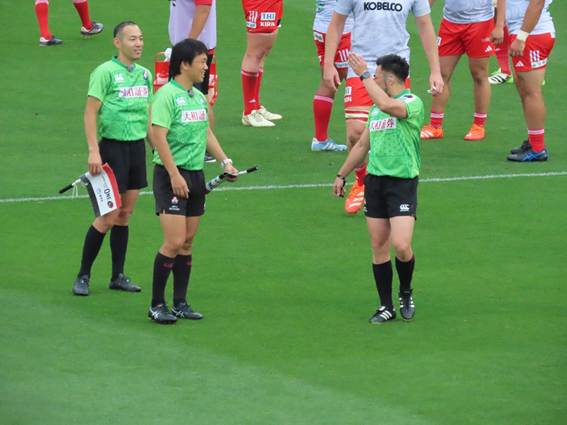
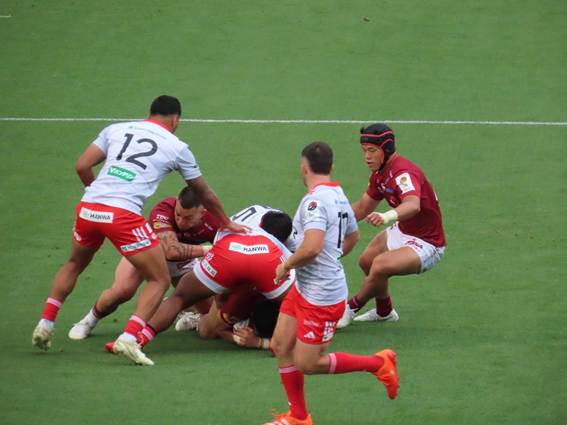
Kenzou TANAKA. 172 cm, 76 kg, 19 years old. A graduate of Toin Gakuen High School, he is a gem of a player who has secured a regular place in the BK lineup at Waseda University, a school with a strong BK lineup, since his freshman year. His characteristic feature is his run play, in which he starts from an extremely low position and goes into top speed. He is a relatively small player, so when he rushes forward from that low stance, it is difficult to tackle him from the front. He also has an excellent sense of scoring, and he is a natural scorer who shows up where the chances are likely to be. He was selected as the Man of the Match for the match against Teikyo University in last November, and has become instantly recognized by rugby fans across the country. We can’t wait to see how far he will go in the future.
Next, I would like to introduce Kyoto Sangyo University, the only Kansai team to survive in the University Championship.
In the past, Kyoto Sangyo University’s tradition was to take players from no-name schools, train them hard, challenge them to the University Championship, and play power rugby with an honest focus on the scrum. However, Kyoto Sangyo University has now become a regular participant in the University Championship, and has gradually begun to attract Japan’s high school national team players, and is on its way to becoming a powerhouse school. In the Kansai League this season, the team did not show the absolute strength that it had until last year, and there was a period at the end of the season when it lost steam, but since entering the University Championship, the team’s unity has grown, and it has advanced to the semifinals again this season. This season, the team hopes to advance to the finals for the first time, and even win the title of University Champions.
This day’s starting lineup was as follows.
Kyoto Sangyo University
No.
Name
height
weight
age
1
Ryushin SONE
175cm
103kg
22
2
Kaen HIRANO
174cm
98kg
22
3
Shinta KAWAGUCHI
186cm
120kg
22
4
Chuka ISHIBASHI
190cm
93kg
20
U18,U20 Japan,JXV
5
Soromone L.FUNAKI
186cm
114kg
22
6
Ken HIYOSHI
180cm
100kg
22
7
Ryu HIRANO
180cm
100kg
21
8
Sione POLUTELE
184cm
110kg
21
U18 Japan
9
Asahi DOEI
170cm
73kg
21
U20 Japan, JJ,JXV
10
Keita OZAKI
165cm
80kg
21
11
Hiroto NISHI
170cm
75kg
22
12
Ryosei FUJIMOTO
172cm
86kg
22
13
Eroni NABULAGI
185cm
100kg
20
U18 Japan
14
Shuichi KOBAYASHI
176cm
82kg
21
15
Hayata TSUJINO
178cm
85kg
21
JJ=Junior Japan
JXV=Japan XV
** Player to watch **
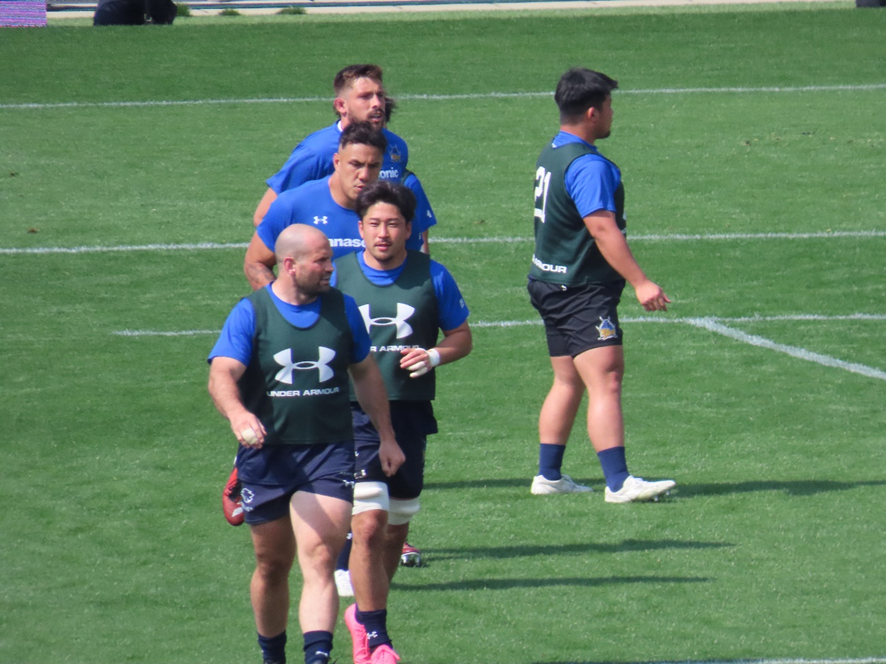
Asahi DOEI is 170 cm, 73 kg, 21 years old. He is a graduate of Kosen Catholic High School, and is a member of U20Japan, Junior Japan, and JapanXV. He was selected for Japan’s national team in his age group, and was noticed by Japan’s national team HC Eddie JONES as soon as he took over, and was called up to the national team training camp. He is known for his long and accurate passing ability, as well as his kicking ability. As a game-maker for Kyoto Sangyo University, he can take control of the game if he can take advantage of the strong FW and connect with the decisive BK.
Due to the similar design of the first jersey, both teams wore their second jerseys for the match.
Waseda University wore white with a rouge-colored collar, while Kyoto Sangyo University wore a dark blue jersey.
Now, let’s start the first half.
7 minutes into the first half:
The game started out with both sides trying to find out what each other’s game was. Kyoto Sangyo University was looking to increase the number of scrums, one of their strengths, while Waseda University was looking for a series of attacks from the densely packed field. Waseda University was the first to take the lead. Kyoto Sangyo University committed an infringement in a scrum in the Waseda camp, and Waseda University opted for a penalty kick. Waseda’s SO HATTORI kicked his weapon, a long-range kick, close to the enemy’s in-goal, and from this position, Waseda gained possession of the ball in the lineout. At the lineout, Waseda University secured the ball, and using sign play, passed the ball from hooker SATOH to WTB IKEMOTO, who came running in, and quickly approached the in-goal. Here, they formed a tight group, and lock KURITA got the ball and scored a try in the left center of the enemy’s in-goal.
The conversion goal after the try failed, but Waseda University scored first. The score was 5-0.
15 minutes into the first half:
Kyoto Sangyo University had a chance to scrum in their best set play, but on the contrary, Waseda University pushed them into a scrum, and they were fouled. Kyoto Sangyo University not only failed to take advantage of their strength, but on the contrary, Waseda University’s set plays looked stronger this season. Waseda University then opted for a penalty kick here, which gave them the chance to have their own lineout in front of the enemy in-goal. Waseda secured the ball in the lineout and tried to advance with a maul, which was stopped by Kyoto Sangyo University. Waseda University then launched a series of attacks, culminating in CTB FUKUSIMA scoring a try in the left center of the enemy’s in-goal.
The conversion goal after the try was also successful, making the score 12-0.
24 minutes into the first half:
Again, Waseda University’s SO HATTORI’s long-range kick was effective in this match. Kyoto Sangyo University had made a good run deep into enemy territory, but were outmuscled by Waseda University in a tight battle, and when the ball was passed to SO HATTORI, he quickly kicked it back deep into his own territory. This only increased the fatigue of the Kyoto Sangyo University players.
Waseda University, who had the upper hand in the battle for possession, moved into the enemy territory and, with little fatigue, expanded wide left and right to close in on the enemy in-goal, with hooker SATOH scoring the final try in the middle right of the in-goal.
Waseda University scored a successful conversion goal after the try to make the score 19-0.
32 minutes into the first half:
Finally, Kyoto Sangyo University’s continuous attack started to work in the enemy territory. Pass after pass, Kyoto Sangyo University’s strong runners broke through the gain line and approached the enemy’s in-goal.
Kyoto Sangyo University came very close to scoring a try, but a tackle by the Waseda University defense caused the ball to be dropped. Waseda University then took the ball into their own in-goal, and SO HATTORI kicked it back deep into enemy territory with a long-range kick of nearly 60 meters.
Waseda University then launched a series of attacks, culminating in Waseda’s WTB Tanaka receiving the ball in the right corner, breaking through the opposing defense, and scoring a try right in the middle of the enemy’s in-goal.
Waseda University also succeeded in scoring the conversion goal after the try, making the score 26-0 and putting Kyoto Sangyo University ahead.
In the end, the first half ended with this score. Kyoto Sangyo University attacked deep into the enemy territory several times, but were unable to break through Waseda University’s skillful defense in front of the in-goal, resulting in no points. In addition, Waseda University’s SO HATTORI’s long kick of almost 60 meters from deep repeatedly made them exhausted by being forced to return to their own line after attacking in front of the in-goal, which resulted in the difference in score.
Can Kyoto Sangyo University come up with some kind of breakthrough to close the gap in the second half?
Let’s get the second half underway.
11 minutes into the second half:
Kyoto Sangyo University, hoping to somehow score the first goal of the second half, connected the ball in good form early in the second half, and came within inches of the enemy’s in-goal. However, once again they were thwarted by the Waseda University defense in front of their own goal and failed to score.
From in front of their own in-goal, FB YAZAKI kicked the ball back to the outside just beyond the enemy 22m line, and the 50-22 rule was applied, resulting in a own ball lineout deep in the enemy territory.
Waseda University secured the ball from the right side near the enemy 22m line, and expanded to the right, and FB YAZAKI to WTB IKEMOTO, and IKEMOTO scored a try in the middle left of the enemy in-goal.
The conversion goal after the try failed, and the score was 31-0.
25 minutes into the second half:
As Kyoto Sangyo University entered the enemy territory, a penalty kick opportunity resulted from a foul by Waseda University, and they had a chance to take the ball out of their own line on the right side near the enemy 22-meter line.
Kyoto Sangyo University secured the ball at this point and attempted to move forward in a maul. After the maul collapsed, Kyoto Sangyo University continued to attack on the flanks.
Kyoto Sangyo University foolishly repeated the side attack nearly 10 times and finally scored a try at the right side of the goal post in the enemy’s in-goal. It was Kyoto Sangyo University’s first try of the match.
It was FL HIYOSHI who scored the try. The conversion goal after the try was also successful, making the score 31-7.
33 minutes into the second half:
Toward the end of the match, both teams made a series of player changes. Due to this, Kyoto Sangyo University was the stronger team in the scrums. Waseda’s scrum collapsing allowed Kyoto Sangyo University to advance into the enemy’s in-goal area. Here, Kyoto Sangyo University secured the ball in a lineout on their own ball, and then formed a maul to advance. The maul collapsed and a dense battle ensued, with Kyoto Sangyo University’s prop NYUI scoring a try in the middle right of the in-goal from a side attack by the FWs.
The conversion goal after the try was also successful, making the score 31-14.
39 minutes into the second half:
Kyoto Sangyo University opted for a penalty kick after a foul by Waseda University, and had a lineout opportunity on their own ball deep in the enemy territory on the right side. After securing the ball, they formed a maul, and BK joined the maul, with 14 players pushing the maul.
After the maul collapsed, a tight battle ensued, and Kyoto Sangyo University’s SH DOEI scored a try in the right corner of the in-goal.
After the try, the conversion goal failed, and the score was 31-19.
With the score at 31-19, the game came to an end, and Waseda University was humiliated by Kyoto Sangyo University, who had suffered a crushing defeat in the quarterfinals of the University Championship last season.
Waseda University will now face Teikyo University on January 13 in the final of the University Championship to decide the winner. Will Teikyo University’s winning streak continue, or will Waseda University be crowned University Champion for the first time in five years? We can hardly wait for the decisive match.
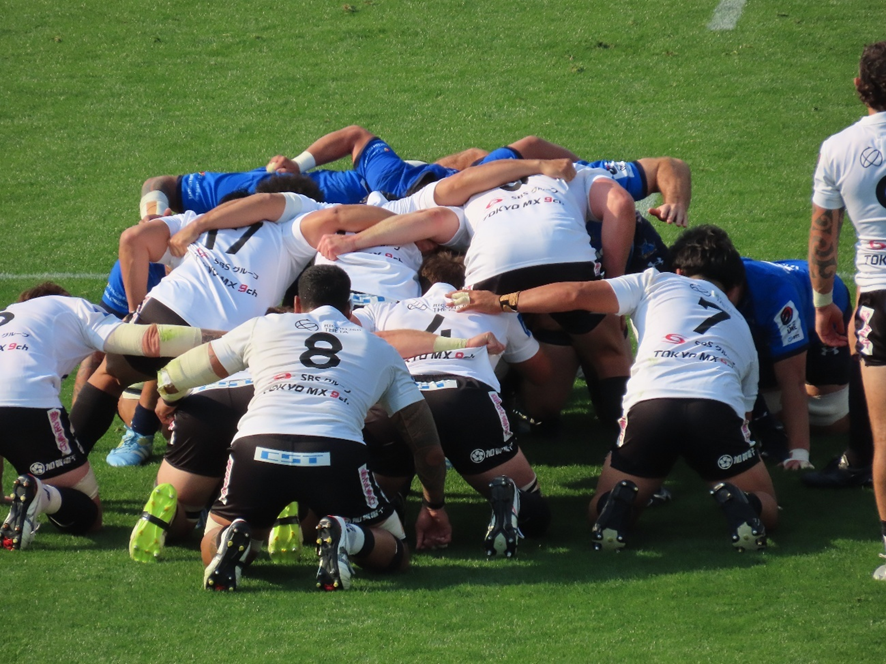
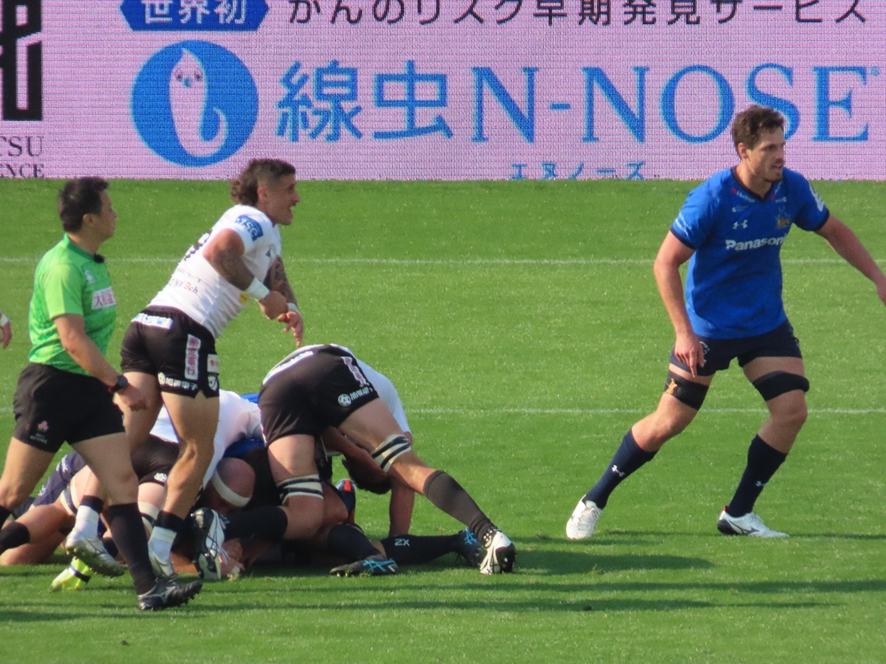
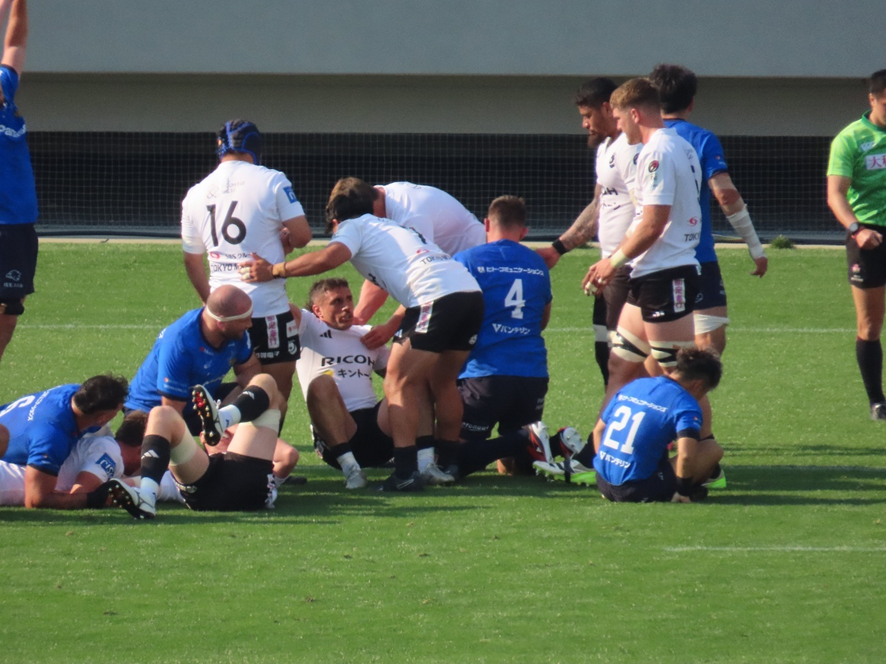
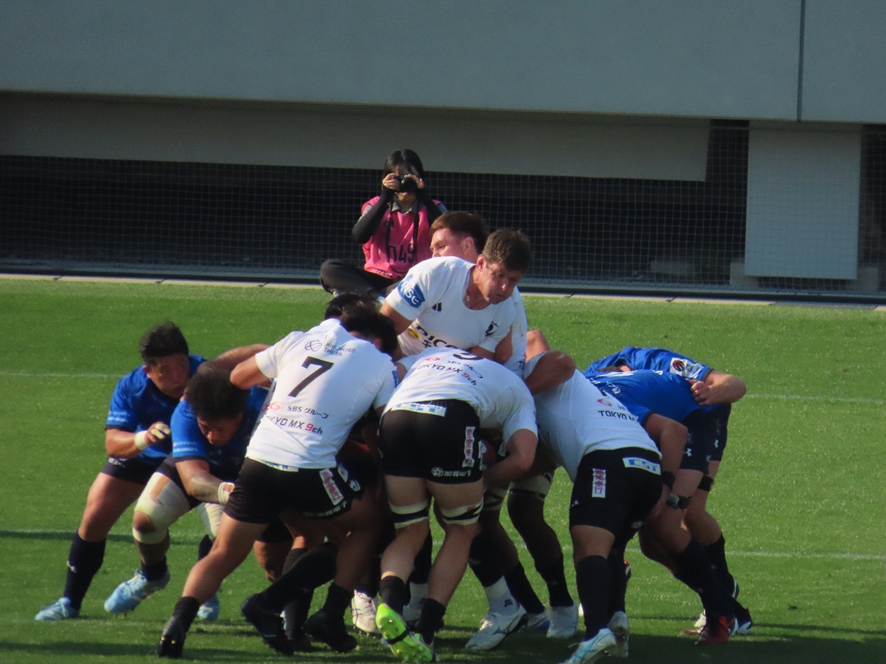
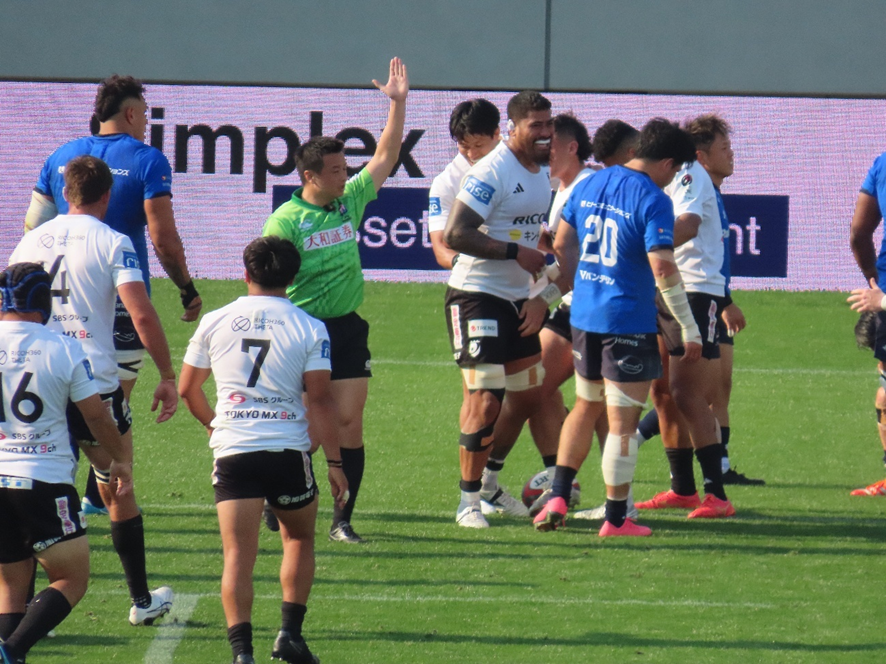
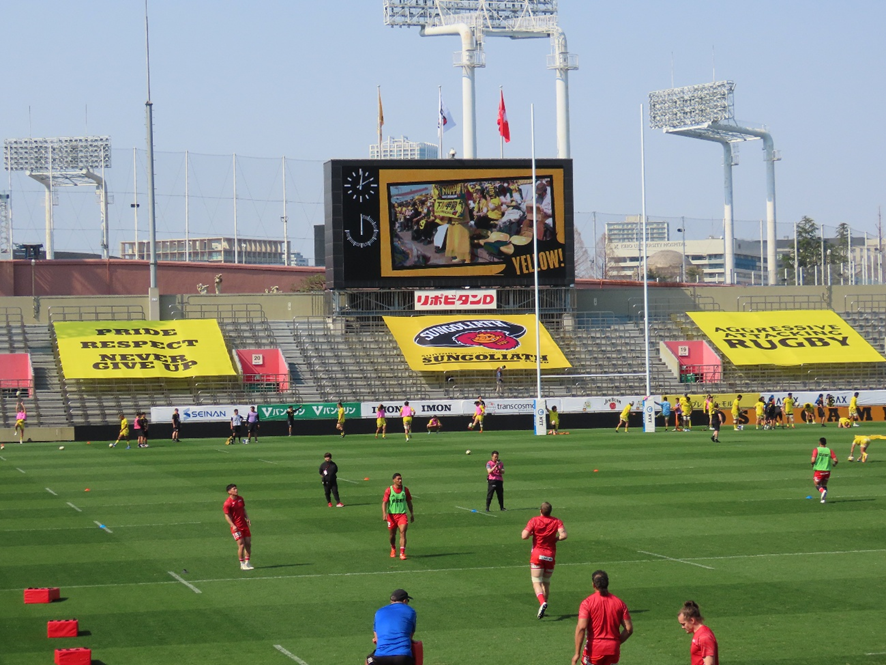
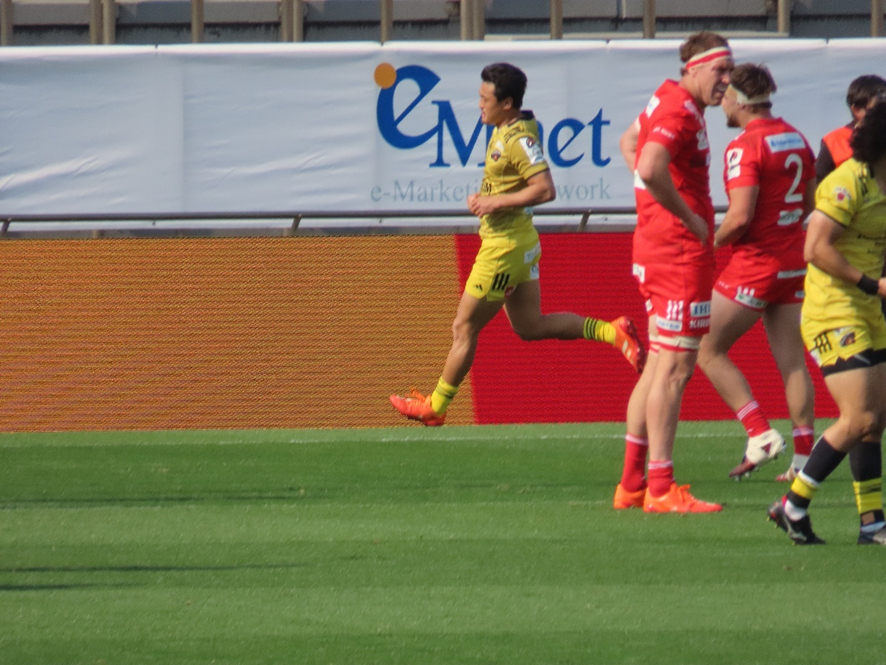
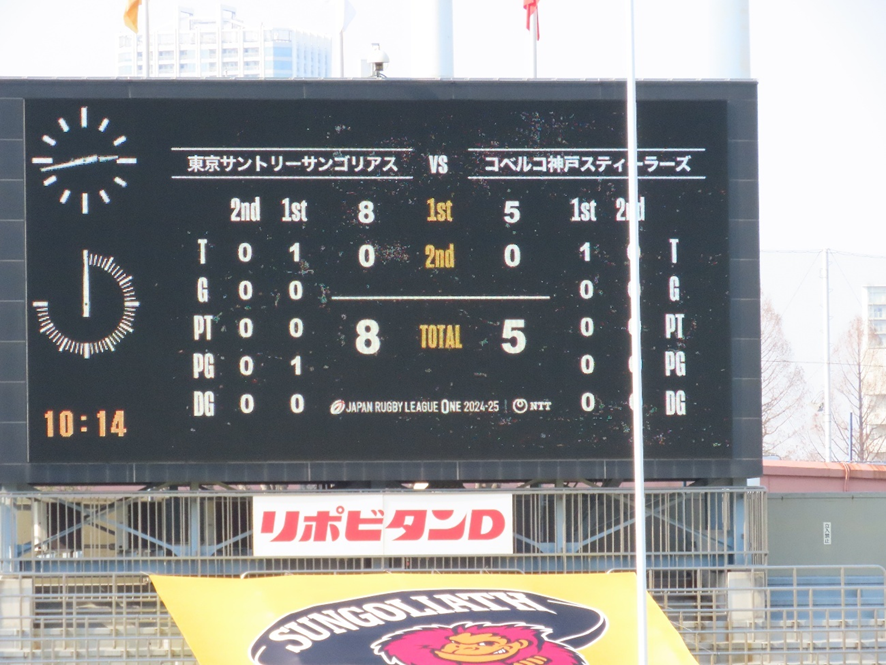
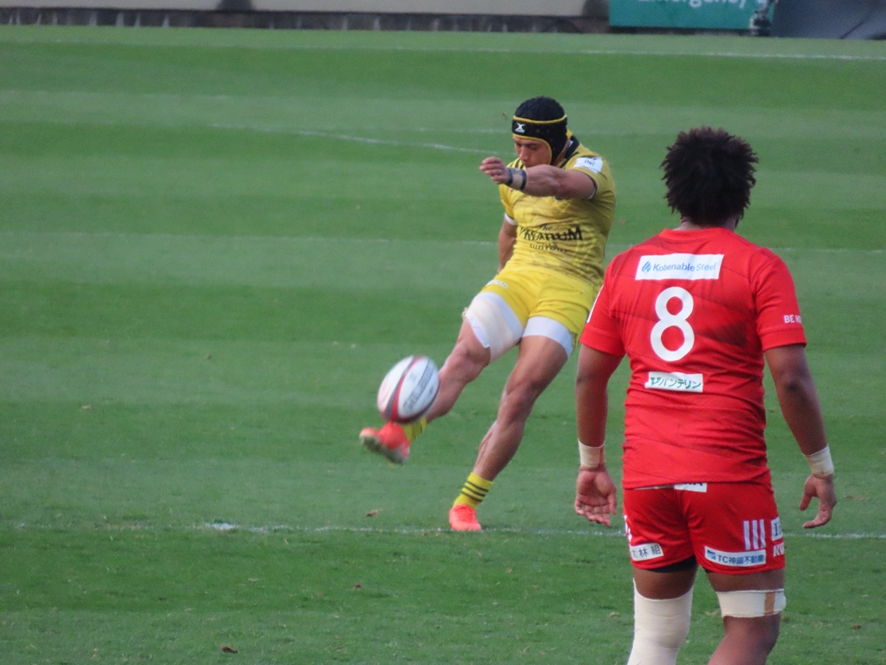
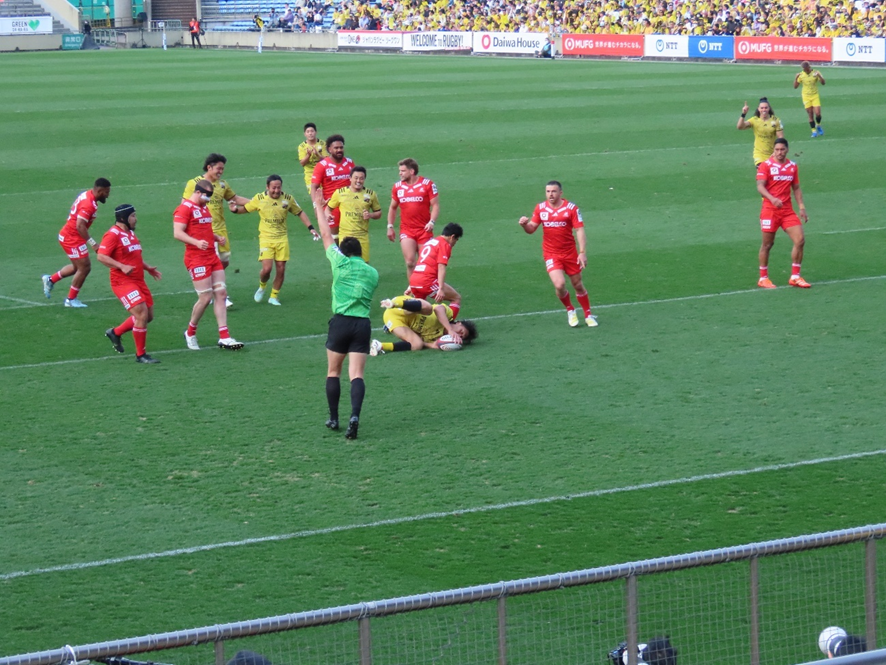
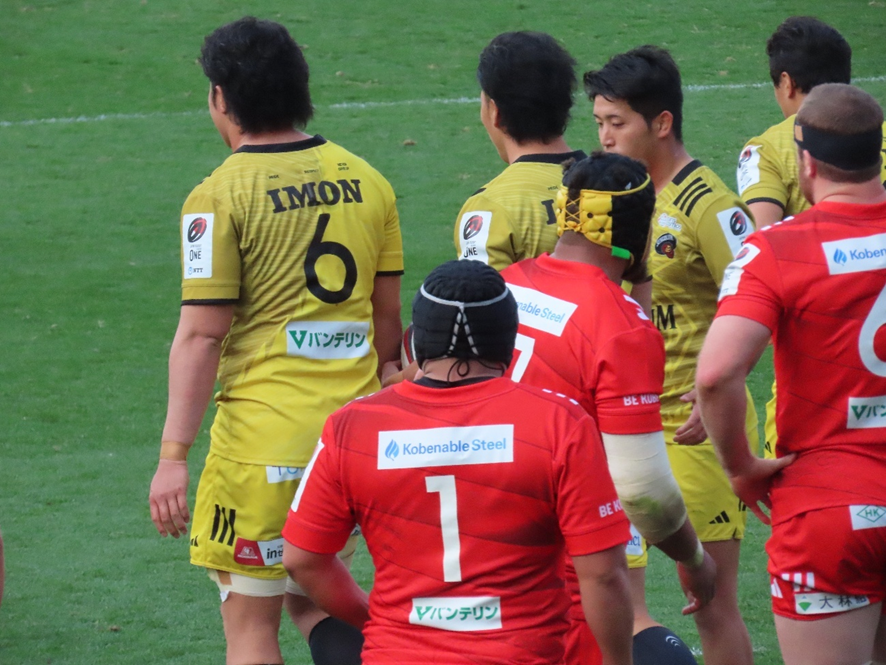
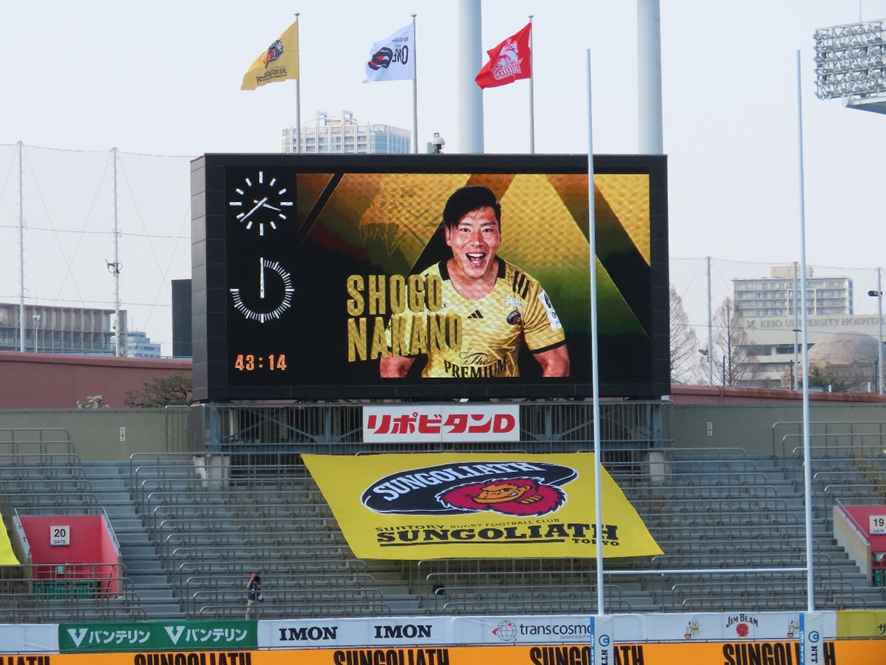
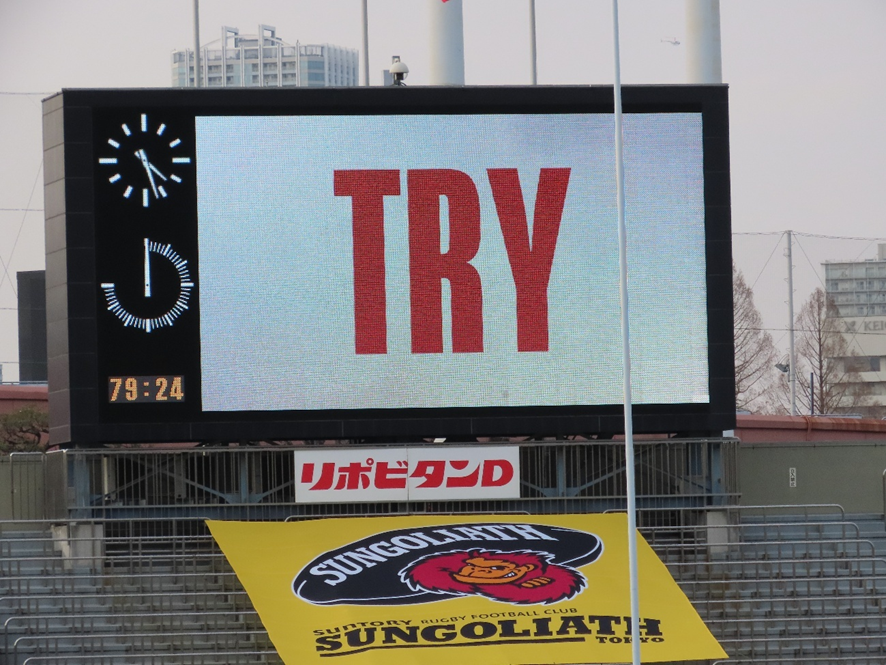
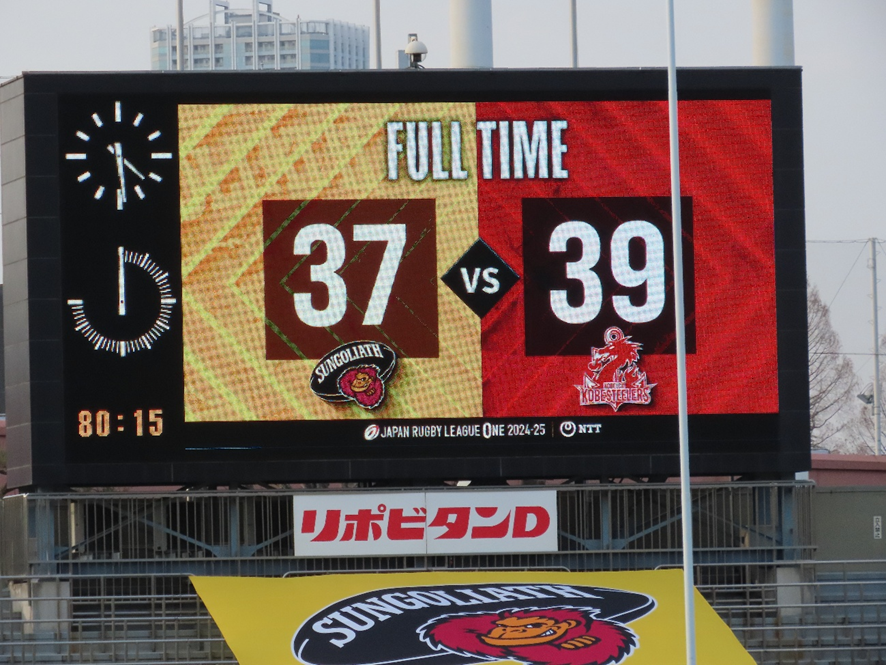
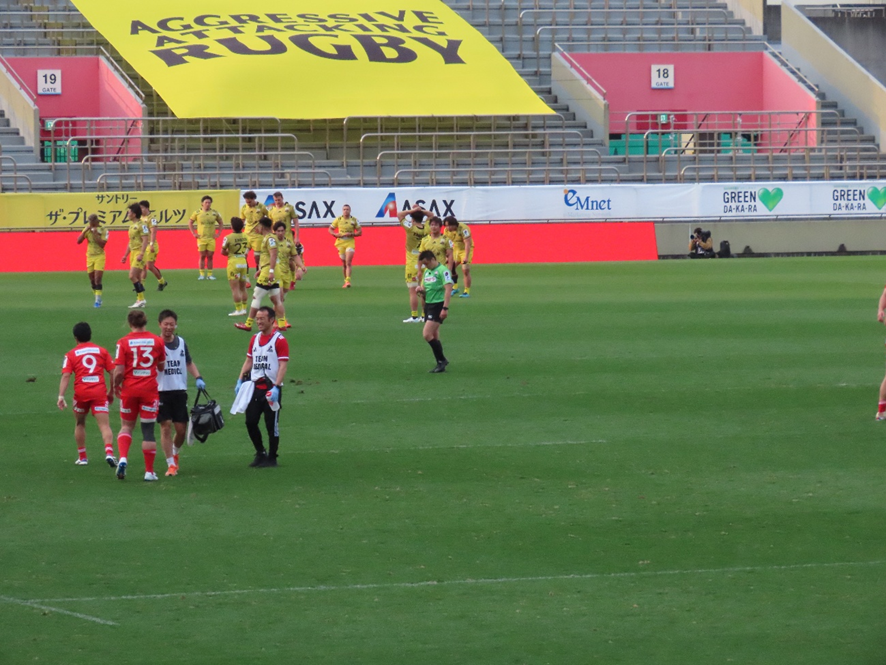
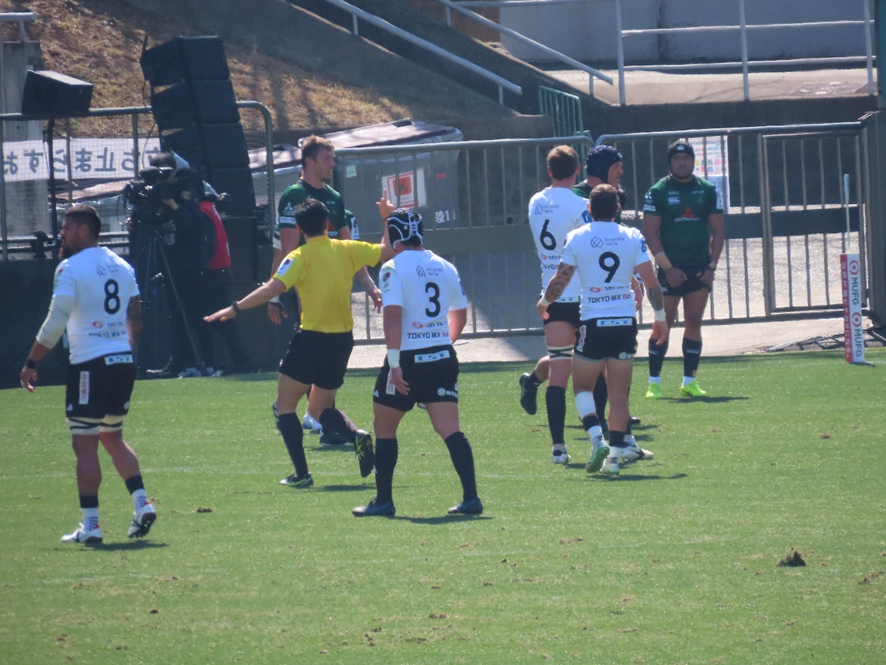
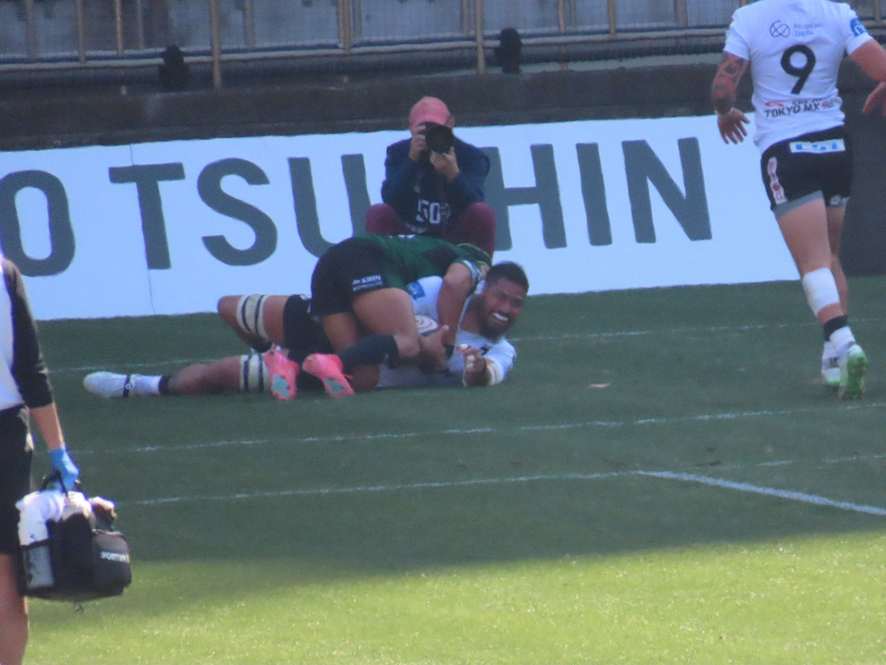
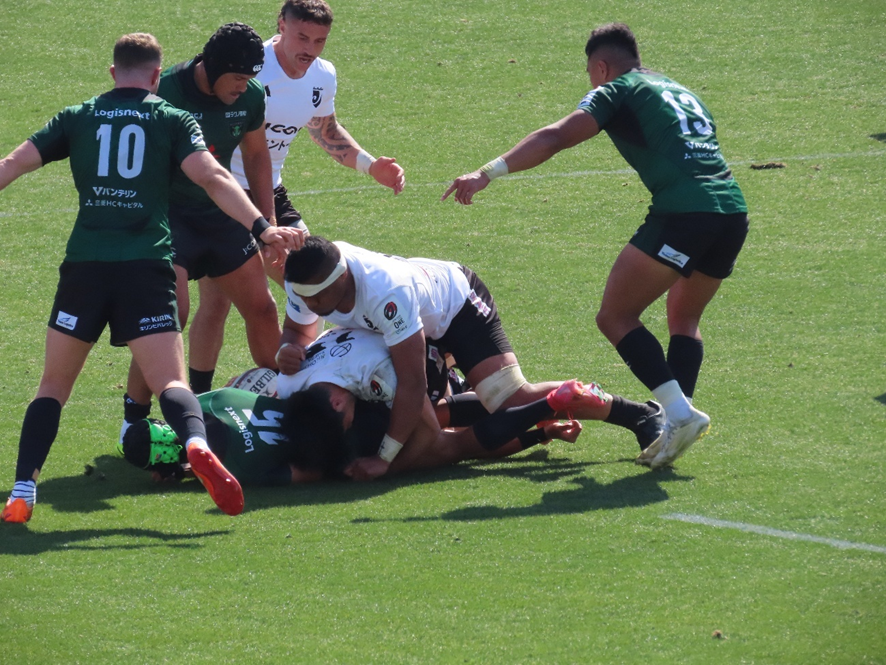
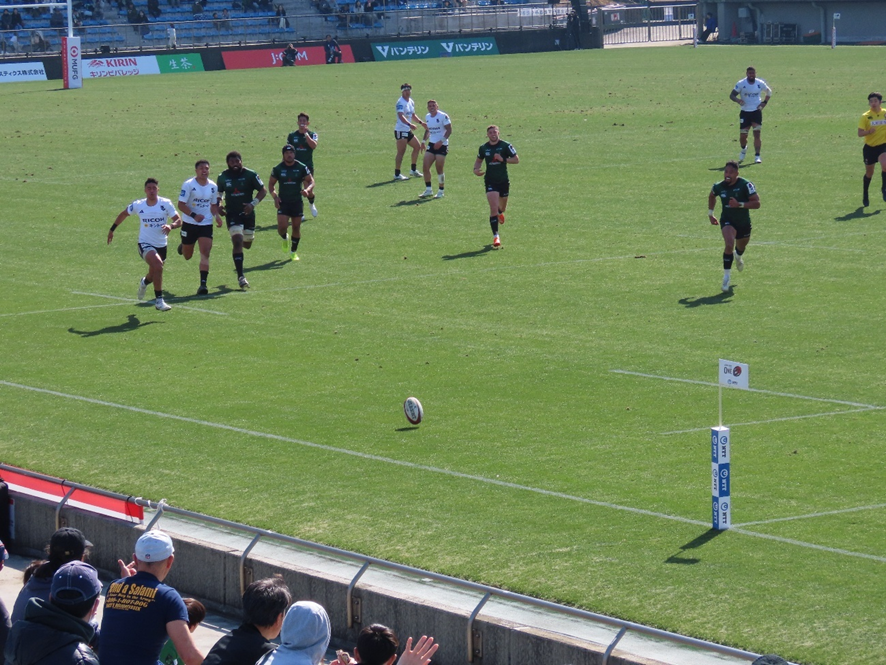
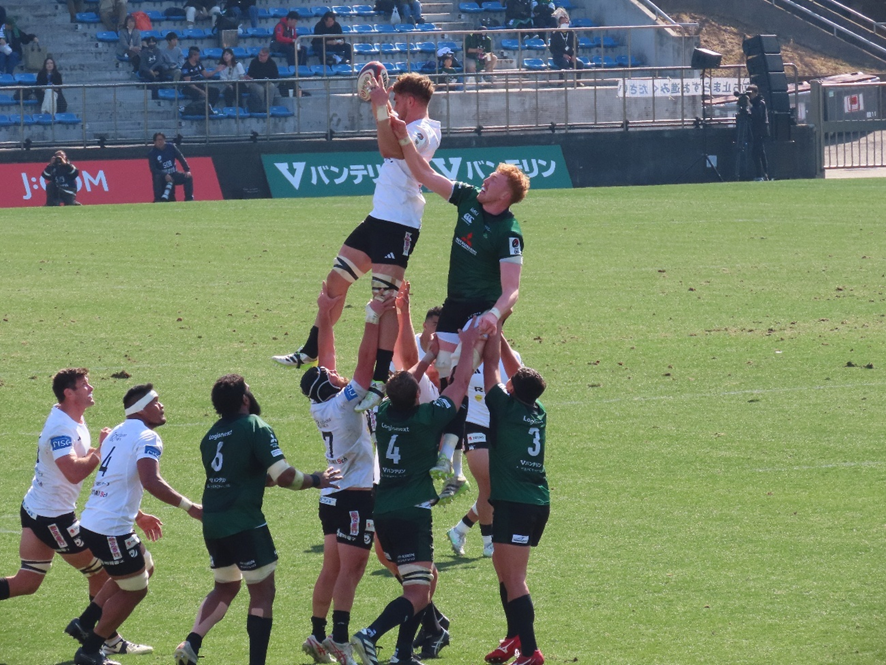
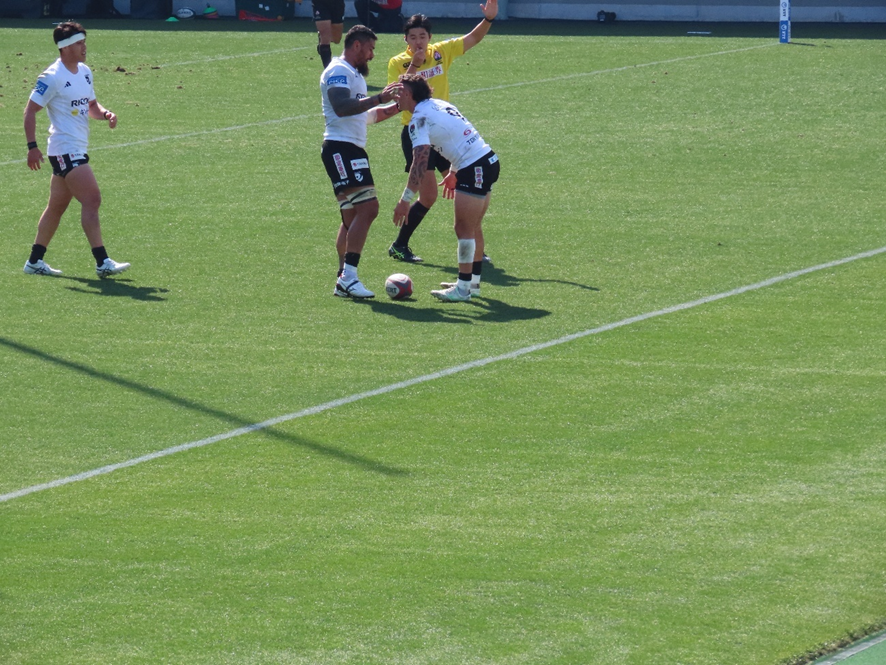
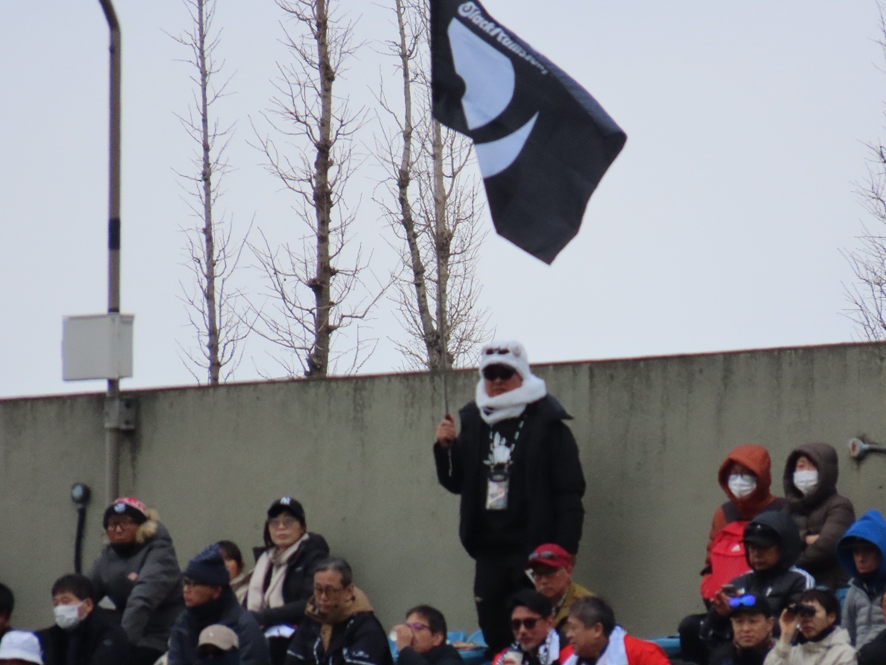
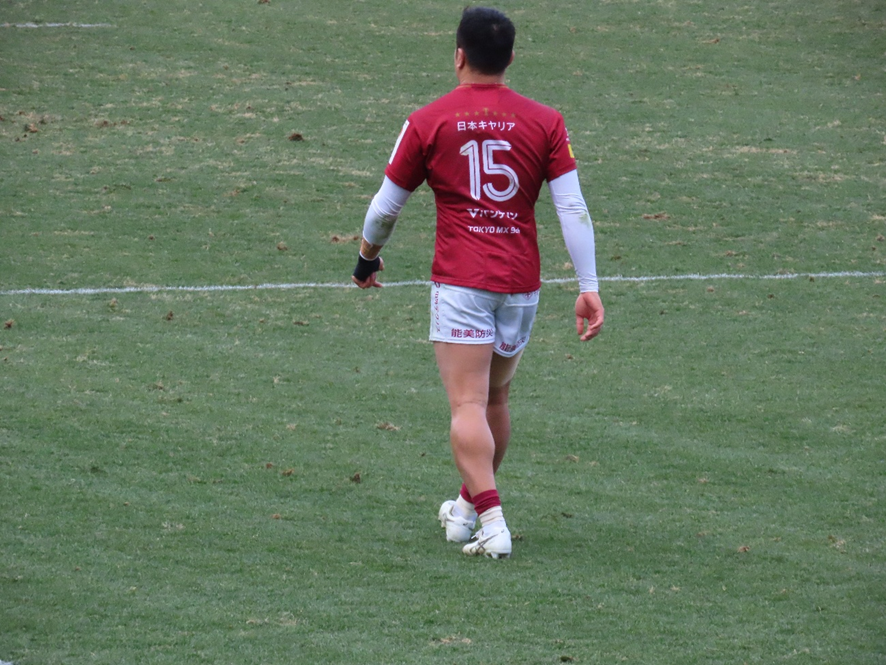
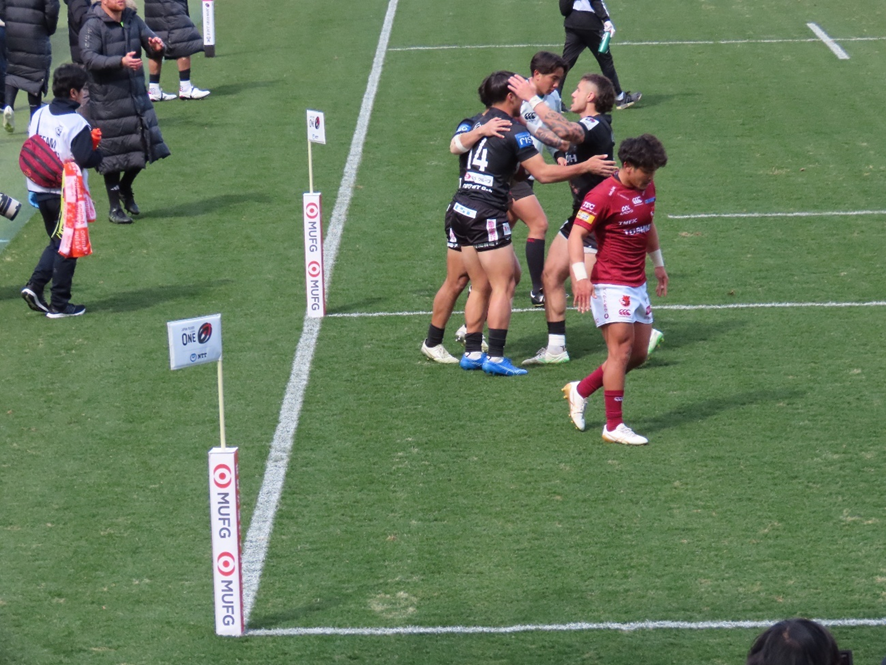
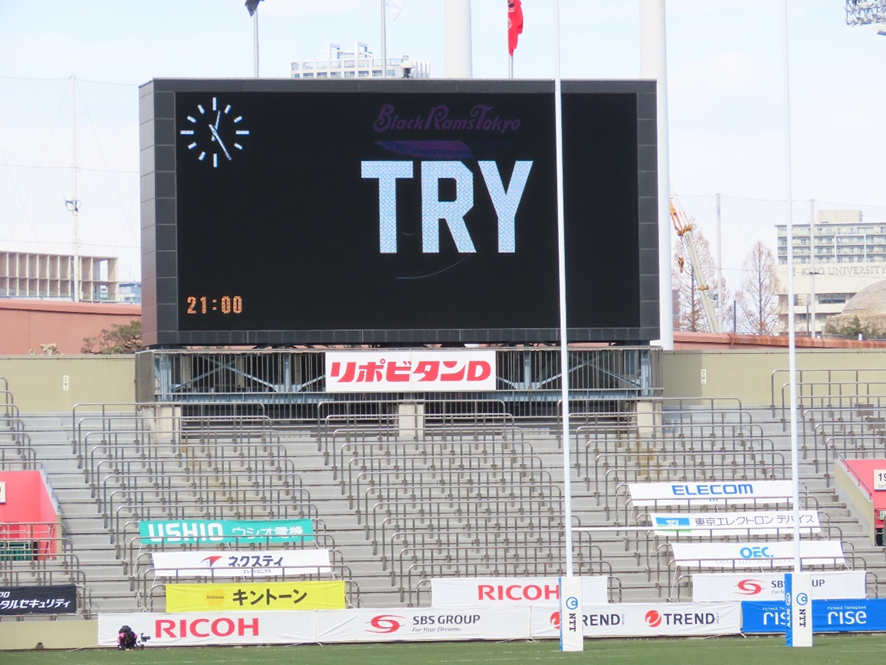
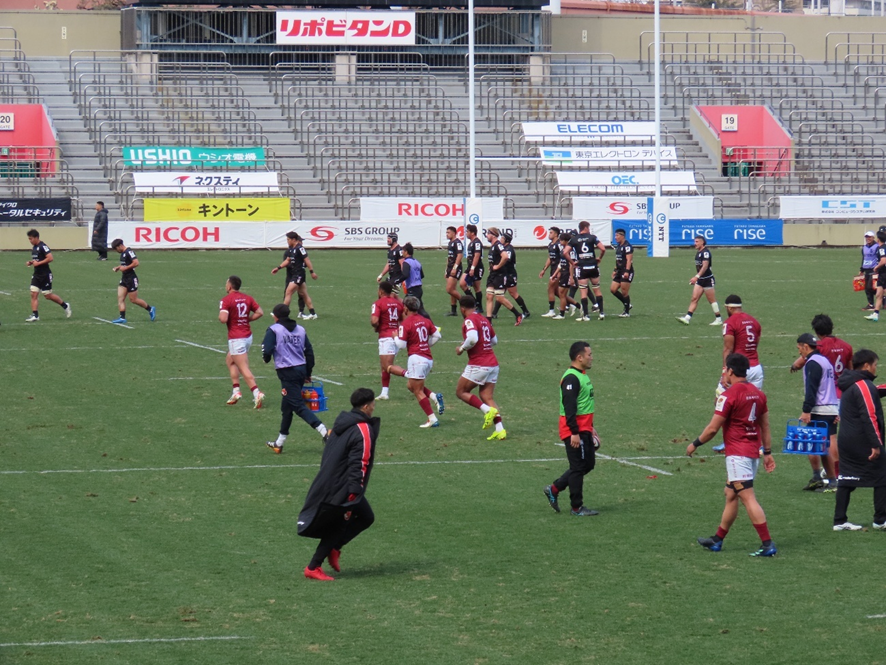
On December 28, 2024, the Japan Rugby League One 2024-2025 season entered its second week. This time, I went to Chichibunomiya Rugby Stadium in Minato-ku, Tokyo, to watch the match between Ricoh Black Rams vs. Suntory Sungoliath. The conditions were fine and the temperature was 7.8 degrees Celsius. The conditions on the day of the game
The conditions on the day of the game were clear and sunny, with a temperature of 7.8 degrees Celsius, but there was not as much wind as I expected and I was seated in the backstage in the sun, so I did not feel the cold so much.
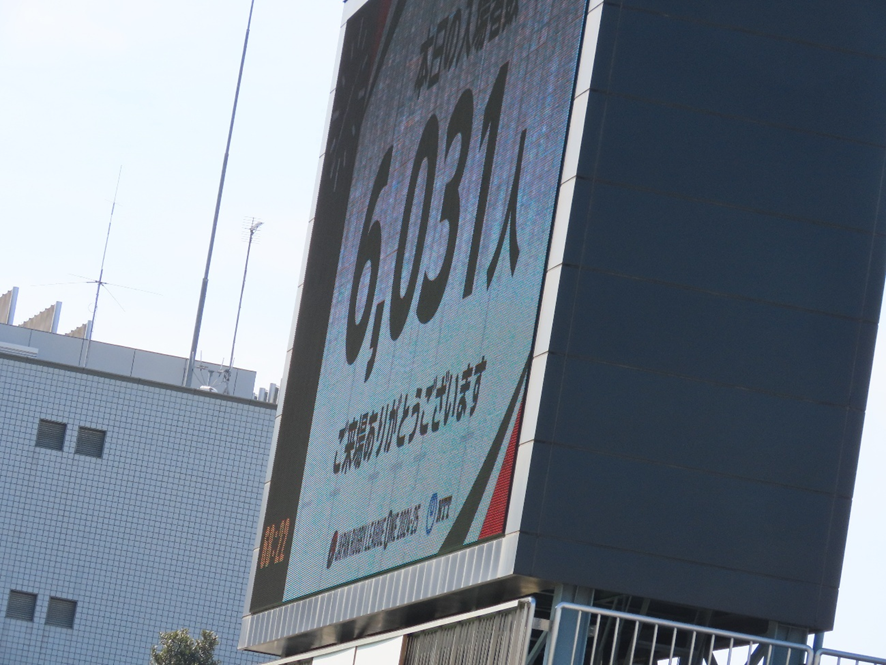
The attendance that day was 8,169, which is said to be a new record for the Black Rams.
Personally, I think the Black Rams fan club pricing contributed to this.
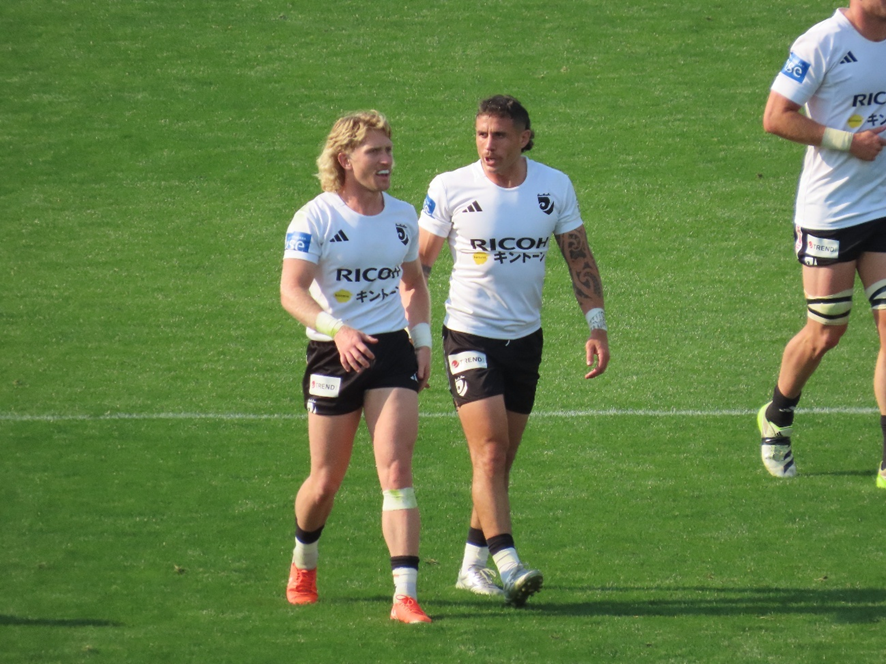
The Black Rams Fan Club offers an annual membership fee of 3,300 yen and a 1,000 yen discount on the price of tickets (non-reserved seats) per game for the host game. In my case, I have never been a member of a fan club for a particular team because I like to watch many teams play, but since T.J. Perenara, formerly of the All Blacks, joined the Black Rams this season, I thought I would watch more Black Rams games, I joined the fan club.
Let me introduce you to the two teams that would be playing on this day.
First, let me introduce the Visitor Team, Suntory Sungoliath.
Suntory Sungoliath is a strong team that has always been one of the favorites for the championship since the Top League days. In the previous round, they lost 12-33 against last season’s runner-up, Panasonic Wild Knights. The team’s morale is expected to be high as they look to get their first win of the season in this match. The team’s catchphrase this season is “Aggressive Attacking Rugby,” and they are probably the best in League One in terms of player depth. However, the dilemma is that the team is so well-rounded that it is difficult for the players who were stars in their college days to play in the games.
The starting lineup for this day was as follows.
Suntory Sungoliath
No.
Name
height
weight
age
1
Yukio MORIKAWA
180cm
113kg
30
Japan 2cap
2
Kosuke Horikoshi
175cm
100kg
28
Japan 7cap
3
Kan NAKANO
177cm
108kg
27
4
Sam JEFFRIES
198cm
114kg
34
5
Harry HOCKINGS
206cm
118kg
25
6
Kanji Shimokawa
188cm
105kg
25
Japan 10caps
7
Kai YAMAMOTO
177cm
100kg
24
Japan 1cap
8
Sean McMAHON
186m
99kg
30
Australia 26 caps
9
Kenta FUKUDA
173cm
80kg
28
Japan 1cap
10
Mikiya Takamoto
171cm
80kg
23
11
Taiga OZAKI
184cm
93kg
26
12
Shogo NAKANO
186cm
98kg
27
Japan 7caps
13
Isaiah PINIVAI
189cm
100kg
24
14
Seiya Ozaki
175cm
85kg
29
Japan 4caps
15
Ryosuke KAWASE
183cm
88kg
25
** Player to watch **
Ryosuke KAWASE.183cm, 88kg, 25 years old. Position = FB, WTB. He is a graduate of Waseda University, and has been a promising prospect since his college days. However, he was not able to play regularly in a team with a large number of players. Currently, KAWASE has had the opportunity to be a starter from the start of the season, as Sungoliath’s teammate and Japan’s WTB, MATSUSHIMA, has been unable to play due to injury. He has the physique, speed, and determination to compete on the international stage, so we hope he can produce solid results this season and be selected for the Japan national team. I am sure Japanese rugby fans are eagerly awaiting his selection.
Next, I would like to introduce today’s Home Team, RICOH Black Rams.
Last season, the Black Rams finished 10th in the final standings, and won the division 2 match to remain in Division 1. However, this season, the Black Rams changed their HC, replaced their players, and reinforced their strong players. In addition, the team’s promotion has also changed, with a more aggressive stance toward promotion, more exciting performances, and a more positive attitude toward attracting spectators to games. Finally, the Black Rams have become more like a professional team.
In the first match of the season, the team faced Mie HONDA Heat, who finished 11th last season, and lost 21-23. In this day’s match, they are looking for their first win of the season as a team.
This day’s starting lineup was as follows.
Black Rams
No.
Name
height
weight
age
1
Kazuma NISHI
180cm
108kg
28
2
Hinata TAKEI
171cm
97kg
26
3
Paddy RYAN
190cm
114kg
36
Australia 3 caps
4
Michael Stolberg
202cm
116kg
32
5
Josh GOODHUE
199cm
113kg
29
6
Amato Fakatava
195cm
118kg
30
Japan 10caps
7
Brodi McCURRAN
193cm
108kg
30
8
Liam GILL
184cm
95kg
32
Australia 15 caps
9
TJ PERENARA
184cm
94kg
32
New Zealand 81caps
10
Ichigo NAKAKUSU
174cm
84kg
24
Japan
11
Netani Vakayalia
181cm
90kg
26
Japan 7th
12
Yuki IKEDA
187cm
100kg
29
Japan
13
Ryohei ISODA
178cm
90kg
28
14
Amanaki LOTOAHEA TAIYO
191cm
107kg
34
Japan 8caps
15
Isaac LUCAS
180cm
85kg
25
** Player to watch **
TJ PERENARA. 184 cm, 94 kg, 32 years old. Position = SH, SO. 81 caps for New Zealand.He is the most popular and accomplished player in League One this season.He has signed a 3-year contract with the Black Rams, and his commitment to the Black Rams’ success is evident. PERENARA was instrumental in the Black Rams setting a new attendance record at the game. PERENARA is a world-class passer, kicker, and runner, as well as a true professional who has instilled an inspirational atmosphere in all Black Rams staff members, both in practice and in their daily lives.
Let’s begin the first half.
Sungoliath’s SO TAKAMOTO kicked off the game.
2 minutes into the first half:
From the opening kickoff, Sungoliath got into the enemy territory, reacquired the ball in a tight battle, and launched a series of attacks. In the flow of the game, Black Rams lock GOODHUE committed a Not Role Away foul. Since the position of the foul was in front of the goal post, Sungoliath elected to go for the PG. Sungoliath’s SO TAKAMOTO scored it, and Sungoliath recorded the first goal with the score 0-3.
6 minutes into the first half:
Both teams kicked each other to gain the upper hand, and the Black Rams managed to get into the enemy territory and launched a series of attacks that led to a Sungoliath foul, where the Black Rams opted for a penalty kick and advanced deep into the enemy territory. The Black Rams then took advantage of a lineout on the right side of the field to break wide left and SO NAKAKUSU broke the line to the enemy in-goal, where NAKAKUSU passed to WTB VAKAYALIA, who was running along the left side of the line, VAKAYALIA scored a try in the left corner of the enemy in-goal.
The conversion goal after the try was also successful, and the score was 7-3 in favor of the Black Rams.
10 minutes into the first half:
Sungoliath developed from their own tight formation, SO TAKAMOTO kicked, Black Rams lock GOODHUE successfully charged, and GOODHUE caught the ball as it rolled by himself and went straight ahead. Sungoliath’s SO TAKAMOTO caught up with him and tackled him, but he passed to Black Rams’ FL McCURAN, who ran after him and scored a try in the middle left of the enemy in-goal.
The conversion goal after the try was also successful, making the score 14-3.
14 minutes into the first half:
The Black Rams’ FWs were gathering quickly, and Sungoliath was unable to move the ball forward. Sungoliath then kicked deep into enemy territory in an attempt to regain possession. However, Black Rams FB LUCAS tried to counter-attack from deep in their own territory.
LUCAS dodged two Sungoliath day defenders and advanced quickly into enemy territory, where the Sungoliath defense again gave chase, but LUCAS passed to lock STOLBERG, who followed up, and STOLBERG scored a try right in the enemy territory.
The conversion goal after the try was missed, but the score was 19-3.
The Black Rams started the first half well, scoring 3 tries in less than 10 minutes.
20 minutes into the first half:
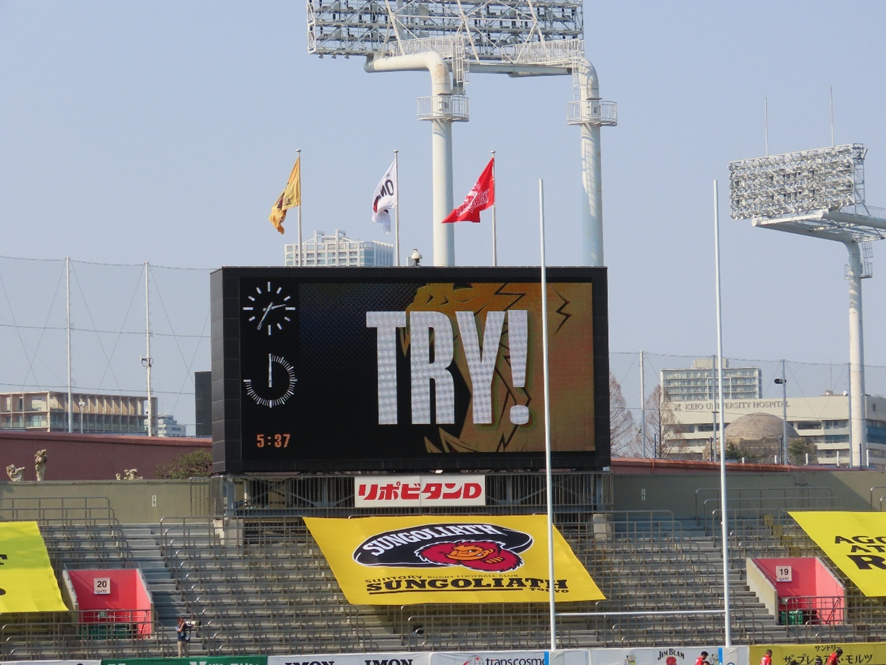
Sungoliath had a penalty kick deep into enemy territory and had the ball in their own lineout. Sungoliath’s CTB PUNIVAI received the ball, broke the line, and approached the enemy’s in-goal. FB KAWASE scored a try in the middle left of the in-goal of the enemy line.
The conversion goal after the try was also successful, making the score 19-10.
31 minutes into the first half:
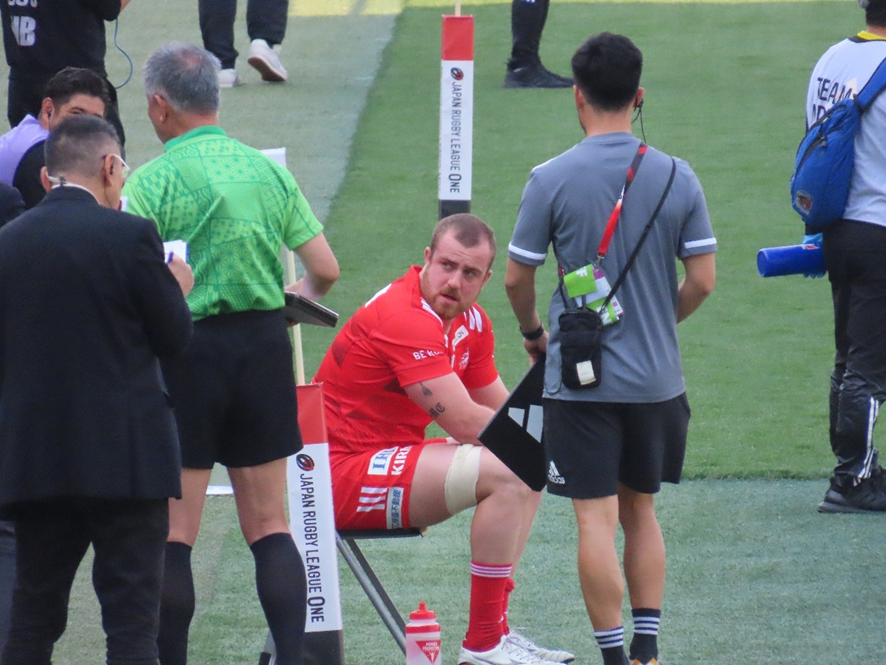
The Black Rams were pinched by a series of unintentional penalties in a tight match, and Black Rams WTB AMANAKI was temporarily sent off for 10 minutes for a bad foul.
In front of the Black Rams’ own in-goal, a tight battle ensued, and the Black Rams did well to push back, but in the end, Sungoliath prop MORIKAWA scored a try right in the middle of the enemy in-goal.
The conversion goal after the try was also successful, making the score 19-17.
42 minutes into the first half:
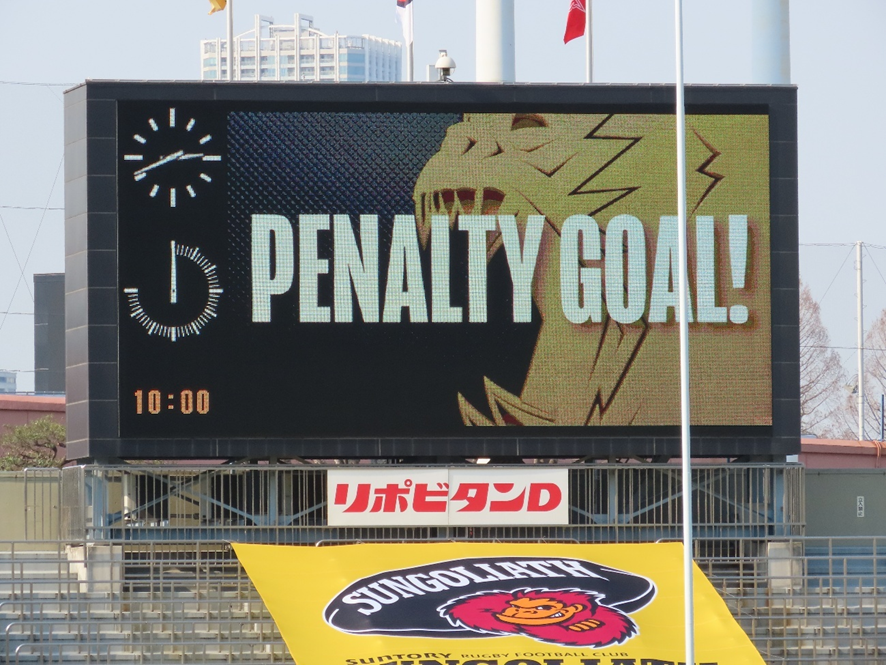
Near the end of the first half, the Black Rams committed an infringement during a scrum in their own territory, and Sungoliath opted to go for the PG. Sungoliath’s SO Takamoto scored to make the score 19-20.
The first half ended here. In the early stages of the match, Black Rams scored a series of tries and took control of the match. However, Sungoliath scored a series of tries towards the end of the first half to bring the match to an even contest.
It will be interesting to see which team will be the first to take control of the match in the second half.
During the 15-minute halftime, the host team, the Black Rams, provided fan service by giving out autograph balls
The team staff also performed an original dance.
Let the second half begin.
5 minutes into the second half:
The Black Rams controlled the ball continuously as they entered the enemy territory at the second half kickoff. The Black Rams gradually made progress and approached the enemy in-goal, and from near the goal posts, the Black Rams took a left turn and SO NAKAKUSU broke the line and ran into the left middle of the enemy in-goal for a try.
The conversion goal after the try was also successful, making the score 26-20 and giving the Black Rams a 6 point lead.
9 minutes into the second half:
The Black Rams’ momentum was unstoppable. From the restart kickoff after the try, they won the ball and continued to attack. Sungoliath occasionally won the ball back, but the Black Rams continued their attack, outpacing the hosts with their athleticism and support in the tight pack. The Black Rams again came close to scoring an in-goal, and CTB IKEDA received the ball and scored a try right under the goalposts.
The conversion goal after the try was also successful, making the score 33-20.
16 minutes into the second half:
Sungoliath was in the middle of the field when the Black Rams committed an infringement, and Sungoliath opted for a penalty kick. Sungoliath had their first scoring opportunity in a long time, but the ball went to the left in front of the enemy in-goal, and SO TAKAMOTO passed the ball to FB KAWASE, who scored his second of the day in the left center of the enemy in-goal.
After the try, the conversion goal failed, and the score was 33-25.
20 minutes into the second half:
Sungoliath resumed the attack from their own territory, and substitute FL IOANE made a powerful run to advance more than 10 meters, and from there, the ball was passed to FB KAWASE who ran as fast as he could from behind. He then swept past 2 Black Rams defenders with his speed and scored his third try of the day in the middle of the enemy in-goal on the right.
The conversion goal after the try was also successful, and the score was 33-32, Sungoliath was finally within one point.
Both teams put on a show in attack, and the time was running out for both teams. From this point on, the game entered a tough phase where a single foul could make the difference between victory and defeat.
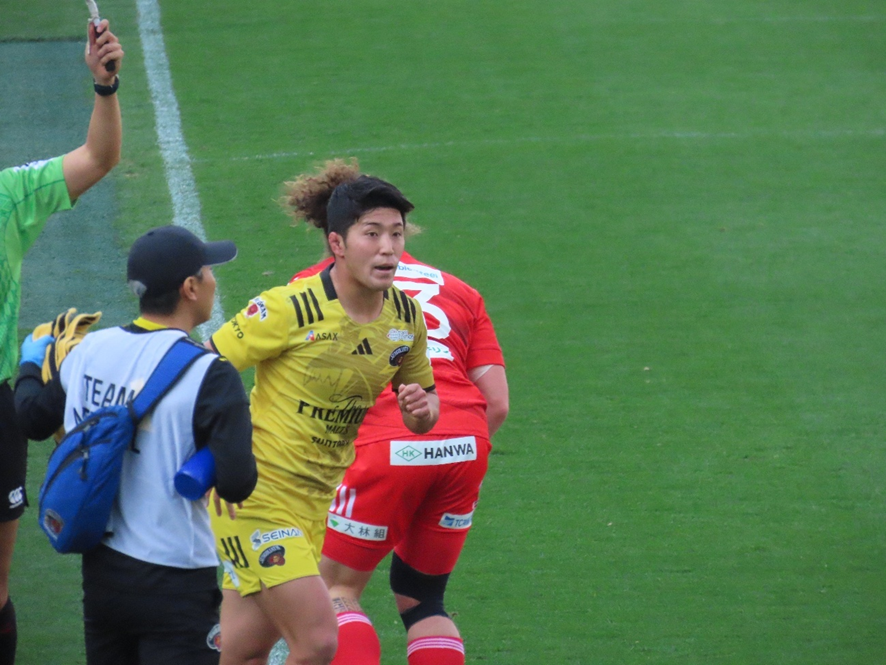
Sungoliath took control of the attack towards the end of the match. This was largely due to the work of Sungoliath substitutes SH NAGARE and prop HOSOKI, with NAGARE helping to set the tempo in the attacking sequences and HOSOKI providing the momentum for Sungoliath as an impact player in the scrums. In my opinion, Sungoliath’s HOSOKI is probably the best scrummager in Japan. But he is not selected for the national team because of his frequent injuries and the short time frame in which he is able to show his strength.
(SH Yutaka NAGARE)
(Prop Kotaro HOSOKI)
Toward the end of the match, Sungoliath pushed and won in all of their scrums. Sungoliath’s prop HOSOKI’s outstanding strength in the scrums shined through here, and the Black Rams also wanted to expand and advance into the opposition’s territory, but the scrums were not enough.
The Black Rams were also at a disadvantage when a collapsing scrum in their own territory resulted in an immediate PG for Sungoliath, which meant the loss of the game.
After 80 minutes of game time, Sungoliath went on their 9th consecutive attack in front of the enemy in-goal,
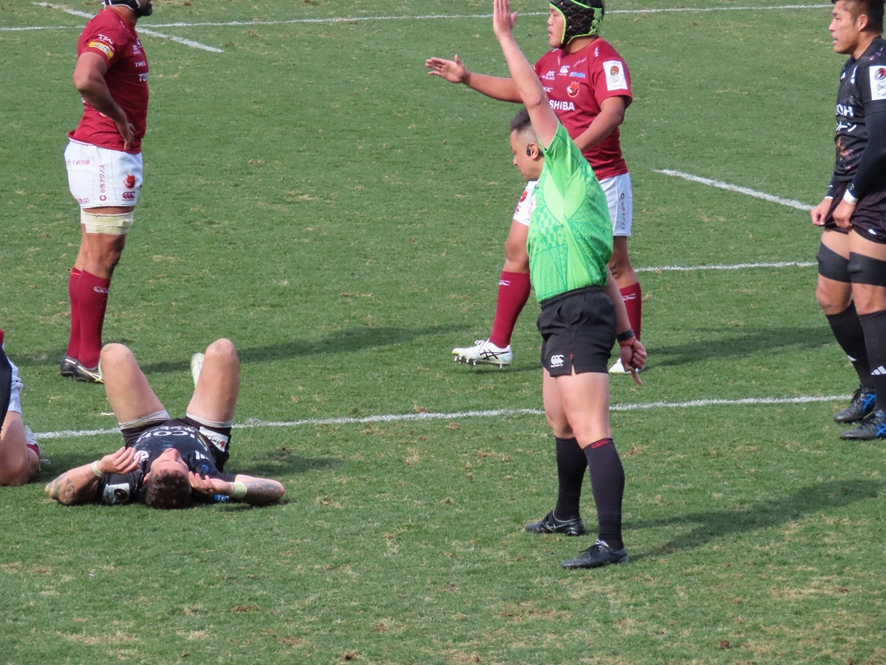
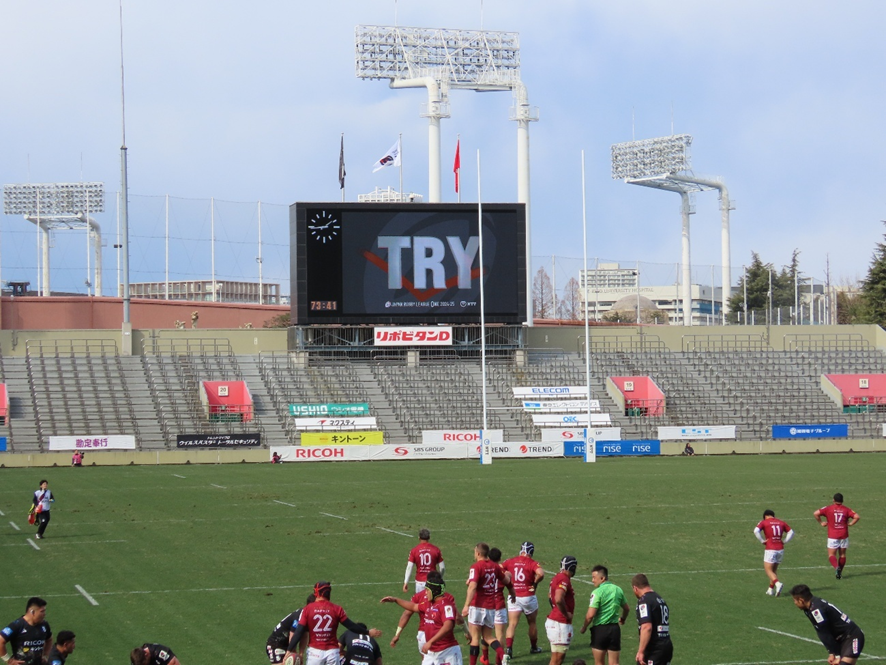
SO TAKAMOTO threw a long pass to FB KAWASE, who placed the ball in the left corner of the enemy’s in-goal. However, just before that, SO NAKAKUSU of the Black Rams appeared to have pushed KAWASE’s foot off the field. The winner was left to the video decision TMO.
Since it was already past the end of the match, the winner was decided by this decision. Could Sungoliath score a try in the end?
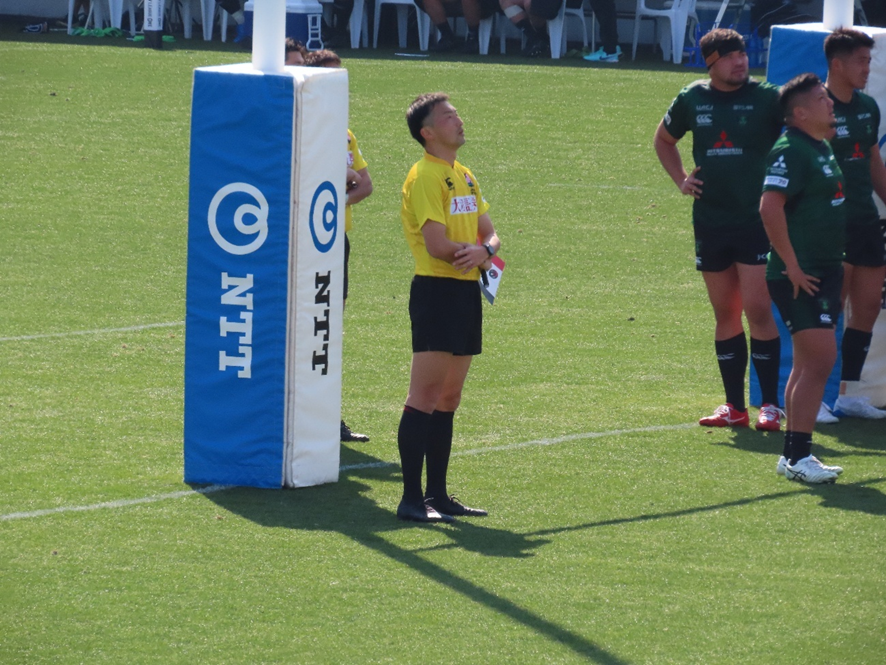
The Black Rams players look at the big screen behind the goal.
The result of the decision was a no try.
At the end of the match, the Black Rams were finally the winners.
Sungoliath’s FB KAWASE cowered as he missed the try that would have decided the match.
The crowd applauded and cheered for the players who had fought so hard, much to the delight of the Black Rams players and fans, who had lost 16 straight games against Sungoliath, including a humiliating 0-62 defeat last season.
We would like to thank all the players and fans for a great match at the end of the year 2024.
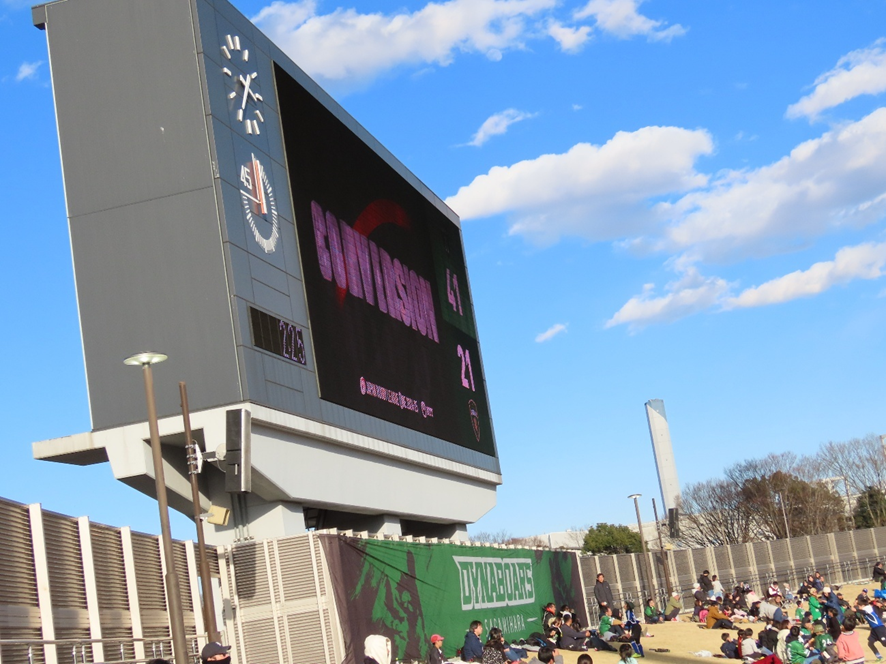
The Japan Rugby League One 2024-2025 season started on December 21, 2024. I went to watch one of the first matches of the season, Sagamihara Dynaboars vs. Urayasu D-Rocks, which was held on December 22 at Sagamihara GION Stadium.
On the day of the game, the weather was fine, but it was a chilly day with a very northerly wind.
We watched the game from the bleachers behind the goal.
The following 12 teams are participating in this season’s League One Division 1.
** CONFERENCE A ** 1.
Urayasu D-Rocks
KOBELCO Kobe Steelers
Shizuoka Blue Revs
Toshiba Brave Lupas Tokyo
Mitsubishi Heavy Industries Sagamihara Dynaboars
Yokohama CANON Eagles
** CONFERENCE B **
Kubota Spears Funabashi, Tokyo Bay
Saitama Panasonic Wild Knights
Tokyo Suntory Sungoliath
TOYOTA Verblitz .
Mie HONDA Heat
RICOH Black Rams Tokyo
This season, the top 6 teams will advance to the playoffs and compete for the championship in a tournament. The bottom 2 teams will play in a match-up with the Division 2 teams.
This season, many stars from around the world who played in RWC2023 have gathered here in League One, and we are looking forward to seeing how they will play.
Now, let me introduce the two teams that will be competing on this day.
First, let me introduce the Visitor Team, Urayasu D-Rocks.
In their first year in League One, they finished 10th in Division One and lost two games against the Dynaboars, who had been promoted from Division Two, and were relegated to Division 2. It took them two seasons to get back to Division 1. On the day of the match, they faced Dynaboars, a team they had lost to in the elimination round. All the players were eager to play in this match.
The starting lineup for this day’s match was as follows
URAYASU D-ROCKS
No.
Name
height
weight
age
1
Hidetomo NABESHIMA
176cm
115kg
23
2
Ryuji FUJIMURA
174cm
102kg
26
3
Syuhei Takeuchi
183cm
115kg
27
Japan 12cap
4
Uwe HELU
193cm
120kg
34
Japan 19cap
5
Lourence ERASUMUS
200cm
123kg
31
6
Tom PERSONS
196cm
113kg
34
7
Shinya OHSUGI
187cm
100kg
32
8
Tui HENDRIK
188cm
112kg
37
Japan 47cap
9
Ren IINUMA
170cm
75kg
24
Japan
10
Otere BLACK
185cm
86kg
29
11
Kai ISHII
179cm
85kg
31
12
Samu KEREVI
186cm
106kg
31
Australia 41cap
13
Shane GATES
183cm
95kg
32
Japan 4cap
14
Takuhei YASUDA
177cm
80kg
26
Japan 2cap
15
Israel FOLAU
194cm
103kg
35
Australia 73cap, Tonga 1cap
** Player to watch **
Ren IINUMA. 170cm, 75kg, 24 years old. He is a graduate of Meiji University. He is a candidate for the Japan national team. Although he is only 24 years old, he has been the captain of the D-Rocks for 2 consecutive years. Last season, he was appointed as the captain of the team, which won the Division 2 championship and defeated the Kintetsu Liners in the replacement game, and is now aiming to make a breakthrough in Division 1. He was also called up to training camp this season as a candidate for the Japan national rugby team. Although he did not play any games for the national team this season, he is expected to be the face of the D-Rocks in the future.
Next, we would like to introduce the home team for this match, the Mitsubishi Heavy Industries Sagamihara Dynaboars.
Since being promoted to Division 1 in the 2022-23 season, the Dynaboars have gradually improved their team strength, finishing 10th the year before last and 9th last year. The driving force behind the team’s progress has been the hard work of all members, who, under the guidance of HC Glenn Delaney, have been training with an emphasis on team athleticism. The team’s strength often comes in the second half of games.
Although there are few national team players in the team, lock ULUIVITI was selected for the national team this season, and WTB ARENDSE, who boasts 22 caps for South Africa, joined the team as a newcomer. This season, the team aims to achieve better results than last season and make a breakthrough as a team.
The starting lineup for the day was as follows.
Dynaboars
No.
Name
height
weight
age
1
Jun MORIMOTO
175cm
115kg
28
2
Seunghyuk LEE
179cm
103kg
25
Japan 1caps
3
Rento TSUKAYAMA
186cm
107kg
26
4
Walt STEENKAMP
203cm
121kg
29
5
Epineri ULUIVITI
196cm
122kg
28
Japan 5caps
6
Kyo YOSHIDA
188cm
108kg
29
7
Kohki SATO
179cm
96kg
29
8
Marino MIKAELE-TUU
193cm
111kg
27
9
Kohta IWAMURA
182cm
87kg
31
10
James GRAYSON
182cm
90kg
26
11
Satoshi KOIZUMI
178cm
86kg
24
12
Charlie LAWRENCE
171cm
92kg
26
13
Tonishio VAIAFU
177cm
103kg
30
14
Ben PALTRIDGE
177cm
88kg
32
15
Kurt-Lee ARENDSE
176cm
80kg
28
South Africa 22caps
** Player to watch **
Kurt-Lee ARENDSE. 176 cm, 80 kg, 28 years old. He has played for South Africa in 7-a-side rugby and represented the country at the Tokyo Olympics. In July 2022, he was selected for the South African 15-man national rugby team, and since then has been a regular member of the national team, contributing to South Africa’s victory at the RWC 2023. Although he is rather small in height and weight compared to Japanese players, his determination as a try-getter is remarkable. His contract with the Dynaboars is for one season only, but we hope that his success will be witnessed by rugby fans in Japan.
Let’s begin the first half.
6 minutes into the first half:
D-Rocks kicks off to start the game.
It was 11 degrees Celsius with a strong northerly wind blowing, and the home team, the Dynaboars, were upwind in the first half. The Dynaboars then opted for the PG, which SO GRAYSON converted to give the Dynaboars a 3-points lead.
8 minutes into the first half:
Immediately after the game resumed, the D-Rocks were in a tight battle in enemy territory, and FL YOSHIDA of the Dynaboars tangled with the ball and drew a foul for Not Release the Ball. The Dynaboars again opted to go for the PG, and SO GREYSON made a great score from 50 meters to make the score 6-0.
13 minutes into the first half:
From the restart kickoff, the D-Rocks got into the enemy territory and deployed left and right, piling up gains and closing in on the opposition’s in-goal. The Dynaboars were fouled for offsides and D-Rocks elected to go for the PG. The point of the infringement was in front of the enemy goalposts, so D-Rocks’ SO BLACK made a steady run to make the score 6-3.
14 minutes into the first half:
From the kickoff of PG’s restart, the Dynaboars were in a tight battle as they entered enemy territory, where D-Rocks committed another infringement. The game was marked by minor infractions by both teams. Here, SO GREYSON of the Dynaboars scored a PG to make the score 9-3.
22 minutes into the first half:
D-Rocks continued the tempo of their attack as they entered the enemy territory, and they came close to the enemy in-goal. SO BLACK released an excellent kick pass, which was caught by CTB KEREVI, and he scored a try in the left corner of the in-goal. However, a video judgment was made at this point, and the try was disallowed for a moment.
The D-Rocks try was disallowed, but just before the play, a foul on the Dynaboars gave them a PG opportunity, which was scored by SO BLACK, making the score 9-6.
25 minutes into the first half:
Dynaboars lock STEENCAMP was fouled for a high tackle and was temporarily sent off for 10 minutes.
32 minutes of the first half:
The Dynaboars were disadvantaged at set pieces as one of their FW players left the field. D-Rocks then pushed the opposing ball scrum, won the ball back, and from there developed a series of attacks, with the FWs repeatedly attacking on the side to the right of the enemy’s in-goal. From there, D-Rocks took a turn to the left, and FB FOLAU passed to WTB ISHII, who scored a try in the left corner of the in-goal.
The conversion goal after the try was unsuccessful, but D-Rocks succeeded in turning the score around, making the score 9-11.
The first half ended with the score at 9-11, with D-Rocks leading by only 2 points, and with only one PG needed to turn the tide, it was hard to predict who would win the game. However, the wind was strong on this day, so D-Rocks was expected to take advantage of the tailwind in the second half. Will Home Team Dynaboars be able to turn the tables?
Let’s start the second half.
9 minutes into the second half:
Dynaboars was now in a bit of a disadvantage because of the strong headwind, which makes it difficult for them to regain ground by kicking, and also because of the scrums they lost. D-Rocks opted to go for the PG, which was scored by substitute SO TAMURA, making the score 9-14.
11 minutes into the second half:
From the restart after the PG, the Dynaboars took advantage of an opponent’s infringement to take a penalty kick, and moved deep into the enemy territory, When the maul broke down, the FWs attacked on the flanks, and finally the 3 of FW players pushed forward and scored a try in the left corner of the enemy’s in-goal.
The conversion goal after the try failed, but the score was 14-14, and the Dynaboars were back on level terms.
21 minutes into the second half:
The Dynaboars, in downwind position, tried to advance by run play instead of kicking. In a series of attacks, they exploited holes in their opponents’ defensive network, and FB Arendse broke the line, ran through the left side of the opposition line, and scored a try in the middle left of the opposition in-goal.
The conversion goal after the try was missed and the score was 19-14.
The Dynaboars were able to come back and score a try.
29 minutes into the second half:
The Dynaboars, despite being downwind of their own line, took control of the attack in the second half and spent much of the time in enemy territory. WTB PALDRIDGE used his speed to break the line and run 40 meters to score a try in the right corner of the enemy’s in-goal.
The conversion goal after the try was missed, making the score 24-14.
33 minutes into the second half:
The D-Rocks were on the defensive in the second half, scoring only 3 points on PGs until this time, when the Dynaboars pushed deep into their own territory and substitute SH STRATTON rolled a punt into the in-goal, which was held by substitute NO.8 HEMOPO of the Dynaboars, resulting in a try.
The conversion goal after the try was also successful, making the score 31-14.
45 minutes into the second half:
In the closing minutes of the match, D-Rocks showed their final mettle and scored a try by CTB GATES in the right corner of the enemy’s in-goal after a series of attacks totaling over 20 phases.
The conversion goal after the try failed, making the score 31-19.
With the failed PG, the game was over, and the Dynaboars were able to win their opening game of the season. Since the number of games in League One has increased this season, the second round will be played before the end of the year.
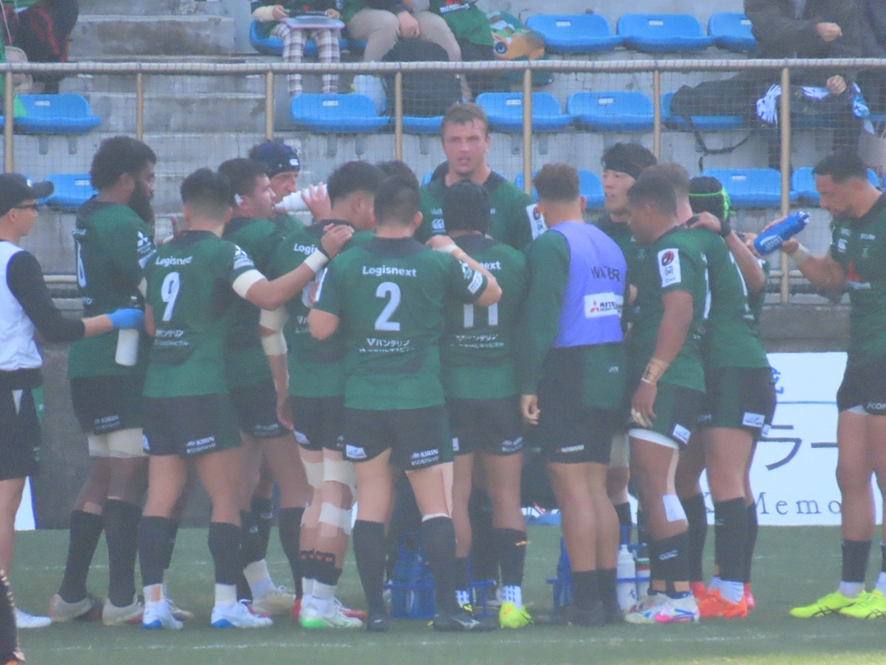
The attendance on the day was 6,607, slightly higher than the average attendance of the Dynaboars last season. We expect that there will be more heated matches after the next section.
On Saturday, December 14, 2024, the 3rd round of the National University Rugby Championship was held at Chichibunomiya Rugby Ground in Minato-ku, Tokyo.
The weather was fine, but a very strong northerly wind was blowing, and this wind was expected to affect the development of the game.
The following 12 teams have advanced to the third round of the 2024 National University Rugby Championships.
Kanto University Rugby Rivalry Group 5 Schools
1st : Waseda University
2nd : Teikyo University
3rd : Meiji University
4th : Keio Gizyuku University
5th : Aoyama Gakuin University
Kanto University Rugby League Group 3 Schools
1st : Daito Bunka University
2nd : Toyo University
3rd : Tokai University
Kansai University A League 3 schools
1st : Tenri University
2nd : Kyoto Sangyo University
3rd : Kinki University
Kyushu Student Rugby League 1st place
1st : Fukuoka Institute of Technology
Remarks:
For leagues with many participating universities, the top 3 schools will be eligible to participate. In addition to this, the league to which the winning team of the previous year belonged will receive one slot, and the team to which the runner-up team belonged will receive one slot. Last season, both of the schools that qualified for the finals were in the Kanto University Rugby Rivalry Group, so this season, the group has 5 spots available.
The temperature at the start of the match was 11 degrees Celsius, but due to the strong northerly wind, the temperature felt much lower.
The cheerleaders of Toyo University were cheering at the game site. When I came to watch the game on November 24, the cheerleaders of Hosei University were cheering in short sleeves and skirts, but the cheerleaders of Toyo University were fully warmed up on this day.
Now, here is the latest information on the two teams that will play on this day.
First, here is the latest information on the Toyo University rugby team, which finished second in the Kanto University League Group and qualified for this national championship.
This will be the Toyo University Rugby Club’s second appearance in the National Championship after being promoted to the first division of the Kanto University League Group in 2022. In 2022, their first appearance in the championship, they lost to Waseda University in the third round. If they win this match, they will advance to the quarterfinals of the University Championship for the first time in their history. Toyo University’s style of rugby play is characterized by the “attack is the best defense. Even against strong teams, Toyo University has been able to score many points by placing physical and superior players in key positions. However, while the team has an excellent attack, they also lose a lot of scores. They are good at scoring points against each other, but they are not good at scoring points against strong defenses. Will they be able to maintain their own fighting style against Keio University?
The starting lineup for the match was as follows.
Toyo University
No.
Name
height
weight
age
1
Seita KASAMAKI
175cm
108kg
21
Captain
2
Shuto KOIZUMI
171cm
100kg
20
3
Makito ISHIKAWA
184cm
115kg
22
4
Daichi KURIHARA
192cm
95kg
21
5
Juan OOSTHUYZEN
211cm
132kg
22
6
Taketo MAEKAWA
173cm
97kg
22
7
Miu Austin MORIYAMA
181cm
108kg
21
8
Shu UEDA
186m
95kg
21
9
Asahi IKUTA
165m
72kg
18
10
Shinsuke AMO
174cm
83kg
21
11
Marks MAURICE
179cm
89kg
23
12
Adam TAMATI
185cm
97kg
21
13
Kodai SATO
173cm
79kg
21
14
Yohei BOND
180cm
87kg
22
15
Kohaku SAKAMOTO
168cm
72kg
19
** Player to watch **
(The lifted player in the center of the photo is KURIHARA)
Daichi KURIHARA. 192 cm, 95 kg, 21 years old. He is a graduate of Isesaki Koyo High School. He started playing rugby in high school, but his alma mater was a no-name high school at the one-win level in the prefectural qualifying rounds. However, he was tall, so some university officials invited him to join the team, but he says, “I thought I wouldn’t be good enough, so I didn’t want to go on to higher education and play. However, he was enthusiastically invited by Toyo University coach Fukunaga and joined the Toyo University Rugby Club. At first, he could barely keep up with practice, but from his second year he was used as a starter and is now an unshakable regular player. A gem in the rough that shines when polished is a player like him.
Next, an update on the Keio Gizyuku University Rugby Club.
Keio Gizyuku University Rugby Club, a school with roots in Japanese rugby, has been participating in the National University Rugby Championship this season as the fourth place team in the Kanto University Rugby Rivalry Group. Although the team does not recruit a large number of Japan’s U-18 national team players like other strong universities, the tradition of training the players who have come to Keio to face strong teams is still alive and well. Since the team is inevitably inferior to the stronger schools in terms of individual breakthrough ability, the entire team tactics are incorporated into each individual player, and the whole team stands up to the challenge. The fighting spirit, traditionally known as “soul rugby,” is still alive and well this season.
This day’s starting lineup is as follows.
Keio Gizyuku University
No.
Name
height
weight
age
1
Yugo IBUKI
175cm
98kg
19
2
Taiki NAKAYAMA
176cm
105kg
22
Captain
3
Takashi YOSHIMURA
177cm
108kg
22
4
Kenta NAKAYA
183cm
103kg
22
5
Yuki ASAI
188cm
108kg
22
6
Masanori NAKANO
176cm
101kg
18
7
Eitetsu TANUMA
176cm
95kg
22
8
Mansaku TOMINAGA
188cm
106kg
22
9
Yamato KOJO
168cm
72kg
22
10
Kentaro WADA
168cm
70kg
19
11
Shinnosuke ISHIGAKI
175cm
80kg
21
12
Ryohei IMANO
183cm
90kg
21
U18,U20 Japan,JJ
13
Kousuke MURATA
174cm
85kg
22
14
Ryo HIROSE
179cm
78kg
21
15
Ou IBUKI
176cm
81kg
21
** Player to watch **
(The player with the number 12 in the photo above is IMANO)
Ryohei IMANO. 183 cm, 90 kg, 21 years old. He is a graduate of Toin Gakuen High School. Position = SO, CTB, WTB, FB. U18, U20 Japan, Junior Japan. He was a national champion in his high school years, and later represented Japan in each generation of the national team. After entering Keio University, he quickly became an unshakable regular and is expected to lead the team as a BK leader.
He is a gem of a BK player with a good combination of running, offense, and defense, and we hope that he will aim for the Japan national team in the future.
Now, let the game begin.
5 minutes into the first half:
Toyo University kicked off from the downwind side, and the game got underway. As expected, the ball kicked by Keio University, which was upwind, went the distance. Keio University pushed deep into enemy territory, but Toyo University committed an infringement and Keio University opted for a penalty kick, resulting in a own ball lineout inside the 22m line.
Keio University secured the ball, and after a maul, they surged forward and scored the first try in the middle left of the enemy’s in-goal. The try was scored by Keio University hooker NAKAYAMA.
The conversion goal after the try was also successful, making the score 0-7.
20 minutes into the first half:
In the early stages of the match, Keio University showed good movement in the densely packed field.
Although Toyo University was taller and heavier than the Keio’s FWs as a whole, Keio University had the advantage in terms of the speed with which they were able to gather and disperse into the densely-packed area. After taking the ball in the enemy territory, they gradually advanced and closed in on the enemy’s in-goal. From the dense in-goal area, Keio University’s SH KOJO moved to the left, cut in, and CTB IMANO scored a try to the left side of the goalposts.
The conversion goal after the try was also successful, making the score 0-12 and giving Keio University the lead.
22 minutes into the first half:
Keio University kicked the ball back from the restart kick-off after the try, but Toyo University FB Sakamoto mishandled the ball and when he caught it, his foot went off the line. This resulted in Keio University having their own ball lineout deep in enemy territory. From there, Keio University secured the ball, and it was spread out to the right, where Keio University’s CTB IMANO scored his second try of the day, right under the goal post.
The conversion goal after the try was also successful, making the score 0-21.
32 minutes into the first half:
Toyo University had the advantage in the set piece scrum, but in the densely packed battle, Keio University overwhelmed them with their concentration and took the ball away from them. This allowed Keio University to constantly attack in the enemy territory. Keio University steadily approached the enemy’s in-goal, and finally, Keio University lock NAKAYA scored a try on the right side of the goal post.
The conversion goal after the try was also successful, and the score was 0-28, with Keio University taking a massive lead and the game looking like a one-sided affair.
36 minutes into the first half:
Toyo University was unable to stop Keio University’s continuous attacks, and was almost glued to its own territory in the first half. Keio University’s attacks gradually became bolder and faster. Keio University kicked the ball behind the enemy defensive net, which was secured by Toyo University’s FL MORIYAMA, but he was pushed out of position in front of the in-goal, resulting in a lineout for Keio University to own the ball. From here, Keio University’s FW made a series of side attacks, and Keio University’s FL NAKANO scored a try at the left corner of the goal post.
The conversion goal after the try was also successful, making the score 0-35.
39 minutes into the first half:
Keio University won a tight battle in the closing minutes of the first half, and their BK made more gains, closing in on the enemy’s in-goal. Toyo University managed to get the ball back in front of the in-goal, where SO AMOU of Toyo University kicked to WTB MARKS, who was stationed at the left corner of the in-goal. MARKS caught the ball and ran about 100 meters from his own in-goal to the enemy’s in-goal to score a try, a masterpiece of individual skill by MARKS.
The conversion goal after the try was also successful, making the score 7-35.
The first half ended with the score 7-35.
In this match, it was evident that Keio University had studied Toyo University’s tactics well before the game.
Toyo University was scored many points against lower-ranked teams when looking at points scored. This was a result of Toyo University’s lack of tenacity in defense.
Next, Toyo University has strong runners in key positions, and they show their strength when they go on the attack, so it was necessary to reduce the opportunities for Toyo University to attack. From this point of view, Keio University dominated the ball battle in the dense first half and did not hand the ball over to Toyo University.
Toyo University had one weapon in their attack, the counter attack by FB Sakamoto, but Keio University crushed it at every opportunity and scored points of their own. This was made possible by the fact that Toyo University’s FB Sakamoto was not likely to kick the ball back, but rather to run with it almost 100% of the time.
Toyo University finally got a shot in the arm at the end of the first half, and will they be able to get back on track in the second half with the wind in their sails?
Toyo University sent a cheering section to this match, which means that Toyo University considers this match as one of the obstacles. They lost in the third round of the University Championship the year before last, so a win here would make new history for the Toyo University Rugby Club. Will the Toyo University Rugby Club be able to live up to the cheers and expectations of this cheering section?
Now, let the second half begin.
7 minutes into the second half:
At the start of the game, Toyo University entered the enemy territory and tried to break through with their key attacking player, an international student player. However, in a densely packed battle, the ball was won back by Keio University. Toyo University continued to attack, with the FWs pushing forward on the crowded side of the field, but Keio University’s tight defense in front of the in-goal made it difficult for them to score. In this situation, Toyo University continued to attack in the same pattern, and Keio University’s WTB ISIGAKI read the flow of the pass, intercepted it, and ran 100 meters across the left side of the field to score a try.
The conversion goal after the try failed, but Keio University scored the first points of the second half to make the score 7-40.
16 minutes into the second half:
Although they were unable to score any points in the middle of the half, Toyo University began to attack for a longer period of time in the second half. In such a situation, Toyo University approached the enemy’s in-goal, continued the attack, and turned the ball to the right corner where WTB MARKS scored his second try of the day.
The conversion goal after the try was also successful, making the score 14-40.
21 minutes into the second half:
Keio University had their first chance to attack in the second half in a while. Keio University secured the ball in their own lineout, and through a gap in the Toyo University defense, Keio University’s SH KOJOH slipped through and scored a try in the middle of the enemy in-goal on the left side of the field.
The conversion goal after the try was missed, but the score was 14-45.
26 minutes into the second half:
At this point in the second half, Keio University began to attack more and more. Keio University continued to attack in the enemy territory, making progress through a series of minor line breaks and closing in on the enemy in-goal, where lock ASAI scored a try in the middle left of the enemy in-goal.
The conversion goal after the try failed, and the score was 14-50. Before the match, Toyo University was said to have the advantage, but the atmosphere of a convincing victory for Keio University was becoming stronger.
30 minutes into the second half:
Towards the end of the match, Toyo University’s original attacking momentum returned. With strong individual contact, they were able to accumulate gains and maintain rhythm while attacking in succession.
When Toyo University had a lineout opportunity in front of the enemy in-goal, they lost their hesitation and formed a maul, then drove left and right to score a try by hooker KOIZUMI.
The conversion goal after the try was also successful, making the score 21-50.
Go, Toyo University! Don’t give up until the end.
40 minutes left in the second half
Time was running out, but Toyo University continued to push forward for a try to show their final determination. Toyo University came close to the enemy’s in-goal many times, but Keio University’s defense kept bouncing them back. However, the ball finally went to Toyo University’s WTB MARKS, who had scored two tries on the day, and MARKS dragged Keio University’s tacklers behind him to score a try right in the middle of the in-goal.
The conversion goal after the try was missed, but the score was 26-50.
In the end, the game ended here, and Keio University beat Toyo University to advance to the third round.
In this third-round match, Keio University was expected to have a tough time according to pre-match previews, but they showed their match mastery and made an impressive advance to the quarterfinals. Toyo University, on the other hand, lost in the third round to a team from the Kanto University rivalry group, as they had done the year before last. However, many of the regulars on this year’s team are underclassmen, and we hope that they will make the most of their experience this time and grow a lot for the next season.
The Kanto University Rugby League Group has finally reached its 7th and final match. In the 6th round, the top four teams all lost their matches, which was a big upset, and the top positions changed drastically. As of the end of Section 6, the league group standings are as follows. The top five schools had a chance to win the championship.
Kanto University Rugby League Group Order 2024
order
team
Win
Even
Lose
Winning Point
1
Ryutsu Keizai
4
0
2
26
1
Daito Bunka
4
1
1
26
3
Toyo
4
0
2
24
3
Tokai
3
1
2
24
3
Hosei
4
0
2
24
6
Nihon
2
0
4
16
6
Rissho
2
0
4
16
8
Kanto Gakuin
0
0
5
2
Daito Bunka University and Hosei University played each other on this day, and in the last four years, Hosei University has had the upper hand in the matchups, winning 3 and Daito Bunka University winning 1. Both schools were cheering enthusiastically for their team to win the league group championship and participate in the University Championships, which was at stake in this match. Hosei University’s cheering group was noticeable from the right end of the back stand where I was sitting.
Here are the two schools that will be playing against each other on this day.
First, an update on Hosei University, currently in third place.
Hosei University was in its final match, and KIM, the team’s captain and SO, who has been the team’s commanding force, was unable to play in this match due to injury. Therefore, sophomore SUZUKI was chosen as the substitute SO. Suzuki is a regular player who has been playing in official matches since he was a freshman, so he was expected to be able to play as a substitute. The rest of the team members were unchanged from the previous game. WTB KOBAYASHI will be the game captain for this match.
The starting lineup for this day’s match is as follows.
Hosei University
No.
Name
height
weight
age
1
Fuminari MORIYASU
172cm
107kg
19
2
Yuta HANAZAWA
175cm
108kg
19
3
Meishi WATANABE
171cm
106kg
22
4
Kota YAMAUCHI
189cm
100kg
20
5
Kanta HOSOKAWA
185cm
103kg
20
6
Kuu OSAWA
172cm
90kg
19
7
Kanta MIURA
184cm
78kg
20
8
Kohki MIYASHITA
187cm
110kg
20
U18,U20Japan
9
Yugo OYAMADA
170cm
70kg
21
U18 Japan
10
Sota SUZUKI
173cm
82kg
20
11
Masaharu KOBAYASHI
173cm
81kg
21
12
Taisei TANAKA
176cm
91kg
21
13
Shun NAKAI
172cm
84kg
22
14
Yuzuto SUMIKAMA
174cm
99kg
19
15
Takuru KITAGAWA
170cm
78kg
21
** Player to watch **
Yugo OYAMADA. 170 cm, 70 kg, 21 years old. His father, Atushi OYAMADA, played for Toshiba Fuchu and played CTB for Japan. He is also an aggressive player who can find open space in the opposition’s ranks and use run play to try to break through. Will he be able to lead his alma mater to the university championship in the 100th anniversary year of the Hosei University Rugby Club?
Next up is the Daito Bunka University Rugby Club, which stands at the top of the Kanto University Rugby League group this season.
Daito Bunka University Rugby Club was founded in 1963. In the past, the team has won the Kanto University Rugby League group 9 times and the National University Rugby Championship 3 times. If they win the league championship this season, it will be their first in seven years, since 2017. The school’s rugby team has deep ties with the Kingdom of Tonga, and several international students have joined the rugby team every year. Many of these players have been selected for the Japanese national rugby team and are remembered by Japanese rugby fans.
This season’s team also has Tongan players playing an active role at the heart of the team. The international players have been playing the role of breaking through the opposing defensive network, and following them, they have been connecting and scoring points with both WTBs who are very decisive.
One of their weaknesses is that they concede a lot of points even in winning games, so they need to stabilize their set plays and reduce the number of penalties in order to win the University Championship in the future.
This day’s starting lineup was as follows.
Daitou Bunka University
No.
Name
height
weight
age
1
Matsuri ODAGIRI
174cm
107kg
20
2
Shura SAGA
169cm
97kg
21
3
Lisala FINAU
189cm
120kg
22
4
Genta ITABASHI
178cm
99kg
22
5
Yuzuki SASAKI
188cm
105kg
22
Junior Japan,U20 Japan
6
Koji MINOHORA
173cm
90kg
22
7
Kou NOBUHARA
177cm
94kg
20
8
Yoshinobu OTAKE
181m
93kg
20
9
Shoei ADACHI
170m
73kg
21
10
Mahito FUKUI
171cm
82kg
21
11
Iori OKATA
166cm
64kg
19
12
Haniteli VAILEA
180cm
100kg
22
13
Sota HASHIMOTO
177cm
90kg
21
14
Towa KANDA
170cm
82kg
22
15
Tavake OTO
182cm
97kg
20
** Player to watch **
Haniteli VAILEA. 180 cm, 100 kg, 22 years old. Born in the Kingdom of Tonga, graduated from Aomori Yamada High School. In this season’s team, he plays a breakthrough role in the BK and is also a placekicker. In games, he not only uses his strong physical ability to break through, but also shows his cleverness in knowing who to follow and being a good link between the players.
This season, Daito Bunka University has a back-3 of fast, decisive players, so VAILEA should be able to make the most of its strengths. I expect Daito Bunka University to make a great leap forward in the University Championship.
Let’s begin the first half.
10 minutes into the first half:
Daito Bunka University, with its FWs at the center, moves forward with power, while Hosei University, with its BKs at the center, runs and connects with its opponents. The two teams had completely different styles of play. After kicking each other, Hosei University tried to counter-attack with their BK, but Daito Bunka University’s defense held firm and they were unable to make much headway. Looking at Daito Bunka University’s previous games, it seemed that they had studied their defense quite a bit in preparation for this match, as they had lost a lot of points.
Daito Bunka University then chose to take a penalty kick after an infringement by their opponents, resulting in a own ball lineout in front of the enemy in-goal. Daito Bunka University secured the ball, and after a maul, they moved forward and scored a try in the middle left of the enemy’s in-goal.
The conversion goal after the try was also successful, and Daito Bunka University succeeded in scoring the first point, making the score 7-0.
15 minutes into the first half:
Hosei University chose to go for the PG when their opponents committed an infringement near the halfway line. The PG was a difficult one, as it was 50 meters long.
Hosei’s CTB TANAKA scored to make the score 7-3.
The Hosei University supporters cheered loudly for Hosei University’s score.
17 minutes into the first half:
Daito Bunka University secured the ball in their own lineout from their own line and expanded to the right. Daito Bunka University’s CTB VAILEA received the ball here, dodged the opposing day defense, and made a big advance deep into enemy territory. Here, VAILEA was caught by the opposing defense, but he connected with No. 8 OTAKE via an offload pass, and OTAKE scored a try to the left side of the goal post in the enemy’s in-goal.
The conversion goal after the try was also successful, and the score was 14-3.
20 minutes into the first half:
After the try, Hosei University took the restart kickoff, secured the ball in the enemy territory, and with the FW and BK working in unison, they attacked left and right and advanced to the enemy 22m line.
However, Daito Bunka University lost the ball in front of the enemy in-goal. Daito Bunka University counter-attacked from this position, and the FWs attacked deep into the enemy territory, and CTB BAILEA followed up on the pass and scored a try right under the enemy goal posts.
The conversion goal after the try was also successful, making the score 21-3.
The photo above shows the screams of Daito Bunka University’s passionate supporters.
From the restart kickoff, Hosei University pushed forward to the enemy’s in-goal, but Daito Bunka University’s defense made them hesitate in their attack, and they missed the chance.
4 minutes into the first half:
Daito Bunka University’s WTB OKATA caught Hosei University’s SO SUZUKI’s kick from his own line at the 22m line, but his foot stepped on the line, resulting in a lineout for Hosei University.
From this position, Hosei University launched a series of attacks, but Daito Bunka University’s stout defense prevented them from advancing. However, Hosei University moved to the left, and with skillful passing, passed the ball to WTB KOBAYASHI, who was positioned on the outside, and KOBAYASHI scored a try in the left corner of the enemy in-goal. This was the first try of the match for Hosei University.
The conversion goal after the try was also successful, making the score 21-10.
The first half ended with the score at 21-10.
In the first half, Daito Bunka University’s solid defense was outstanding as they almost completely stopped Hosei University’s counter attacks.
For Hosei University, the score was a direct result of repeated line breaks by Daito Bunka University’s leading scorer, CTB Vailea, which led to the score.
Can Hosei University overcome their first half mistakes and close the gap?
Let’s get the second half underway.
10 minutes into the second half:
Hosei University was unable to match Daito Bunka University’s strong in-goal defense in attack in the first half. However, Hosei University’s FWs made strong contact, connected the ball, kept moving forward, and found a rhythm of continuous attacks. Hosei University came close to the enemy’s in-goal several times and even created a try chance, but failed to score a try. However, Hosei University got a PG opportunity deep in enemy territory after a foul on their opponents, and CTB TANAKA converted it to make the score 21-13.
12 minutes into the second half:
Daito Bunka University caught the ball from a PG restart and launched an attack. Again, the ball was passed to CTB VAILEA, the key man in Daito Bunka University’s attack, who bounced off the opponent’s defense and quickly approached the enemy’s in-goal. Hosei University stopped VAILEA just before the in-goal, but VAILEA connected with No.8 OTAKE via an off-load pass, and OTAKE scored a try in the left center of the in-goal.
The conversion goal after the try was missed, but the score was 26-13.
As Daito Bunka University spent more time on the attack, they gradually added to their tally. First, in the 16 minutes into the second half, a driving maul in front of the in-goal resulted in a try. The scorer was hooker SAGA, and the conversion goal was successful. The score was 33-13.
21 minutes into the second half:
Hosei University was penalized for a dangerous tackle, and FB KITAGAWA was temporarily sent off for 10 minutes.
Daito Bunka University gained a numerical advantage and used a series of aggressive attacks to their advantage, and WTB OKATA scored a try in the right corner of the in-goal. The conversion goal after the try was missed, but the score was 38-13.
25 minutes into the second half:
From the kickoff after the try, Hosei University took possession of the ball in the enemy territory and launched a series of attacks, but the teams did not communicate well with each other, and there were two occasions when no one received a pass. Daito Bunka University’s WTB OKATA did not let this go. After a mistake by Hosei University, Daito Bunka University’s WTB OKATA picked up the ball that had rolled into their own territory and ran 80 meters to score a try in the left center of the enemy’s in-goal.
The conversion goal after the try was also successful, making the score 45-13, Daito Bunka University’s 32-point lead, and considering the time remaining, Daito Bunka University’s victory was almost assured in this match.
Hosei University suffered a great deal of mental damage as they attacked right up to the enemy in-goal, where a mistake cost them a try.
29 minutes into the second half:
Hosei University started a counterattack from the restart kickoff with 11 minutes remaining. Hosei University attacked in good rhythm, with each player moving forward at key points to close in on the enemy in-goal, and finally WTB KOBAYASHI scored a try right in the middle of the in-goal.
The conversion goal after the try was also successful, making the score 45-20.
36 minutes into the second half:
With only a few minutes remaining, Hosei University broke the line on a run play from their own line and moved deep into the enemy territory. With the enemy in-goal closing in, they went on a series of attacks, but were unable to break through Daito Bunka University’s defensive network because of their monotonous attacks. However, Hosei University continued to attack tenaciously, and Lock HOSOKAWA scored a try in the left center of the in-goal.
The score was 45-25, despite a failed conversion attempt.
38 minutes into the second half:
Hosei University, hoping to get as many points back as possible, kicked off from the restart after the try and tried to break through, even from deep in their own territory. Hosei’s attack was not interrupted, and the ball flowed smoothly, with Hosei’s FB KITAGAWA running along the left line deep in the enemy territory and kicking a grounder punt toward the in-goal. Hosei University’s WTB KOBAYASHI, with his quick feet, followed up and scored a try right under the goal post.
The conversion goal after the try was also successful, making the score 45-32.
The time remaining was running out, but Hosei University’s explosive attack continued. On the return from the kickoff, the FW and BK worked in unison to push forward and close in on the enemy in-goal, creating a try opportunity right in front of the goal posts.
However, the final pass of the try chance was ruled as a throw forward, and the scoring opportunity was missed.
Hosei University tried to fight back, but time ran out, and Daito Bunka University won the Kanto University Rugby League group championship for the first time in seven seasons.
Many Daito Bunka University supporters could be seen in the stands cheering on their team.
Hosei University was also down by a large margin of points at one point, but they made a spectacular game by catching up at the end of the game.
The final score was 45-32. As a result of this match, Daito Bunka University won the Kanto University Rugby League group championship for the first time in seven seasons, and will participate in the National University Rugby Championship Tournament.
Hosei University, on the other hand, finished 5th in the league standings, cutting off their path to the University Championship.
Both schools gave their all in this match, and we commend Hosei University for their good effort and wish Daito Bunka University the best of luck in the University Championship Tournament.
There are only two rounds left in the Kanto University Rugby League. The standings at the end of the 5th round were as follows.
Kanto University Rugby League Group Order 2024
order
team
Win
Even
Lose
Winning Point
1
Daito Bunka
4
1
0
25
2
Toyo
4
0
2
22
2
Tokai
3
1
1
22
4
Ryutsu Keizai
3
0
2
19
5
Hosei
3
0
2
17
6
Nihon
1
0
4
6
6
Rissho
1
0
4
6
8
Kanto Gakuin
0
0
5
1
At the top of the table, there is only a small difference in points, and with two games remaining, the top 5 teams have a chance to win the championship. In addition, since only the top 3 teams can participate in the University Championship, the competition for the right to participate is also fierce. In addition, the 4th-placed team or below may be sent to the second division league if they lose again. Therefore, both Tokai University and Hosei University were determined not to lose the match on this day.
The venue for the match that day was the Edogawa-ku Athletic Field in Tokyo. The game started at 11:30 a.m., and the temperature was 18 degrees Celsius, making it a perfect day to watch the game.
The number of spectators on the day was 899, which was small compared to the previous week’s match between Teikyo University and Waseda University. We hope that the Kanto University Rugby League group matches will be a little more exciting. For this to happen, the top schools in the league group need to win the University Championship.
Now, let me introduce the two teams that will be playing on this day.
First, an update on Tokai University, the reigning champions of the league for six straight years.
Tokai University, the absolute champion until last season, is now in second place with 3 wins, 1 loss, and 1 draw. In previous years, the team has dominated the league matches with their physicality, but this season, they have not been as strong as they could have been. The team is trying to compensate for its lack of physicality with its ability to expand, especially in the BK, but they are not meshing as a team. Will Tokai University be able to win the Kanto University Rugby League group championship for the seventh straight year?
The starting lineup for this day’s match was as follows.
Tokai University
No.
Name
height
weight
age
1
Ryusei KOYANAGI
178cm
106kg
20
2
Kosuke SHIMOE
173cm
101kg
23
3
Kosuke SUGIURA
177cm
110kg
20
4
Yuga KAWASE
187cm
97kg
22
5
Ikuta IMAI
178cm
97kg
21
6
Shuki USUDA
180cm
98kg
21
7
Yushin SHIOTSUKI
172cm
93kg
20
Captain
8
Hikaru OHMORI
180m
96kg
22
9
Tentaro IKAWA
165m
74kg
21
10
Taishin OKUDA
174cm
88kg
21
11
Yuta OKAMURA
176cm
85kg
22
12
Towa KONDO
180cm
90kg
22
Captain
13
Koki KITAMURA
172cm
80kg
21
14
Yuma NAKAGAWA
169cm
76kg
22
15
Conrad SEVENSTER
196cm
98kg
21
** Player to watch **
Towa KONDO. 180 cm, 90 kg, 22 years old. He is a graduate of Tokai University Auxiliary Gyosei High School. His senior year in high school, he was the captain of his team in the quarterfinals of the National Tournament, and his fierce 18-minute loss against Higashi Fukuoka High School will remain in the memories of many rugby fans. This season, he is not only a strong breakthrough player who makes use of his strong physicality, but also a game-maker as a commanding presence in the team. He is aiming for Tokai University’s seventh consecutive victory in the Kanto University Rugby League group, as well as a long-sought first victory in the National University Rugby Championship.
Next, I would like to introduce the Hosei University Rugby Club.
Founded in 1924, Hosei University Rugby Club is one of the pioneer teams of Kanto University Rugby. The team has won the Kanto University Rugby League group 13 times, the most in its history, and the National University Rugby Championship 3 times. In recent years, the team has fallen behind other universities and has not won a championship for a long time, but their traditional style of rugby, in which the FW and BK play as a unit using the entire ground, still fascinates the audience. One of their weaknesses this season is that they are not good against teams that are physical and push hard. However, all of the teams in the top tier and in the University Championships are strong and physical, so the question for the future is whether Hosei University can maintain its style of play against such opponents.
The starters for the day are as follows.
Hosei University
No.
Name
height
weight
age
1
Fuminari MORIYASU
172cm
107kg
19
2
Yuta HANAZAWA
175cm
108kg
19
3
Meishi WATANABE
171cm
106kg
22
4
Kota YAMAUCHI
189cm
100kg
20
5
Kanta HOSOKAWA
185cm
103kg
20
6
Kuu OSAWA
172cm
90kg
19
7
Kanta MIURA
184cm
78kg
20
8
Kohki MIYASHITA
187cm
110kg
20
U18,U20Japan
9
Yugo OYAMADA
170cm
70kg
21
U18 Japan
10
You KIM
175cm
85kg
22
11
Masaharu KOBAYASHI
173cm
81kg
21
12
Taisei TANAKA
176cm
91kg
21
13
Shun NAKAI
172cm
84kg
22
14
Yuzuto SUMIKAMA
174cm
99kg
19
15
Takuru KITAGAWA
170cm
78kg
21
** Player to watch **
Yuzuto SUMIKAMA. 174 cm, 99 kg, 19 years old. He is a graduate of Houtoku Gakuen High School. In high school, he was the main CTB of Houtoku Gakuen High School, which won the Spring National Rugby Championship, the National 7-man Rugby Championship, and the National Tournament runner-up title. After entering Hosei University, he has participated in official matches since his freshman year, and this season, his sophomore year, he is a regular WTB. With his imposing physique, he has the look and feel of a FW, but his ability to break through is the main reason for his success as a scorer for Hosei University. He is a very prominent player when given the ball in his hands, and how much of the ball is passed to him will be the barometer of Hosei University’s offensive success.
Let the match begin.
9 minutes into the first half:
Looking at the start of both teams, Tokai University was stable in the set plays of scrums and lineouts. In contrast, Hosei University was clearly superior to their opponents in attacking after winning the ball, especially in their ability to develop.
In such an early flow of the game, it was Hosei University
After securing the ball, they made a wide left-right move, moved deep into the enemy territory, and with some excellent passing, got past the opposing defense to score a try by WTB SUMIKAMA in the right corner of the enemy in-goal.
The conversion goal after the try failed, but Hosei University succeeded in scoring the first point.
The score was 0-5.
24 minutes into the first half:
Tokai University had twice gone close to the enemy’s in-goal, but failed to score. The team’s inability to score goals at the right time has been a reason for their poor performance this season.
Also, when it came to kicking battles in the BK, Tokai University was unable to gain an advantage, and their offensive moves gradually became fewer and fewer.
This season, Tokai University has been trying to develop and attack, but in such cases, Hosei University’s defense and attack were superior, and there were many scenes where the ball was taken away from them. When Hosei University took the ball away from the opposing team, they deployed brilliantly from their own line and gained a lot of ground, coming close to the in-goal on the left side of the enemy line. From a tight battle at this point, Hosei’s lock MIYAKAWA broke away and, despite being tackled, scored a try in the middle left of the enemy’s in-goal.
The conversion goal after the try was also successful, making the score 12-0.
32 minutes into the first half:
On this day, Hosei University had the upper hand in the dense battle and counter-attacks after kicks, but they could not secure their own ball lineout at all in the set play. Even when Hosei University won a penalty kick for a foul by their opponents and kicked deep into the enemy territory, they lost the ball at every own-ball lineout. It was as if Hosei University was reading the lineout and where to throw. Then, Tokai University took the ball out of Hosei University’s lineout and advanced at once, closing in on the enemy’s in-goal and scoring a try by No.8 OOMORI right under the goal post.
Tokai University also succeeded in scoring the conversion goal after the try, making the score 12-7.
36 minutes into the first half:
Tokai University seemed to have caught on to the flow of the game with their earlier score, and after gaining ground through successive attacks, they moved right into the enemy territory, where WTB OKAMURA scored a try in the left corner of the enemy’s in-goal.
Tokai University missed the conversion goal after the try, but the score was tied 12-12.
43 minutes into the first half:
Hosei University had a chance to score a PG at the end of the game after an infringement by their opponents just past the 10-meter line. Hosei’s SO KIM scored it, and the first half ended with the score 12-15.
At the end of the first half, for Tokai University, the challenge was to reduce the number of infringements after attacking into the enemy territory, and for Hosei University, the challenge was to steadily secure their own ball lineout.
How far can both teams go to correct their issues for the second half?
Let’s kick off the second half.
2 minutes into the second half:
In the second half, it was Tokai University who first took control of the game. After catching Hosei University’s kickoff, the FW and BK teams worked together to gain ground and move deep into enemy territory, closing in on the enemy in-goal, and finally prop Sugiura broke the line and scored a try right under the goal posts.
The conversion goal after the try was also successful, making the score 19-15, and Tokai University succeeded in turning the score around.
10 minutes into the second half:
In the second half, Hosei University’s own ball lineout became more stable. This allowed them to make steady progress in their position. Hosei University moved deep into the enemy territory, and after a right-to-left move, they had an extra man on the field, and WTB KOBAYASHI scored a try in the left corner of the in-goal.
Hosei University scored the conversion goal after the try to make the score 19-22.
22 minutes into the second half:
With the game slightly stalemated, Hosei University attempted a PG on a foul by their opponents in front of the enemy 10-meter line, but failed.
23 minutes of the second half:
Both teams exchanged kicks, and Hosei’s SO KIM attempted a DG from near the halfway line, but failed.
The game remained close with Hosei University leading by 3 points. Both teams recovered from their first-half mistakes and showed each other what they had, making it a match worth watching.
36 minutes into the second half:
Tokai University went on the offensive, controlling the ball deep in enemy territory and continuing to push forward toward the in-goal. Here, Hosei’s FL MIURA intercepted a Tokai University pass deep in their own territory and ran nearly 80 meters to score a try in the left corner of the enemy in-goal.
The conversion goal was also successful, making the score 29-19 in favor of Hosei University.
41 minutes into the second half:
Hosei University had a chance to score a PG deep in the enemy territory after a foul by their opponents. Hosei’s SO Kim attempted a PG for the final score, but missed.
With time running out, Tokai University tried their best to connect the ball, but the game was over.
Tokai University suffered a humiliating second loss, and their bid for back-to-back championships was over. Hosei University, on the other hand, had a chance to qualify for the University Championships on their own with a win in the final game.
The sixth and final match of the season was a heartbreaker for both teams, as they both had a chance to qualify for the championship. The final match will be held on November 24 at the Chichibunomiya Rugby Ground in Minato-ku, Tokyo.
This time, I went to Chichibunomiya Rugby Ground in Minato-ku, Tokyo to watch the Kanto University Rugby Rivalry Group match between Teikyo University and Waseda University.
The weather was fine and the temperature was 20 degrees Celsius, making it a perfect day to watch the game.
This season’s Kanto University Rugby Rivalry Group League started in early September, and so far three teams, Teikyo University, Meiji University, and Waseda University, have all won and are competing for the championship. With the second half of the season now upon us, the top-ranked schools will now begin to face each other directly, and rugby fans can look forward to a series of exciting matches.
In the first match of the day, Meiji University vs. University of Tsukuba was played, kicking off at 11:30.
The result of the match was 31-0 in favor of Meiji University, defending their unanimous victory.
Next, the second match kicked off at 14:00.
Here is the latest information on both schools going into the second match.
First, let me introduce the Defending Champion, Teikyo University Rugby Club.
Last season, the team won the University Championship for three years in a row, but the most senior students have graduated and the team has become a new team. The results of the competitions so far this season were as follows.
September 7: vs Japan University of Health and Sport Science 67-6 〇
September 22: vs Aoyama Gakuin University 40-5 〇
Sept. 29: vs Rikkyo University 85-7 〇
Oct. 20: vs Keio University 57-19 〇
Teikyo University has had some close wins against lower ranked teams from last season. Teikyo University, last season’s university champion, has many U-18 Japan players joining the team this season. If they continue to gain experience in the game, the new players this season will grow steadily, but if we look for weaknesses, there are few players among the regular members who have won last season’s championship, so it remains to be seen whether they can show the same strength as last season in a matchup against a higher-ranked school.
This day’s starting lineup was as follows.
Teikyo University
No.
Name
height
weight
age
1
Hanjiro HIRAI
174cm
94kg
21
2
Ren TOMA
174cm
95kg
22
3
Taro UESUGI
176cm
113kg
21
4
Jo KURAMORI
180cm
102kg
21
5
Takuma MOTOHASHI
194cm
116kg
22
JapanXV,Japan
6
Keito AOKI
187cm
106kg
22
Japan XV
7
Eugene GUAINI
177cm
89kg
22
8
Kaisa DAUNAKAMAKAMA
182cm
120kg
21
U-18 Japan
9
Kumsu LEE
174cm
80kg
22
10
Takaya MOTOHASHI
182cm
86kg
20
U-20 Japan,JapanXV,Japan
11
Kanta MORI
176cm
89kg
21
12
Taichi KUGINO
178cm
89kg
22
13
Yamato UEDA
180cm
84kg
19
U-18,U-20 Japan,JapanXV
14
Genki IKUTA
169cm
83kg
21
15
Ryunosuke AOYAGI
176cm
82kg
20
U-18 Japan
** Player to watch **
Takaya Motohashi is 20 years old, 182 cm, 86 kg. A graduate of Kyoto Seisho High School, he is the younger brother of Takuma Motohashi, a regular lock for Teikyo University’s three consecutive university championships. He played mainly at CTB for U20 Japan this summer. He is the leading BK player of his generation, but has only become a regular starter this season, so he is expected to show his ability as the season deepens. Teikyo University’s fourth straight University Championship title this season will depend on the twin shoulders of MOTOHASHI, the commanding leader of the team.
And now, an update on the Waseda University Rugby Club, the right wing of Teikyo University’s team to beat.
Waseda University’s official results so far this season were as follows.
September 14: vs Rikkyo University 57-6 〇
September 22: vs Japan University of Health and Sport Science 83-0 〇
October 12: vs Aoyama Gakuin University 67-0 〇
Since forming their new teams for this season, both Teikyo University and Waseda University have played each other twice in open matches.
June 16: 7-60 (Teikyo University won)
August 18: 38-14 (Waseda University won)
With a record of 1 win and 1 loss, both teams have been making adjustments to focus on a direct confrontation in an official match.
This day’s starters were as follows.
Waseda University
No.
Name
height
weight
age
1
Airou SUGIMOTO
176cm
107kg
21
U19 Japan
2
Kenji SATO
177cm
107kg
21
Japan XV,Japan
3
Shotaro KAMEYAMA
176cm
116kg
22
4
Takeomi NISHIURA
184cm
94kg
22
5
Bunsuke KURITA
184cm
105kg
20
U20Japan
6
Osuke SHIRO
185cm
99kg
18
U18 Japan
7
Yusei TANAKA
166cm
87kg
21
8
Fuuta SUZUKI
183m
99kg
23
9
Sena HOSOYA
162m
64kg
21
10
Ryota HATTORI
178cm
80kg
18
U18 Japan
11
Haruto IKEMOTO
183cm
90kg
20
12
Kengo NONAKA
180cm
93kg
21
U20,U21Japan,Junior Japan
13
Shuhou FUKUSHIMA
183cm
95kg
21
U18 Japan
14
Kenzou TANAKA
172cm
76kg
19
15
Yoshitaka YAZAKI
180cm
86kg
20
U18,U20 Japan,JapanXV,Japan
** Player to watch **
(Ryota HATTORI is the player in the black-and-red striped jersey in the photo above.)
Ryota HATTORI is 178cm, 80kg, 18 years old. He is a graduate of Saga Technical High School and a member of the U18 Japan national team. As an 18-year-old first-year student, he has won a commanding position at Waseda University, where BK players from all over the country gather to compete for the top spot in the high school rugger world. In high school, he won a national championship in 7-man rugby, and his running ability and ability to find space are regarded as the best of his generation. In high school, he played FB, but was converted to SO by Waseda University’s rugby team coach, Otao, who noticed his exceptional kicking ability. Although he has little experience as an SO, he has made a big impact on the team’s tactics with his kicking ability. He is a player that we can expect no end to how far he will develop his abilities as the season deepens.
Before the game began, both teams sang their school anthems, and the fans of both teams were excited for this traditional match and the big game that will determine who will win the championship this season.
The crowd of 12,383 on the day was the largest of the season’s rivalry matches.
Teikyo University, as usual, went on the offensive from the very beginning of the game. However, in the early stages, Waseda University went toe-to-toe with Teikyo University, last season’s university champion, in set plays, dense battles, and development attacks. Last season, Waseda University was crushed by Teikyo University in both set plays and dense battles, so Waseda fans’ expectations for victory must have been heightened by Waseda University’s well-rounded performance this season.
13 minutes into the first half:
The SO HATTORI, one of Waseda University’s new players of the season, kicked a touch kick from his own penalty kick that went close to the opponent’s in-goal, which made the fans filling Chichibunomiya Rugby Stadium roar.
Waseda University secured the ball in their own lineout, and their FW players rushed through the maul and the dense side of the ruck to score a try, but Teikyo University’s defense in front of the in-goal was very strong, and a try was hard to come by. From this point on, Waseda University swung left and right to score with their BK. From a tight pack, SO HATTORI sent a long pass to the right, and WTB TANAKA, who ran to the left edge, scored a try in the right corner of the enemy’s in-goal. The conversion goal after the try failed. The score was 0-5, with Waseda University scoring first.
TANAKA, who scored the try, is one of Waseda University’s promising new players this season.
19 minutes into the first half:
From the restart after the try, both teams exchanged long kicks. However, Waseda’s SO HATTORI kicked from deep in his own half, which went out beyond the enemy 22m line. At this point, the 50-22 rule was applied, and the lineout became Waseda University’s ball. Here, Waseda University made a series of attacks in the enemy territory. Teikyo University then committed a knock-on infringement, resulting in a scrum that was Waseda’s own ball. For Teikyo University, it was a humiliating scrum push loss. Last season, Teikyo University had never lost a scrum to Waseda University, so the shock must have been great for Teikyo University. After that, Waseda University secured the ball, and made the best use of attacking from both sides, and finally, WTB Tanaka, who received the ball from FB YAZAKI, ran through on the right side and scored the second try of the day. The conversion goal after the try was also successful, making the score 0-12.
21 minutes into the first half:
Again, from the restart kickoff by Teikyo University, Waseda University deployed the ball in their own territory, and SO HATTORI kicked a long kick which was stopped in front of the enemy in-goal, The ball was passed from hooker SATOH to WTB TANAKA, and TANAKA scored his third try of the day. The conversion goal after the try was also successful, and the score was 0-19.
Teikyo University suffered an unprecedented series of losses, and each player’s face showed signs of impatience.
27 minutes into the first half:
After a long period of Waseda’s attacking time, Teikyo University finally got a chance to attack in the enemy territory from the restart kick-off. Teikyo University’s FWs had been dominant in the contact phase of the game so far, so they connected short passes and their break-through FWs piled up the gains to close in on the enemy’s in-goal. Waseda University committed an infringement in their own half, and Teikyo University opted for a penalty kick and gained their own ball lineout just in front of the enemy in-goal. Teikyo University made a sign play, and from the lineout, FL AOKI received a short pass and went all the way to the left middle of the in-goal for a try. After the try, the conversion goal failed, and the score was 5-19.
35 minutes into the first half:
Teikyo University seemed to have confirmed their strength after the try they scored earlier, and they began to play a strategy of penetrating the enemy line, mainly with their FWs, and attacking the dense side of the field. Teikyo University chose to take a penalty kick after an infringement by their opponents, advanced their position to just before the enemy’s in-goal, secured the ball in a lineout on their own ball, and then formed a maul, which the FWs exploited to gain the ball. The try was scored by FL AOKI, who dragged 4 players to the right of the enemy in-goal for the second try of the day.
The conversion goal after the try failed, and the score was 10-19.
With this try, Teikyo University turned the tide of the match back in their favor.
40 minutes into the first half:
From the restart kick-off after the try, Waseda University advanced into the enemy territory and gradually advanced their position through a series of attacks. From a lineout near the 22-meter line, Waseda University was in a tight spot with the opposing defense, but hooker SATOH managed to secure the ball and pass it to SO HATTORI, who stepped past four men and scored a try right in the middle of the enemy in-goal.
The conversion goal after the try was also successful, and the score was 10-26.
The first half ended here, with Waseda University pulling the game back into their own hands.
Now, will Teikyo University, the winner of three consecutive University Championships, be able to pull themselves back into the game in the second half and capture a come-from-behind victory?
Or will Waseda University be able to continue their momentum and defeat the absolute champion, Teikyo University? We look forward to a heated battle in the second half.
6 minutes into the second half:
Teikyo University kicked off the second half and the game resumed. Teikyo University attacked from beyond the 22-meter line, but made a series of mistakes at the crucial moments and missed the opportunity to score.
Waseda University took advantage of Teikyo University’s mistake, and after entering the enemy territory, they moved to the left, and WTB TANAKA made a big gain in the first attack. Waseda University then went in the opposite direction, and the ball was again passed to WTB TANAKA, who made a big move from the left corner to the right corner.
6 minutes into the second half:
Teikyo University kicked off the second half, and the game resumed. Teikyo University attacked continuously beyond the enemy 22-meter line, but at the crucial moment, they made a series of mistakes, which was uncharacteristic of the university champions, and missed a scoring opportunity.
Waseda University took advantage of Teikyo University’s mistake, and after entering the enemy territory, they moved to the left, and WTB TANAKA made a big gain in the first attack. Waseda University then went in the opposite direction and the ball was again passed to WTB TANAKA who made a big move from the left corner to the right corner, where TANAKA got tangled up with three opposing defenders but was able to pull away and score his 4th try of the day in the middle right of the enemy in-goal.
The conversion goal after the try was also successful, making the score 10-33. In the second half, it was Waseda University who scored first.
Teikyo University came close to scoring at the enemy’s in-goal, but Waseda University got the ball back, and when the ball passed to Waseda University’s SO HATTORI, he kicked it to the enemy’s 10m line with his amazing kicking ability. Waseda’s SO HATTORI’s kick flew about 20 meters farther than a normal SO of a university team. Even if Teikyo University took their time and attacked deep into the enemy territory, Waseda University’s SO HATTORI’s amazing kicking ability would bring them down to about 50 meters back. Teikyo University’s FWs were getting tired.
11 minutes into the second half:
Waseda University’s PG attempt is foiled by a foul by the opposing team, and they are about 40 meters out in front of the goalposts.
14 minutes into the second half:
Both teams kicked each other’s kicks, but Teikyo University’s BK, gradually being pushed back, decided that they had the worse of it and counter-attacked from their own 22m line. The penalty was committed in front of the enemy goal post, about 15 meters away, so Waseda University opted to go for the PG, which CTB NONAKA converted to make the score 10-36.
27 minutes into the second half:
Teikyo University made several attacks deep into the enemy territory, but after an infringement just before the in-goal, Waseda’s SO HATTORI took a penalty kick to bring his team back to the enemy 10-meter line, making it difficult to find a rhythm in the game. This led to frequent handling errors by Teikyo University, and each time the ball was lost to Waseda University.
Waseda University then moved closer to the enemy’s in-goal and attacked in a series of rhythmic attacks, culminating in SO HATTORI’s try to the left of the enemy’s in-goal.
Waseda’s conversion goal after the try was also successful, making the score 10-43.
40 minutes into the second half:
Teikyo University was still scoreless in the second half at this time. With a 33-point difference, Waseda University was almost certain to win the match, but Teikyo University was looking for revenge in their next matchup. However, Teikyo University was finding it difficult to break the enemy defense and even gain ground.
Teikyo University was in a dilemma on the day, as they were unable to score from inside their own 22-meter line. As Teikyo University was attacking the enemy line, Waseda’s WTB Tanaka intercepted the ball and ran 90 meters to score his fifth try of the day in the middle right of the enemy in-goal.
The conversion goal after the try was unsuccessful, but the score was 10-48.
42 minutes into the second half:
Toward the end of the match, Teikyo University attacked deep into enemy territory, and at about 15 meters in front of the goal posts, substitute FL MORIMOTO broke out through the side and scored a try just below the goal posts.
The conversion goal after the try was also successful, and the score was 17-48.
Immediately after the conversion goal, the game was called “no side. The final score was 17-48. Teikyo University had not lost by such a large margin since their golden era when they became the number 1 university in Japan.
Waseda University’s main reason for winning this match was that their FWs were more than equal to Teikyo University in set plays. The BKs were active in all directions based on the overwhelming kicking ability of SO HATTORI, a newcomer to the Waseda team this season. WTB TANAKA’s overwhelming decisiveness, scoring 5 tries by himself, led to such a large points difference against last season’s university champion, Teikyo University.
Waseda University has 2 current members of the national team, hooker SATOH and FB YAZAKI, but even without them scoring tries, the fact that they were able to score so many tries shows the resilience of this season’s Waseda University.
Can Waseda continue their winning streak and become the number 1 university in Japan for the first time since 2020? Or will Teikyo University be able to regroup and take revenge in the University Championship? This season’s college rugby is becoming more and more exciting.
On October 26, 2024, a test match between the Brave Blossoms of Japan and the All Blacks of New Zealand took place at Nissan Stadium in Yokohama, Kanagawa Prefecture. The temperature was 22 degrees Celsius and the weather was cloudy. The crowd was 60,057, 83% of the capacity of Nissan Stadium, the largest stadium in Japan.
Considering that the attendance at the PNC final in September was less than 20,000, this means that the All Blacks are an especially popular team among Japanese rugby fans.
The Brave Blossoms are ranked 14th in the world, while the All Blacks are ranked 3rd in the world, making this the strongest match Japan has played so far this season.
The previous matchups between the Brave Blossoms and the All Blacks are as follows
October 25, 1987: 0-74 ●
November 1, 1987: 4-106 ●
June 4, 1995: 17-145 ●
September 16, 2011: 7-83 ●
November 2, 2013: 6-54 ●
November 3, 2018: 31-69 ●
October 29, 2022: 31-38 ●
The Japanese national team has lost six straight, with an average score of 14-83, and with the exception of 2022, they have racked up heavy defeats.
Let us introduce you to the two teams that would be competing on this day.
First, let’s talk about the New Zealand All Blacks, who was the Visitor Team of this day.
He has won three of the ten RWCs held so far,
New Zealand is the only country that has won 3 of the 10 RWCs held so far,and has won more than three-quarters of its matches against all other countries in Test matches. Before the RWC, the Japanese national team was not allowed to play in the Rugby World Cup due to its lack of ability. In recent years, many All Blacks players have joined League One, a professional rugby league in Japan, and the All Blacks are very popular and well known in Japan.
Currently ranked third in the world, the All Blacks will travel to Europe this November to compete with the best European rugby teams in the world and try to regain the No. 1 spot in the world rankings.
This day’s starting lineup was as follows.
All Blacks
No.
Name
height
weight
age
NZ Caps
1
Tamaiti WILLIAMS
196cm
140kg
24
14
2
Asafo AUMUA
177cm
108kg
27
15
3
Pasilio TOSI
193cm
140kg
26
3
4
Sam DARRY
203cm
110kg
24
5
5
Patrick TUIPLOTU
198cm
120kg
31
46
6
Samipeni FINAU
193cm
115kg
25
4
7
Sam CANE
189cm
103kg
32
100
8
Wallace SITITI
187m
113kg
22
5
9
Cameron ROIGARD
183m
88kg
23
5
10
Damian MCKENZIE
177cm
78kg
29
56
11
Mark TELEA
186cm
94kg
27
15
12
Anton LIENERT-BROWN
185cm
96kg
29
79
13
Billy PROCTOR
187cm
96kg
25
1
14
Sevu REECE
179cm
87kg
27
30
15
Stephen PEROFETA
181cm
85kg
27
5
** Player to watch **
Mark TELEA. 186cm, 94kg, 27 years old. Position = WTB. Caps for NZ = 15. Club: Blues (Super Rugby).
He made a strong impression on rugby fans around the world at the RWC 2023, scoring his first try in his first RWC appearance in the opening match of the tournament. Even when surrounded by opposing defenses, he slips through tackles like an eel and scores a lot of tries. Will he be able to showcase their superior skills on this day?
Next, I would like to introduce the home team of the day, the Brave Blossoms of Japan.
The Japanese National Rugby Team, a.k.a. Brave Blossoms, has formed a new team under the leadership of new HC Eddie JONES, and has been playing a series of test matches since June this year. The results of the matches so far and the schedule for the future are as follows.
Date
Opponent
match venue
Result
1
6/22
England
Tokyo
17-52 ●
2
6/29
Maori All Blacks
Tokyo
10-36 ●
3
7/6
Maori All Blacks
Toyoda
26-14 〇
4
7/13
Georgia
Sendai
23-25 ●
5
7/21
Italy
Sapporo
14-42 ●
6
8/25
Canada
Bancouver
55-28 〇
7
9/7
USA
Saitama
41-24 〇
8
9/15
Samoa
Tokyo
49-27 〇
9
9/21
Fiji
Osaka
41-17 ●
10
10/26
All Blacks
Tokyo
11
11/9
France
Paris
12
11/16
Uruguay
Chambéry
13
11/24
England
London
The team has played 9 matches so far, with a record of 4 wins and 5 losses.The team’s world ranking, which was 12th before the start of the season, has dropped to 14th. The team now has only 4 test matches left in the season, including this one.
After this, the team will continue to play matches against teams higher in the world ranking, so we hope that the team will show growth as a team from this point on.
The team has been made up mainly of young players who have had little experience playing in the past, but the return of some of the core players from RWC 2023 is a good sign for the team’s improvement.
This day’s lineup was as follows.
Brave Blossoms
No.
Name
height
weight
age
Japan Caps
1
Takato OKABE
180cm
105kg
29
4
2
Atsushi SAKATE
180cm
104kg
25
46
3
Shuhei TAKEUCHI
183cm
115kg
26
10
4
Sanaila WAQA
202cm
120kg
29
7
5
Warner DEARNS
201m
117kg
22
18
6
Amato FAKATAVA
195m
115kg
29
10
7
Kazuki HIMENO
187m
109kg
30
32
8
Faulua MAKISI
187cm
112kg
27
12
9
Shinobu FUJIWARA
171cm
76kg
25
6
10
Harumichi TATEKAWA
180cm
94kg
34
60
11
Malo TUITAMA
182cm
91kg
28
4
12
Nicolas MCCURRAN
188cm
93kg
28
4
13
Dylan RILEY
187cm
102kg
27
24
14
Jone NAIKABULA
177cm
95kg
30
13
15
Yoshitaka YAZAKI
180cm
85kg
20
4
** Player to watch **
(Kazuki HIMENO (Number 7 is HIMENO)
Kazuki HIMENO is 30 years old, 187cm, 109kg. Position = FL, No.8. Japan national team CAP = 32. A graduate of Teikyo University, he was the captain of Japan’s national team at RWC 2023. He was out of the national team in the spring due to elbow surgery, but has recovered from the injury and made a long-awaited return to the national team. We hope that this day’s match would be a step forward in reinvigorating the Japanese national team’s strong FW.
Prior to the match, a ceremony was held. Following the national anthems of both countries, Her Imperial Highness Princess Akiko, Honorary President of the Japan Rugby Union, gave encouragement to both teams.
Then, just before kickoff, the atmosphere of the decisive battle reached its climax with the performance of HAKA, the War Cry of the NZ national team.
Kickoff for the first half.
5 minutes into the first half:
One of the characteristics of Brave Blossoms’ catchphrase, “super-fast rugby,” is to attack hard early in the game and score the first point. On this day, the Brave Blossoms got into the enemy territory right from the start, and once they secured the ball, they launched a series of attacks. Both teams then exchanged kicks with each other in an attempt to advance their positions. The Japanese team then launched a series of attacks from around the 10-meter line in enemy territory. A successful sign play saw WTB NAIKABULA run right next to SH FUJIWARA, and NAIKABULA slipped behind the enemy defensive net and headed for the in-goal. NAIKABULA was just in front of the in-goal, he was caught by two All Blacks defenders just before the in-goal, but spun around and scored a try in the middle left of the enemy in-goal.
The Brave Blossoms also succeeded in scoring the conversion goal after the try. The score was 7-0.
12 minutes into the first half:
The All Blacks, as if fired up by the first goal, kicked off from the restart, and gradually advanced deep into the enemy territory. The ball was passed to WTB TELEA who was running on the edge of the line, and despite being tangled up with the enemy defense, TELEA twisted his body into the left corner of the enemy in-goal to score a try.
The conversion goal after the try was also successful, and the score was tied 7-7.
16 minutes into the first half:
The All Blacks showed their physicality by not getting knocked down until they passed the ball off-load to a follow-up player, even if they were caught by the opposing defense. Finally, the lock TUIPLOTU scored a goal in the right corner of the enemy’s in-goal.
The conversion goal after the try was also successful, making the score 7-14 to the All Blacks.
19 minutes into the first half:
From the restart kickoff, Brave Blossoms got into the enemy territory, and their FW players fought hard to penetrate the defense and advance more than 10 meters. The Brave Blossoms then chose to take a penalty kick and kicked the ball into touch. The Brave Blossoms secured the ball at the lineout. Here, NO.8 MAKISI broke through the opposing defense and scored a try in the left center of the enemy’s in-goal.
After the try, the conversion goal failed and the score was 12-14.
The excitement in the stadium was high as both teams scored points against each other.
20 minutes into the first half:
Brave Blossoms also won the ball back in a tight battle and went on the counter-attack. The All Blacks got the ball and as SO McKENZIE was about to kick, Brave Blossoms’ NO.8 MAKISI made a strong tackle and the ball rolled backwards. Brave Blossoms lock DEARNS ran in and kicked the ball, caught it himself, and took it straight into the in-goal, overcoming the fast-footed WTB REECE of All Blacks who was chasing him, and scored a try in the left center of the enemy in-goal.
The stadium was in full swing, and the crowd went wild for the first time of the day.
However, a TMO video review revealed that when Brave Blossoms’ No.8 MAKISI made a tackle, the passing ball hit MAKISI’s hand, resulting in a knock-on foul by the Brave Blossoms and the try was cancelled.
22 minutes of the first half:
From a scrum in the middle of the field after the restart, the All Blacks went to the right and scored a try on the first attempt by CTB Procter. The conversion goal after the try failed, and the score was 12-19.
25 minutes into the first half:
In this period, both sides put on a show as they fought for the ball in a dense battle, but here All Blacks outpaced their opponents with their quickness in supporting in dense areas, and finally FL CANE scored a try in the left corner of the in-goal. After the try, the conversion goal failed, and the score was 12-24.
31 minutes into the first half:
From the kickoff after the restart, All Blacks had a scrum, from which All Blacks moved to the left, and SO McKENZIE got behind the enemy defense and made a big gain. The All Blacks then connected with the ball inside the enemy 22-meter line, and as the ball spread out from the right end of the field to the left end, they gained a numerical advantage and finally scored a try by FL FINAU in the left corner of the enemy in-goal.
The conversion goal after the try failed, and the score was 12-29.
34 minutes into the first half:
The All Blacks attacked for more and more time, and the Brave Blossoms’ tackles were no longer able to keep up with them. The Brave Blossoms players became tired from the continuous physical battles, and their tackles became weaker, leading to a vicious cycle where the All Blacks were able to get out of tackles and connect with the ball continuously. Conversely, the All Blacks found a rhythm in their attack and made gain after gain in the enemy territory. In the end, prop TOSI scored a try right in the middle of the enemy in-goal. The conversion goal after the try was also successful, making the score 12-36.
40 minutes into the first half:
Brave Blossoms players started to show signs of fatigue. The All Blacks made a series of relentless attacks on the Brave Blossoms, and after a penalty kick, the Brave Blossoms gained possession of their own ball lineout just inside their own 22-meter line, close to the in-goal. From there, the All Blacks secured the ball, and after a maul, they moved forward to score a try by prop WILLIAMS at the right end of the in-goal. The conversion goal after the try was also successful, making the score 12-43.
The score at the end of the first half was 12-43.
The Brave Blossoms were evenly matched until about 20 minutes into the first half, but after Rock DEARNS’ try was disallowed, the pace of the game became one-sided for the All Blacks.
Could the Brave Blossoms really come back in the second half of the match?
After a 15-minute break, the second half of the match began.
4 minutes into the second half:
The Brave Blossoms tried to move forward from their own territory and connect with passes, but were unable to gain any ground. In contrast, when the All Blacks got possession of the ball, they were able to break through their opponents’ defenses and make progress, perhaps due to the strength of their individual players at the point of contact. Then, All Blacks shook off the defense in enemy territory, and SH ROIGARD gained more than 10 meters and scored a try right in the middle of the enemy in-goal. The conversion goal after the try was also successful, making the score 12-50.
After this, both teams replaced at least four players, and the newly introduced players stepped up at the point of contact. The Brave Blossoms players in particular put on a good show, but were unable to score.
The Brave Blossoms changed their game and instead of going for the fast break, they started to connect the ball steadily with their individual players at the point of contact.
24 minutes into the second half:
The Brave Blossoms made the biggest show of the second half, when CTB RILEY broke through a gap in the opposing defense and connected with FB YAZAKI, who followed him. YAZAKI’s first try for the national team was expected, but it was stopped by All Blacks’ SO McKENZIE just before the in-goal.
28 minutes into the second half:
Brave Blossoms substitute prop HELU received the ball in front of the enemy 22m line, darted past the defense, and scored a try just under the goal post.
The conversion goal after the try was also successful, making the score 19-50.
37 minutes into the second half:
The All Blacks had not scored for some time in the second half, but an infringement by their opponents led to a penalty kick that gave them the chance to go inside the enemy 22m line and take the ball out of their own half. After winning the ball, they attempted to move forward in a maul, but the Brave Blossoms defense held firm and prevented them from advancing. However, the All Blacks were able to move to the right and the ball was passed to WTB LOVE, who came on as a substitute, and although he was tangled up with two defenders, he was able to score a try through individual skill.
The conversion goal after the try was also successful, making the score 19-57.
41 minutes into the second half:
Just before the end of the game, Brave Blossoms started their final attack from their own line, but WTB LOVE of All Blacks took the ball away from them, and he scored his second try of the day right under the in-goal.
The conversion goal after the try was also successful, and the All Blacks won the match with a final score of 19-64.
Despite the heavy defeat for the Brave Blossoms, there were some positives to take away from the match. One was the stability of the FW set play against the All Blacks. The other was that the team was able to create a game without playing “ultra-fast rugby” all the time. We hope that the team will be able to win on their upcoming tour of Europe.
** New Weapon: The Newly Arrived **
I changed the camera for taking pictures from this day’s game.
The new camera is the Canon Power Shot SX70HS, with an optical zoom of 65x. The SX420 camera I had been using until then had a zoom factor of 42x, so I was able to take clearer pictures from a distance at the stadium. The difference is obvious when comparing actual photos.
This time, I went to Kiryu Stadium in Kiryu City, Gunma Prefecture, to watch the official Kanto University Rugby League match between Tokai University (1st) and Toyo University (4th).
About Kiryu City, Gunma Prefecture, the population is about 100,000 and it is located about 150 km away from the center of Tokyo. It took me about 3 hours by train from Tokyo Station.
This day’s stadium was Mori Engineering Kiryu Stadium. The stadium seats 692 spectators, which is not very many. I don’t think it meets the standards for professional sports such as soccer and rugby. Today’s game was an amateur college rugby match, so there was no problem in terms of entertainment. By the way, the ticket price was 2,000 yen for all unreserved seats.
When I went to the venue, I found that the actual spectators were mostly alumni of both universities who had some kind of relationship with the rugby clubs, according to the conversation at the venue.
General rugby fans who have no particular connection with both universities are considered to be in the minority.
Let me introduce the two schools that played the matches on the day.
First, let us talk about Tokai University, which is ranked first in the Kanto University League group.
Tokai University, the champion of the Kanto University Rugby League group, is currently on a six-game winning streak in the league. In the National University Rugby Championships, they have been runners-up three times, and in the University Championships, they have been regular semifinalists. According to pre-match predictions in sports newspapers and other media, Tokai University was expected to win the game on the day of the match.
However, Tokai University’s FWs were smaller than usual this season. The only foreign student registered in the starting lineup FW member that day was No.8 FONUA, who plays the role of breaking through the opponent’s defensive network.
Tokai University’s scoring pattern this season is running rugby, in which the BK plays a central role and develops wide left and right to score points.
Today’s starting lineup is as follows.
Tokai University
No.
Name
height
weight
age
1
Chihiro HOSHIDA
176cm
108kg
20
2
Kosuke SHIMOE
173cm
101kg
23
3
Kosuke SUGIURA
177cm
110kg
20
4
Yuga KAWASE
187cm
97kg
22
5
Noriyasu OHARA
178cm
95kg
21
6
Kaito MIYAMAE
175cm
92kg
20
7
Hikaru OMORI
180cm
96kg
22
8
Caston FONUA
185m
100kg
20
9
Towa TSUJI
174m
80kg
21
10
Mei URAMOTO
175cm
78kg
19
11
Yuta OKAMURA
176cm
85kg
22
12
Towa KONDO
180cm
90kg
22
Captain
13
Koki KITAMURA
172cm
80kg
21
14
Yamato HORITA
176cm
81kg
19
15
Conrad SEVENSTER
196cm
98kg
21
** Player to watch **
Conrad SEVENSTER. 196cm, 98kg, 21 years old. Position = FB. from South Africa. He is a big man of about 2m in height who stands out among the regular players of Tokai University this season, who have become a bit small in stature. His physique and atmosphere remind me of Australia’s Israel FORAU, who was considered the strongest FB in the world.
SEVENSTER has been a regular player for Tokai University since last season, and his speed and ability to break through have increased. As an example, the 50m dash data in the player’s directory has been reduced from 6.7 seconds last season to 6.1 seconds. Furthermore, the distance of touch kicks has increased dramatically. His physical growth has been remarkable, and we look forward to his future success. If he gains game experience at a higher level, he can be considered a gem of a player who can be expected to perform well on the international stage. He will be a key player in Tokai University’s scoring this season.
Next, I would like to introduce Toyo University Rugby Club.
In 2021, the team was promoted from the second division of the Kanto University Rugby League group to the first division for the first time in 22 years. And in 2023, in the first division of the league, they finished in third place and made their first appearance in the University Championship. 2024 season results were as follows,
September 7 :vs. Daito Bunka University: 20-26 ●
September 15 :vs Hosei University: 52-43 〇
October 6 :vs Ryutsu Keizai University: 27-24 〇
In their first match, the team suffered a loss, but after two more wins, they faced the top-ranked Tokai University on the day of the match.
In order to qualify for the University Championship, they will need to grab a victory, even if it is against No. 1-ranked Tokai University. Toyo University’s play style is that each player puts his body on the line at key points and connects the ball, and the FW and BK attack as a team attracts spectators. One of their weaknesses is that they lose a little too many scores, and many games turn into point-scoring battles. With an eye on the University Championship, it is hoped that the team will develop its day defense as the season deepens.
This day’s starters were as follows.
Toyo University
No.
Name
height
weight
age
1
Seita KASAMAKI
175cm
108kg
21
Captain
2
Shuto KOIZUMI
171cm
100kg
20
3
Makito ISHIKAWA
184cm
115kg
22
4
Matariki CHANNINGS
195cm
125kg
22
5
Juan OOSTHUYZEN
211cm
132kg
22
6
Shu UEDA
186cm
100kg
21
7
Miu Austin MORIYAMA
181cm
108kg
21
8
Daichi KURIHARA
192m
102kg
21
9
Asahi IKUTA
165m
72kg
18
10
Shinsuke AMO
174cm
83kg
21
11
Kodai SATO
172cm
82kg
21
12
Adam TAMATI
185cm
97kg
21
13
Shion ASAO
174cm
83kg
20
14
Yohei BOND
180cm
87kg
22
15
Kohaku SAKAMOTO
168cm
72kg
19
** Player to watch **
Shinsuke AMO. 174 cm, 83 kg, 21 years old. He is a graduate of Tokushima Prefectural Joto High School. He is the leader of Toyo University’s attack. He plays physical defense and quickly finds holes in the opponent’s defensive network and tries to break through on his own. When the SO receives the ball in attack, he moves the entire BK line away from the opposing defensive line and deploys it. Since this season, he has also taken on the role of placekicker, and his accuracy is improving with each game, making him the team’s leading scorer.
Following the singing of the school anthems of both schools, the game began.
9 minutes into the first half:
FB SEVENSTAR, the point getter for Tokai University, kicked conspicuously and kicked a touch kick deep into the enemy territory at once. This season, Tokai University has been challenging the game with their BK’s ability to develop. Among them, FB SEVENSTAR, with his height of 196 cm and weight of 98 kg, reminds me of Van Den Heaver, a former Japanese FB from South Africa. As Toyo University continued to attack in the enemy territory, FB SEVENSTAR caught the ball near the halfway line and counter-attacked from there, cutting through the opponent’s defensive network and scoring the first try in the middle left of the enemy’s in-goal, despite being tangled up with the opponent’s defense on the way.
The conversion goal after the try was also successful, and Tokai University scored the first points to make the score 7-0.
19 minutes into the first half:
Toyo University was quick to follow up on attacks and made steady gains at the point of contact with the opposing defense. Toyo University got into the enemy territory, and after a penalty kick opportunity, they advanced just in front of the in-goal of the enemy. Here, Toyo University secured the ball in their own lineout, and from there they attacked in succession. Toyo University’s 211cm tall giant lock OOSTHUYZEN broke through the opponent’s defensive net, and from there, he connected with CTB TAMATI via an offload pass, and TAMATI scored a try in the left center of the enemy in-goal.
28th minutes into the first half:
Toyo University had a penalty kick opportunity after a foul by the opposing team in their own territory. After a lineout deep in enemy territory, Toyo University secured the ball, formed a maul, and advanced nearly 15 meters to score a try by hooker KOIZUMI in the middle right of the enemy in-goal.
The conversion goal after the try was also successful, and the score was 7-14, Toyo University leading by 7 points.
39 minutes into the first half:
At this point in the half, Tokai University found it difficult to score as they were bounced back by the Toyo University defense just before the in-goal.
Toyo University then spent more and more time playing in the enemy territory, and in the midst of this, Toyo University’s FW got behind the enemy defense from a dense battle, and finally prop KASAMAKI, who followed up, scored a try right in the middle of the enemy’s in-goal.
The photo above shows Toyo University celebrating their try.
The conversion goal after the try was also successful, making the score 7-21.
41 minutes into the first half:
Toward the end of the first half, Tokai University attacked deep into the enemy territory and made a series of attacks, mainly by BK players, to create a numerical advantage, and WTB HOTTA scored a try in the left center of the enemy in-goal.
The conversion goal after the try was also successful, and the score was 14-21. Tokai University scored one more try at the end of the first half to give the visitors hope for a second half comeback.
After watching the match, I noticed that this season Tokai University is oriented toward developmental rugby mainly by the BKs. This was a bit surprising because Tokai University usually pushes with strong physicality, centering on foreign students. However, since they have won all their games so far, it is too early to say whether their team strength has declined this year or not.
Now, let’s start the second half.
10 minutes into the second half:
While Tokai University was unable to make gains in the attacking phase, Toyo University gained the upper hand in the contact phase and steadily made progress in the enemy territory. After a series of line breaks just before the enemy in-goal, No.8 KURIHARA finally scored a try by diving into the enemy in-goal and finishing just under the goal post.
The conversion goal after the try was also successful, making the score 14-28.
With Toyo University scoring the first points of the second half, the game began to turn in Toyo University’s favor.
17 minutes into the second half:
Tokai University repeatedly entered the enemy’s territory and created chances, but repeated mistakes in the dense battle and kick handling prevented any play that would lead to a score. Toyo University began to dominate the ball more and more. Toyo University gradually moved forward with a series of attacks near the enemy 22m line, and finally hooker KOIZUMI scored a try in the middle left of the enemy’s in-goal.
The conversion goal after the try failed, and the score was 14-33.
24 minutes into the second half:
Tokai University had a bad day in the FW game. They were outpushed in the scrums at set plays, and were also heavily outpaced by Toyo University in the maul attack in a tight battle.
However, Tokai University’s FWs showed their mettle at this time of the game. From the enemy 10-meter line, they formed a maul and advanced more than 10 meters at a stretch. The FWs attacked relentlessly on the flanks in a tight battle, and lock OOHARA scored a try in the middle of the enemy’s in-goal on the left.
After the try, the conversion goal failed, and the score was 19-33.
Tokai University showed that they could also score in the FW game, changing their focus from a tactical strategy that focused solely on backs’ deployment. Then, would Tokai University be able to regain their footing from this point on?
30 minutes into the second half:
Tokai University came back to life through the spirited play of their FWs. After a series of penalties, Toyo University kicked the ball deep into their own territory, but FB SEVENSTAR counter-attacked, connecting with WTB and flanker, and finally FB SEVENSTAR re-received the ball and scored a try in the enemy’s in-goal. FB SEVENSTAR.
The conversion goal after the try was also successful, making the score 26-33, and Tokai University was within 7 points.
The tide of the game turned in Tokai University’s favor toward the end of the game.
Tokai University attacked continuously in the enemy’s territory, but Toyo University, showing their determination to win, continued to prevent their opponents from making big gains. A fierce battle ensued between the two sides, and both props, CTB and SO were replaced by Toyo University.
46 minutes into the second half:
With less than one minute remaining, Tokai University drew an infringement from their opponents in a scrum, giving them a penalty kick opportunity. Here, Tokai University’s SO Uramoto kicked deep into the enemy territory, resulting in a own ball lineout just in front of the enemy’s in-goal. This was the last chance for Tokai University. Tokai University secured the ball from the lineout, and advanced with a maul. However, in the ensuing densely contested battle, Toyo University regained possession of the ball. From this point on, Toyo University dominated the ball, and in the end, Toyo University advanced and kicked the ball out to end the game.
For Toyo University, this was a big win for their bid for the University Championship, while Tokai University fell from the top of the standings with the loss of the day. However, it was a good match worth watching.
The final score was 33 points for Toyo University and 26 points for Tokai University, confirming Toyo University’s victory.
The Kanto University League will now enter the second half of the season, and the fierce competition will continue for the right to participate in the University Championship, which is awarded to the top three schools.
We hope to see more exciting matches like the one that took place this day.